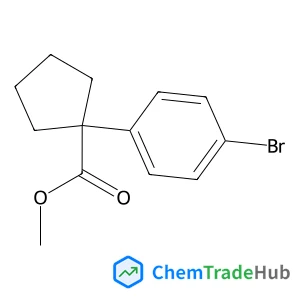
Methyl 1-(4-bromophenyl)cyclopentanecarboxylate
CAS Number:
1236357-64-4
Molecular Formula:
C13H15BrO2
Jian-Hua Li, Xin-Yi Mou
Unlike MoS2, single-layered Ag2S nanoribbons (Ag2SNRs) exhibit a nonmetal-shrouded and a zigzag-shaped buckling structure and possess two distinct edges, S- or Ag-terminated ones. By performing first principle calculations, the spin-dependent electron transport of Ag2SNRs in a ferromagnetic state has been investigated. It is found that the SS- and AgAg-terminated Ag2SNRs exhibit semi-metallic characteristics, but with opposite spin-polarized directions. And AgS-terminated ones show metallic characteristics, but with completely spin-unpolarized transmission. That is to say, all three states, i.e., spin up polarized, spin down polarized and spin unpolarized ones, could be achieved by modulating the edge geometry. Further analysis shows that, the spatial separation on edges of the energy states with different spins around EF is responsible for the switch in the three states. The system could operate as a dual spin-filter, and the direction of the spin polarization can be switched by the edge morphology. Furthermore, calculations show that such a phenomenon is robust to the width of the ribbon and strain, showing great application potential.
Leo W. T. Parsons, James C. Fettinger, Louise A. Berben
DOI: 10.1039/D3SC03806H
DOI: 10.1039/D3SC04126C
Jing Cao, Joshua L. Zhu, Karl A. Scheidt
DOI: 10.1039/D3SC05162E
DOI: 10.1039/D3SC04519F
Lucas T. Göttemann, Stefan Wiesler, Richmond Sarpong
DOI: 10.1039/D3SC05414D
Ana Alcalde-Ordóñez, Natalia Barreiro-Piñeiro, Bríonna McGorman, Jacobo Gómez-González, David Bouzada, Francisco Rivadulla, M. Eugenio Vázquez, Andrew Kellett, José Martínez-Costas, Miguel Vázquez López
DOI: 10.1039/D3SC03303A
Jayoh A. Hernandez, Paul S. Micus, Sean Alec Lois Sunga, Luca Mazzei, Stefano Ciurli, Gabriele Meloni
DOI: 10.1039/D3SC05135H
Corentin Rossi, Giel Muller, Sandesh Gondarry, Paul M. Mayer, Ugo Jacovella
DOI: 10.1039/D3SC03015F
3-(2-Bromoimidazo[2,1-b]thiazol-6-yl)propanoic acid hydrochloride is typically s...
2-Isopropyl-1,3-dioxane-5-carboxylic acid is typically synthesized by the carbox...
Alisporivir (CAS: 254435-95-5) is an antiviral medication used in the treatment ...
[1,2,4]triazolo[3,4-a]phthalazine (CAS: 234-80-0) is a crystalline compound with...
Regulatory guidelines for (2S)-5-Hydroxy-2-(4-hydroxyphenyl)-4-oxo-3,4-dihydro-2...
2,2-Difluorocyclohexanamine hydrochloride is generally safe when handled under p...
3-Nitro-2-phenylthiophene is primarily used in the synthesis of other organic co...
1-(Trifluoroacetyl)-4-piperidinecarbonitrile (CAS: 77940-79-5) is a colorless to...
Research and market trends for 1,3,6,8-Tetranitro-9H-carbazole (CAS: 4543-33-3) ...
Waste containing Dibenzo[b,d]thiophen-1-ylboronic acid (CAS: 1245943-60-5) shoul...

Physical Chemistry Chemical Physics (PCCP) is an international journal co-owned by 19 physical chemistry and physics societies from around the world. This journal publishes original, cutting-edge research in physical chemistry, chemical physics and biophysical chemistry. To be suitable for publication in PCCP, articles must include significant innovation and/or insight into physical chemistry; this is the most important criterion that reviewers and Editors will judge against when evaluating submissions. The journal has a broad scope and welcomes contributions spanning experiment, theory, computation and data science. Topical coverage includes spectroscopy, dynamics, kinetics, statistical mechanics, thermodynamics, electrochemistry, catalysis, surface science, quantum mechanics, quantum computing and machine learning. Interdisciplinary research areas such as polymers and soft matter, materials, nanoscience, energy, surfaces/interfaces, and biophysical chemistry are welcomed if they demonstrate significant innovation and/or insight into physical chemistry. Joined experimental/theoretical studies are particularly appreciated when complementary and based on up-to-date approaches.