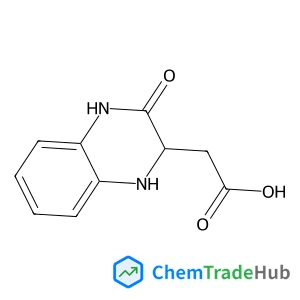
![2,6-Di(thiophen-2-yl)dithieno[3,2-b:2',3'-d]thiophene structure](https://static.chemtradehub.com/structs/910/910788-24-8-5b70.webp "2,6-Di(thiophen-2-yl)dithieno[3,2-b:2',3'-d]thiophene structure")
2,6-Di(thiophen-2-yl)dithieno[3,2-b:2',3'-d]thiophene
CAS Number:
910788-24-8
Molecular Formula:
C16H8S5
Efficient and cost-effective electrocatalysts for the hydrogen oxidation/evolution reaction (HOR/HER) are essential for commercializing alkaline fuel cells and electrolyzers. The sluggish HER/HOR reaction kinetics in base is the key issue that requires resolution so that commercialization may proceed. It is also quite challenging to decrease the noble metal loading without sacrificing performance. Herein, we report improved HER/HOR activity as a result of hydrogen spillover on platinum-supported MoO3 (Pt/MoO3-CNx-400) with a Pt loading of 20%. The catalyst exhibited a decreased over-potential of 66.8 mV to reach 10 mA cm−2 current density with a Tafel slope of 41.2 mV dec−1 for the HER in base. The Pt/MoO3-CNx-400 also exhibited satisfactory HOR activity in base. The mass-specific exchange current density of Pt/MoO3-CNx-400 and commercial Pt/C are 505.7 and 245 mA mgPt−1, respectively. The experimental results suggest that the hydrogen binding energy (HBE) is the key descriptor for the HER/HOR. We also demonstrated that the enhanced HER/HOR performance was due to the hydrogen spillover from Pt to MoO3 sites that enhanced the Volmer/Heyrovsky process, which led to high HER/HOR activity and was supported by the experimental and theoretical investigations. The work function value of Pt [Φ = 5.39 eV) is less than that of β-MoO3 (011) [Φ = 7.09 eV], which revealed the charge transfer from Pt to the β-MoO3 (011) surface. This suggested the feasibility of hydrogen spillover, and was further confirmed by the relative hydrogen adsorption energy [ΔGH] at different sites. Based on these findings, we propose that the H2O or H2 dissociation takes place on Pt and interfaces to form Pt–Had or (Pt/MoO3)–Had, and some of the Had shifted to MoO3 sites through hydrogen spillover. Then, Had at the Pt and interface, and MoO3 sites reacted with H2O and HO− to form H2 or H2O molecules, thereby boosting the HER/HOR activity. This work may provide valuable information for the development of hydrogen-spillover-based electrocatalysts for use in various renewable energy devices.
Minseon Cho, Min Su Han, Changill Ban
DOI: 10.1039/B811346G
Catherine Bonnier, Warren E. Piers, Masood Parvez, Ted S. Sorensen
DOI: 10.1039/B808739C
Saad Makhseed, Jacob Samuel
DOI: 10.1039/B805656K
Tom F. A. de Greef, Marko M. L. Nieuwenhuizen, Patrick J. M. Stals, Carel F. C. Fitié, Anja R. A. Palmans, Rint P. Sijbesma, E. W. Meijer
DOI: 10.1039/B806506C
Magali Bonne, Nicolas Bion, Frédéric Pailloux, Sabine Valange, Sébastien Royer, Jean-Michel Tatibouët, Daniel Duprez
DOI: 10.1039/B808699K
Buqing Huang, Sergio M. Santos, Vitor Felix, Paul D. Beer
DOI: 10.1039/B808094A
Maria J. Petersson, Wendy A. Loughlin, Ian D. Jenkins
DOI: 10.1039/B807695B
DOI: 10.1039/B807629D
Tingyang Dai, Xiujuan Jiang, Shouhu Hua, Xiaoshu Wang, Yun Lu
DOI: 10.1039/B807116K
Juan Manuel Herrera, Enrique Colacio, Corine Mathonière, Duane Choquesillo-Lazarte, Michael D. Ward
DOI: 10.1039/B807364C
When handling 4-(2-Furylmethyl)thiomorpholine 1,1-dioxide (CAS: 79206-94-3), it ...
When handling 4-Chloro-N-[2-(4-morpholinyl)ethyl]benzamide (CAS: 71320-77-9), it...
Waste containing this compound (CAS: 62921-74-8) should be handled according to ...
Waste containing (S)-Methyl 2-amino-3-cyclohexylpropanoate should be collected i...
This compound can be synthesized using a multi-step process involving the conjug...
There are several alternatives to (2E)-3-(3,4-Dichlorophenyl)acrylic acid in syn...
Ethyl 6-(2-nitrophenyl)imidazo[2,1-b][1,3]thiazole-3-carboxylate (CAS: 925437-84...
Waste containing 2-(1,3-Thiazol-2-yl)ethanamine (CAS: 18453-07-1) should be coll...
Methyl 5-iodo-2-methylbenzoate can be synthesized through the iodination of meth...
5-Chloro[1,2,4]triazolo[1,5-a]pyridine is commonly synthesized via the condensat...

Our journal has a wide-ranging scope which covers the full breadth of the chemical sciences. The research we publish contains the sorts of novel ideas, challenging questions and progressive thinking that bring undiscovered breakthroughs within reach. Your paper could focus on a single area, or cross many. It could be beyond the accepted bounds of the chemical sciences. It might address an immediate challenge, contribute to a future breakthrough or be wholly conceptual. We’re a team from every field of the chemical sciences, and know from experience that breakthroughs that drive the solutions to global challenges can come from anywhere, at any time. You could even start an entirely new area of research. Too bold? Too progressive? No such thing
![6-Benzyl-4,5,6,7-tetrahydro-1H-pyrazolo[3,4-c]pyridin-3(2H)-one structure](https://static.chemtradehub.com/structs/909/909187-64-0-f54f.webp "6-Benzyl-4,5,6,7-tetrahydro-1H-pyrazolo[3,4-c]pyridin-3(2H)-one structure")