












Probing hidden colloidal transitions with the assistance of surface plasmons
Literature Information
Publication Date
2019-07-05
DOI
10.1039/C9CP02463H
Impact Factor
3.676
Authors
Fangfang Deng, Yunxia Wang, Xiaolin Lu, Tao Ding
View Original
Abstract
Actuating plasmonic nanoparticles with responsive hydrogels has led to many useful applications but an understanding of how exactly the assembly and disassembly happen remains ambiguous. Conventional views about this system mainly recognize this reversible process as a bi-switch between dispersed and aggregated states. However, in this paper, a hidden vesicle intermediate is revealed by probing changes in plasmon resonances with temperature. The critical factor that influences such a vesicle state originates from the different aggregation modes between polymers and Au NPs. Our theoretical model, along with experimental evidence, further supports this mechanism. This new insight not only provides a kinetic means to modify self-assemblies by engineering the polymer aggregation rate but it also has great implications for the dynamics of colloid/polymer interactions in general.
Related Literature
A preliminary observation of additive thermodynamic contribution of pendant arms to the complexation of calixarene derivatives with mercury(ii)
Angela F. Danil de Namor, Samir Chahine, Eduardo E. Castellano, Oscar E. Piro, H. Donald Brooke Jenkins
2005-06-23
Communication
DOI: 10.1039/B505408G
A microporous scandium terephthalate, Sc2(O2CC6H4CO2)3, with high thermal stability
S. R. Miller, P. A. Wright, C. Serre, T. Loiseau, J. Marrot, G. Férey
2005-06-23
Communication
DOI: 10.1039/B506677H
Exclusive transition state stabilization in the supramolecular catalysis of Diels–Alder reaction by a uranyl salophen complex
Antonella Dalla Cort, Luigi Mandolini, Luca Schiaffino
2005-07-01
Communication
DOI: 10.1039/B504713G
Highly regio-, chemo- and diastereoselective synthesis of oxa-bridged spirocycles: A novel observation of reverse selectivity
Sengodagounder Muthusamy, Janagiraman Krishnamurthi, Munirathnam Nethaji
2005-06-21
Communication
DOI: 10.1039/B504692K
2,2-Dimethyl cyclopentanones by acid catalyzed ring expansion of isopropenylcyclobutanols. A short synthesis of (±)-α-cuparenone and (±)-herbertene
Angela M. Bernard, Angelo Frongia, Francesco Secci, Pier P. Piras
2005-06-23
Communication
DOI: 10.1039/B505707H
A chiral porous 3D metal–organic framework with an unprecedented 4-connected network topology
Chuan-De Wu, Wenbin Lin
2005-06-15
Communication
DOI: 10.1039/B505916J
Colloidal lithography with crosslinkable particles: fabrication of hierarchical nanopore arrays
Jun Hyuk Moon, Won Sun Kim, Jong-Wook Ha, Se Gyu Jang, Seung-Man Yang, Jung-Ki Park
2005-07-14
Communication
DOI: 10.1039/B507542D
Low power upconversion using MLCT sensitizers
Radiy R. Islangulov, Denis V. Kozlov, Felix N. Castellano
2005-07-04
Communication
DOI: 10.1039/B506575E
Shape and size control of Ag2Se nanocrystals from a single precursor [(Ph3P)3Ag2(SeC{O}Ph)2]
Meng Tack Ng, Chris Boothroyd, Jagadese J. Vittal
2005-06-27
Communication
DOI: 10.1039/B506203A
You might also like
Compound Q&A
How is 3-(2-Bromoimidazo[2,1-b]thiazol-6-yl)propanoic acid hydrochloride (CAS: 1187830-80-3) typically synthesized?
3-(2-Bromoimidazo[2,1-b]thiazol-6-yl)propanoic acid hydrochloride is typically s...
1187830-80-33-(2-Bromoimidazo[2,...
Compound Q&A
How is 2-Isopropyl-1,3-dioxane-5-carboxylic acid (CAS: 116193-72-7) typically synthesized?
2-Isopropyl-1,3-dioxane-5-carboxylic acid is typically synthesized by the carbox...
116193-72-72-Isopropyl-1,3-diox...
Compound Q&A
What is Alisporivir (CAS: 254435-95-5)?
Alisporivir (CAS: 254435-95-5) is an antiviral medication used in the treatment ...
254435-95-5Alisporivir
Compound Q&A
What are the physical and chemical properties of [1,2,4]triazolo[3,4-a]phthalazine (CAS: 234-80-0)?
[1,2,4]triazolo[3,4-a]phthalazine (CAS: 234-80-0) is a crystalline compound with...
234-80-0[1,2,4]triazolo[3,4-...
Compound Q&A
What regulatory guidelines apply to (2S)-5-Hydroxy-2-(4-hydroxyphenyl)-4-oxo-3,4-dihydro-2H-chromen-7-yl methyl beta-D-glucopyranosiduronate (CAS: 1985597-72-5)?
Regulatory guidelines for (2S)-5-Hydroxy-2-(4-hydroxyphenyl)-4-oxo-3,4-dihydro-2...
1985597-72-5(2S)-5-Hydroxy-2-(4-...
Compound Q&A
Is 2,2-Difluorocyclohexanamine hydrochloride (CAS: 921602-83-7) safe?
2,2-Difluorocyclohexanamine hydrochloride is generally safe when handled under p...
921602-83-72,2-Difluorocyclohex...
Compound Q&A
What are the main uses of 3-Nitro-2-phenylthiophene (CAS: 18150-94-2)?
3-Nitro-2-phenylthiophene is primarily used in the synthesis of other organic co...
18150-94-23-Nitro-2-phenylthio...
Compound Q&A
What is 1-(Trifluoroacetyl)-4-piperidinecarbonitrile (CAS: 77940-79-5)?
1-(Trifluoroacetyl)-4-piperidinecarbonitrile (CAS: 77940-79-5) is a colorless to...
77940-79-51-(Trifluoroacetyl)-...
Compound Q&A
What is the market or research trend for 1,3,6,8-Tetranitro-9H-carbazole (CAS: 4543-33-3)?
Research and market trends for 1,3,6,8-Tetranitro-9H-carbazole (CAS: 4543-33-3) ...
4543-33-31,3,6,8-Tetranitro-9...
Compound Q&A
How should waste containing Dibenzo[b,d]thiophen-1-ylboronic acid (CAS: 1245943-60-5) be handled?
Waste containing Dibenzo[b,d]thiophen-1-ylboronic acid (CAS: 1245943-60-5) shoul...
1245943-60-5Dibenzo[b,d]thiophen...
Source Journal
Physical Chemistry Chemical Physics

CiteScore:
5.5
Self-citation Rate:
10.3%
Articles per Year:
3036
Physical Chemistry Chemical Physics (PCCP) is an international journal co-owned by 19 physical chemistry and physics societies from around the world. This journal publishes original, cutting-edge research in physical chemistry, chemical physics and biophysical chemistry. To be suitable for publication in PCCP, articles must include significant innovation and/or insight into physical chemistry; this is the most important criterion that reviewers and Editors will judge against when evaluating submissions. The journal has a broad scope and welcomes contributions spanning experiment, theory, computation and data science. Topical coverage includes spectroscopy, dynamics, kinetics, statistical mechanics, thermodynamics, electrochemistry, catalysis, surface science, quantum mechanics, quantum computing and machine learning. Interdisciplinary research areas such as polymers and soft matter, materials, nanoscience, energy, surfaces/interfaces, and biophysical chemistry are welcomed if they demonstrate significant innovation and/or insight into physical chemistry. Joined experimental/theoretical studies are particularly appreciated when complementary and based on up-to-date approaches.
Recommended Compounds
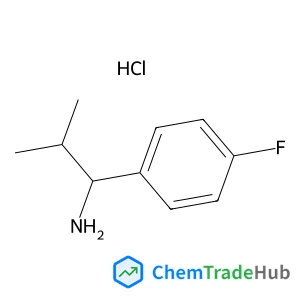
(1R)-1-(4-Fluorophenyl)-2-methyl-1-propanamine hydrochloride (1:1)
CAS Number:
1213329-40-8
Molecular Formula:
C10H15ClFN
Recommended Suppliers




Disclaimer
This page provides academic journal information for reference and research purposes only. We are not affiliated with any journal publishers and do not handle publication submissions. For publication-related inquiries, please contact the respective journal publishers directly.
If you notice any inaccuracies in the information displayed, please contact us at support@chemtradehub.com. We will promptly review and address your concerns.