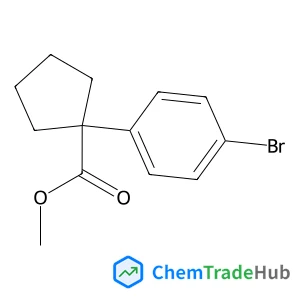
Methyl 1-(4-bromophenyl)cyclopentanecarboxylate
CAS Number:
1236357-64-4
Molecular Formula:
C13H15BrO2
Hannu P. Pasanen, Paola Vivo, Laura Canil, Antonio Abate, Nikolai Tkachenko
Perovskites have lately attracted a lot of attention as promising materials for the next-generation of efficient, low-cost, and solution processable optoelectronics. Their complex transient photophysics, in time scales ranging from femtoseconds to seconds, have been widely investigated. However, in most of the reported works the spectral window of ultrafast transient absorption (TA) spectroscopy of perovskite films is limited to the visible region, hence missing crucial information coming from the near-infrared (NIR). Furthermore, the measured TA responses are affected by light interference in a thin perovskite layer making data interpretation a challenge even in the visible part of the spectrum. Here, we demonstrate a method that allows us to separately obtain the changes in absorption and refractive index from conventional transmission and reflection pump–probe measurements. We show that the contribution of the absorption change to the response of metal halide perovskite thin films in the NIR is much smaller than that of the refractive index change. Furthermore, the spectral shape of TA responses in the NIR range is predominantly determined by perovskite layer thickness and its refractive index. However, the time profile of the responses bears important information on the carrier dynamics and makes the NIR a useful range to study perovskite photophysics.
DOI: 10.1039/B507503N
P. Prashanth Kumar, G. Premaladha, Bhaskar G. Maiya
DOI: 10.1039/B504029A
Dario Braga, Fabrizia Grepioni
DOI: 10.1039/B504668H
Tristram Chivers, Dana J. Eisler, Chantall Fedorchuk, Gabriele Schatte, Heikki M. Tuononen, René T. Boeré
DOI: 10.1039/B506253E
Noboru Ono, Hidemitsu Uno, Deok Yun Kim, Soo Bum Noh, Dongho Kim
DOI: 10.1039/B505340D
Masakazu Morimoto, Masahiro Irie
DOI: 10.1039/B505256D
Lan He, Yu An, Lihua Yuan, Kazuhiro Yamato, Wen Feng, Oksana Gerlitz, Chong Zheng, Bing Gong
DOI: 10.1039/B503921E
S. R. Miller, P. A. Wright, C. Serre, T. Loiseau, J. Marrot, G. Férey
DOI: 10.1039/B506677H
Sengodagounder Muthusamy, Janagiraman Krishnamurthi, Munirathnam Nethaji
DOI: 10.1039/B504692K
Eugenii Katz, Itamar Willner
DOI: 10.1039/B505936D
3-(2-Bromoimidazo[2,1-b]thiazol-6-yl)propanoic acid hydrochloride is typically s...
2-Isopropyl-1,3-dioxane-5-carboxylic acid is typically synthesized by the carbox...
Alisporivir (CAS: 254435-95-5) is an antiviral medication used in the treatment ...
[1,2,4]triazolo[3,4-a]phthalazine (CAS: 234-80-0) is a crystalline compound with...
Regulatory guidelines for (2S)-5-Hydroxy-2-(4-hydroxyphenyl)-4-oxo-3,4-dihydro-2...
2,2-Difluorocyclohexanamine hydrochloride is generally safe when handled under p...
3-Nitro-2-phenylthiophene is primarily used in the synthesis of other organic co...
1-(Trifluoroacetyl)-4-piperidinecarbonitrile (CAS: 77940-79-5) is a colorless to...
Research and market trends for 1,3,6,8-Tetranitro-9H-carbazole (CAS: 4543-33-3) ...
Waste containing Dibenzo[b,d]thiophen-1-ylboronic acid (CAS: 1245943-60-5) shoul...

Physical Chemistry Chemical Physics (PCCP) is an international journal co-owned by 19 physical chemistry and physics societies from around the world. This journal publishes original, cutting-edge research in physical chemistry, chemical physics and biophysical chemistry. To be suitable for publication in PCCP, articles must include significant innovation and/or insight into physical chemistry; this is the most important criterion that reviewers and Editors will judge against when evaluating submissions. The journal has a broad scope and welcomes contributions spanning experiment, theory, computation and data science. Topical coverage includes spectroscopy, dynamics, kinetics, statistical mechanics, thermodynamics, electrochemistry, catalysis, surface science, quantum mechanics, quantum computing and machine learning. Interdisciplinary research areas such as polymers and soft matter, materials, nanoscience, energy, surfaces/interfaces, and biophysical chemistry are welcomed if they demonstrate significant innovation and/or insight into physical chemistry. Joined experimental/theoretical studies are particularly appreciated when complementary and based on up-to-date approaches.