


Ultrahigh binding affinity of a hydrocarbon guest inside cucurbit[7]uril enhanced by strong host–guest charge matching
Literature Information
Publication Date
2019-06-11
DOI
10.1039/C9CP01762C
Impact Factor
3.676
Authors
View Original
Abstract
Cucurbit[7]uril (CB[7]) is an artificial macrocyclic molecule that can form exceptionally strong host–guest complexes with binding constants higher than that of the biotin–avidin complex. Despite notable experimental efforts, there do not exist large-scale computational investigations on finding strongly binding guests of CB[7]. Herein, we develop a computational approach based on large-scale molecular modelling to predict strongly binding hydrocarbon motifs. Our results indicate that an expanded cubane (PubChem ID 101402794) will be the most strongly binding hydrocarbon guest of CB[7] among the hundreds of thousands of hydrocarbons in the PubChem database, achieving a binding affinity significantly stronger than those reported in preceding experimental studies. Our findings highlight the important role of charge complementarity in the form of quadrupole electrostatic interactions in enabling the ultrahigh binding affinity of nonpolar guest molecules with CB[7], in addition to other known contributions such as van der Waals interactions and high-energy water release.
Recommended Journals

Organic Preparations and Procedures International

Israel Journal of Chemistry

European Journal of Wood and Wood Products

Proceedings of the National Academy of Sciences of the United States of America

Journal of Heterocyclic Chemistry

Fibre Chemistry

Nature

Planta Medica

Pharmacological Reviews

Journal of Organometallic Chemistry
Related Literature
A single phosphorylation mechanism in early metabolism – the case of phosphoenolpyruvate
Joris Zimmermann, Robert J. Mayer
2023-12-04
Edge Article
DOI: 10.1039/D3SC04116F
A general approach to stereospecific Pd-catalyzed cross-coupling reactions of benzylic stereocenters
2023-11-24
Edge Article
DOI: 10.1039/D3SC04519F
Photocatalytic, modular difunctionalization of alkenes enabled by ligand-to-metal charge transfer and radical ligand transfer
Kang-Jie Bian, David Nemoto, Jr, Xiao-Wei Chen, Shih-Chieh Kao, James Hooson, Julian G. West
2023-11-24
Edge Article
DOI: 10.1039/D3SC05231A
Mutual induced fit transition structure stabilization of corannulene's bowl-to-bowl inversion in a perylene bisimide cyclophane
Manuel Weh, Olga Anhalt
2023-11-27
Edge Article
DOI: 10.1039/D3SC05341E
Cooperatively designed aptamer-PROTACs for spatioselective degradation of nucleocytoplasmic shuttling protein for enhanced combinational therapy
Ran Liu, Zheng Liu, Mohan Chen, Hang Xing, Penghui Zhang, Jingjing Zhang
2023-11-29
Edge Article
DOI: 10.1039/D3SC04249A
A β-barrel-like tetramer formed by a β-hairpin derived from Aβ
Tuan D. Samdin, Chelsea R. Jones, Gretchen Guaglianone, Adam G. Kreutzer, J. Alfredo Freites, Michał Wierzbicki
2023-11-28
Edge Article
DOI: 10.1039/D3SC05185D
Matrix stiffness-dependent microglia activation in response to inflammatory cues: in situ investigation by scanning electrochemical microscopy
Jian Zhuang, Hua Zhang
2023-11-28
Edge Article
DOI: 10.1039/D3SC03504B
Using waste to treat waste: facile synthesis of hollow carbon nanospheres from lignin for water decontamination
Xiang Liu, Zixuan Hao, Chen Fang, Kun Pang, Jiaying Yan, Yingping Huang, Di Huang
2023-11-27
Edge Article
DOI: 10.1039/D3SC05275C
18F-Labeled brain-penetrant EGFR tyrosine kinase inhibitors for PET imaging of glioblastoma
Jonathan E. Tsang, David A. Nathanson
2023-11-09
Edge Article
DOI: 10.1039/D3SC04424F
Thermally activated delayed fluorescence in a deep red dinuclear iridium(iii) complex: a hidden mechanism for short luminescence lifetimes
Andrey V. Zaytsev, Amit Sil, Glib V. Baryshnikov, J. A. Gareth Williams, Fernando B. Dias, Valery N. Kozhevnikov
2023-11-14
Edge Article
DOI: 10.1039/D3SC04450E
You might also like
Compound Q&A
How is 3-(2-Bromoimidazo[2,1-b]thiazol-6-yl)propanoic acid hydrochloride (CAS: 1187830-80-3) typically synthesized?
3-(2-Bromoimidazo[2,1-b]thiazol-6-yl)propanoic acid hydrochloride is typically s...
1187830-80-33-(2-Bromoimidazo[2,...
Compound Q&A
How is 2-Isopropyl-1,3-dioxane-5-carboxylic acid (CAS: 116193-72-7) typically synthesized?
2-Isopropyl-1,3-dioxane-5-carboxylic acid is typically synthesized by the carbox...
116193-72-72-Isopropyl-1,3-diox...
Compound Q&A
What is Alisporivir (CAS: 254435-95-5)?
Alisporivir (CAS: 254435-95-5) is an antiviral medication used in the treatment ...
254435-95-5Alisporivir
Compound Q&A
What are the physical and chemical properties of [1,2,4]triazolo[3,4-a]phthalazine (CAS: 234-80-0)?
[1,2,4]triazolo[3,4-a]phthalazine (CAS: 234-80-0) is a crystalline compound with...
234-80-0[1,2,4]triazolo[3,4-...
Compound Q&A
What regulatory guidelines apply to (2S)-5-Hydroxy-2-(4-hydroxyphenyl)-4-oxo-3,4-dihydro-2H-chromen-7-yl methyl beta-D-glucopyranosiduronate (CAS: 1985597-72-5)?
Regulatory guidelines for (2S)-5-Hydroxy-2-(4-hydroxyphenyl)-4-oxo-3,4-dihydro-2...
1985597-72-5(2S)-5-Hydroxy-2-(4-...
Compound Q&A
Is 2,2-Difluorocyclohexanamine hydrochloride (CAS: 921602-83-7) safe?
2,2-Difluorocyclohexanamine hydrochloride is generally safe when handled under p...
921602-83-72,2-Difluorocyclohex...
Compound Q&A
What are the main uses of 3-Nitro-2-phenylthiophene (CAS: 18150-94-2)?
3-Nitro-2-phenylthiophene is primarily used in the synthesis of other organic co...
18150-94-23-Nitro-2-phenylthio...
Compound Q&A
What is 1-(Trifluoroacetyl)-4-piperidinecarbonitrile (CAS: 77940-79-5)?
1-(Trifluoroacetyl)-4-piperidinecarbonitrile (CAS: 77940-79-5) is a colorless to...
77940-79-51-(Trifluoroacetyl)-...
Compound Q&A
What is the market or research trend for 1,3,6,8-Tetranitro-9H-carbazole (CAS: 4543-33-3)?
Research and market trends for 1,3,6,8-Tetranitro-9H-carbazole (CAS: 4543-33-3) ...
4543-33-31,3,6,8-Tetranitro-9...
Compound Q&A
How should waste containing Dibenzo[b,d]thiophen-1-ylboronic acid (CAS: 1245943-60-5) be handled?
Waste containing Dibenzo[b,d]thiophen-1-ylboronic acid (CAS: 1245943-60-5) shoul...
1245943-60-5Dibenzo[b,d]thiophen...
Source Journal
Physical Chemistry Chemical Physics

CiteScore:
5.5
Self-citation Rate:
10.3%
Articles per Year:
3036
Physical Chemistry Chemical Physics (PCCP) is an international journal co-owned by 19 physical chemistry and physics societies from around the world. This journal publishes original, cutting-edge research in physical chemistry, chemical physics and biophysical chemistry. To be suitable for publication in PCCP, articles must include significant innovation and/or insight into physical chemistry; this is the most important criterion that reviewers and Editors will judge against when evaluating submissions. The journal has a broad scope and welcomes contributions spanning experiment, theory, computation and data science. Topical coverage includes spectroscopy, dynamics, kinetics, statistical mechanics, thermodynamics, electrochemistry, catalysis, surface science, quantum mechanics, quantum computing and machine learning. Interdisciplinary research areas such as polymers and soft matter, materials, nanoscience, energy, surfaces/interfaces, and biophysical chemistry are welcomed if they demonstrate significant innovation and/or insight into physical chemistry. Joined experimental/theoretical studies are particularly appreciated when complementary and based on up-to-date approaches.
Recommended Compounds
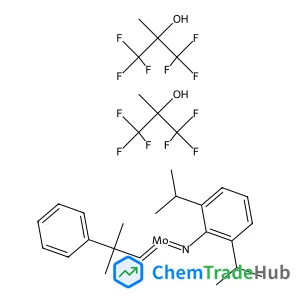
2,6-Diisopropylphenylimidoneophylidene molybdenum(VI) bis(hexafluoro-t-butoxide)
CAS Number:
139220-25-0
Molecular Formula:
C30H37F12MoNO2
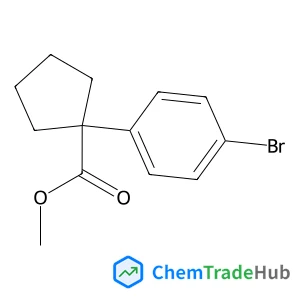
Methyl 1-(4-bromophenyl)cyclopentanecarboxylate
CAS Number:
1236357-64-4
Molecular Formula:
C13H15BrO2
Recommended Suppliers








Disclaimer
This page provides academic journal information for reference and research purposes only. We are not affiliated with any journal publishers and do not handle publication submissions. For publication-related inquiries, please contact the respective journal publishers directly.
If you notice any inaccuracies in the information displayed, please contact us at support@chemtradehub.com. We will promptly review and address your concerns.