












A β-barrel-like tetramer formed by a β-hairpin derived from Aβ
Literature Information
Publication Date
2023-11-28
DOI
10.1039/D3SC05185D
Impact Factor
9.825
Authors
Tuan D. Samdin, Chelsea R. Jones, Gretchen Guaglianone, Adam G. Kreutzer, J. Alfredo Freites, Michał Wierzbicki
View Original
Abstract
β-Hairpins formed by the β-amyloid peptide Aβ are building blocks of Aβ oligomers. Three different alignments of β-hairpins have been observed in the structures of Aβ oligomers or fibrils. Differences in β-hairpin alignment likely contribute to the heterogeneity of Aβ oligomers and thus impede their study at high-resolution. Here, we designed, synthesized, and studied a series of β-hairpin peptides derived from Aβ12–40 in one of these three alignments and investigated their solution-phase assembly and folding. These assays reveal the formation of tetramers and octamers that are stabilized by intermolecular hydrogen bonding interactions between Aβ residues 12–14 and 38–40 as part of an extended β-hairpin conformation. X-ray crystallographic studies of one peptide from this series reveal the formation of β-barrel-like tetramers and octamers that are stabilized by edge-to-edge hydrogen bonding and hydrophobic packing. Dye-leakage and caspase 3/7 activation assays using tetramer and octamer forming peptides from this series reveal membrane-damaging and apoptotic properties. A molecular dynamics simulation of the β-barrel-like tetramer embedded in a lipid bilayer shows membrane disruption and water permeation. The tetramers and octamers described herein provide additional models of how Aβ may assemble into oligomers and supports the hypothesis that β-hairpin alignment and topology may contribute directly to oligomer heterogeneity.
Related Literature
[60]Fullerene-based liquid crystals acting as acid-sensitive fluorescent probes‡
Laura Pérez, Julie Lenoble, Joaquín Barberá, Pilar de la Cruz, Robert Deschenaux, Fernando Langa
2008-08-22
Communication
DOI: 10.1039/B808730J
Subtractive assembly of DNA nanoarchitectures driven by fuel strand displacement
Zhe Li, Yonggang Ke, Chenxiang Lin, Hao Yan, Yan Liu
2008-07-17
Communication
DOI: 10.1039/B807933A
Nanostructured polymers with embedded self-assembled reactive gel networks
Jamie R. Moffat, Gordon J. Seeley, Jeff T. Carter, Andrew Burgess, David K. Smith
2008-08-01
Communication
DOI: 10.1039/B809077G
Direct functionalization at the boron center of antiaromatic chloroborole
Holger Braunschweig, Thomas Kupfer
2008-07-30
Communication
DOI: 10.1039/B808483A
Strategic synthesis of SBA-15 nanorods
Xiulei Ji, Kyu T. Lee, Muguette Monjauze, Linda F. Nazar
2008-06-20
Communication
DOI: 10.1039/B804327B
Model systems for flavoenzyme activity: intramolecular self-assembly of a flavin derivative viahydrogen bonding and aromatic interactions
Stuart T. Caldwell, Graeme Cooke, Shanika G. Hewage, Suhil Mabruk, Gouher Rabani, Vincent Rotello, Brian O. Smith, Chandramouleeswaran Subramani, Patrice Woisel
2008-08-01
Communication
DOI: 10.1039/B809762C
Facile fabrication of conducting polymer hydrogels via supramolecular self-assembly
Tingyang Dai, Xiujuan Jiang, Shouhu Hua, Xiaoshu Wang, Yun Lu
2008-07-16
Communication
DOI: 10.1039/B807116K
An electrochemical sensor for 3,4-dihydroxyphenylacetic acid with carbon nanotubes as electronic transducer and synthetic cyclophane as recognition element
Jie Yan, Yucheng Zhou, Ping Yu, Lei Su, Lanqun Mao, Deqing Zhang, Daoben Zhu
2008-07-17
Communication
DOI: 10.1039/B805958F
Unilamellar composite vesicles and Y-junctions from pristine fullerene C60
Illa Ramakanth, Balachandran Vijai Shankar, Archita Patnaik
2008-08-05
Communication
DOI: 10.1039/B806772D
Borenium cations derived from BODIPY dyes
Catherine Bonnier, Warren E. Piers, Masood Parvez, Ted S. Sorensen
2008-07-31
Communication
DOI: 10.1039/B808739C
You might also like
Compound Q&A
What precautions should be taken when handling 4-(2-Furylmethyl)thiomorpholine 1,1-dioxide (CAS: 79206-94-3)?
When handling 4-(2-Furylmethyl)thiomorpholine 1,1-dioxide (CAS: 79206-94-3), it ...
79206-94-34-(2-Furylmethyl)thi...
Compound Q&A
What precautions should be taken when handling 4-Chloro-N-[2-(4-morpholinyl)ethyl]benzamide (CAS: 71320-77-9)?
When handling 4-Chloro-N-[2-(4-morpholinyl)ethyl]benzamide (CAS: 71320-77-9), it...
71320-77-94-Chloro-N-[2-(4-mor...
Compound Q&A
How should waste containing 2-[2-(2-Methoxyethoxy)ethoxy]ethyl 4-methylbenzenesulfonate (CAS: 62921-74-8) be handled?
Waste containing this compound (CAS: 62921-74-8) should be handled according to ...
62921-74-82-[2-(2-Methoxyethox...
Compound Q&A
How should waste containing (S)-Methyl 2-amino-3-cyclohexylpropanoate be handled?
Waste containing (S)-Methyl 2-amino-3-cyclohexylpropanoate should be collected i...
40056-18-6(S)-Methyl 2-amino-3...
Compound Q&A
How is 5-({4-[(2S,4R)-4-Hydroxy-2-methyltetrahydro-2H-pyran-4-yl]-2-thienyl}sulfanyl)-1-methyl-1,3-dihydro-2H-indol-2-one (CAS: 166882-70-8) typically synthesized?
This compound can be synthesized using a multi-step process involving the conjug...
166882-70-85-({4-[(2S,4R)-4-Hyd...
Compound Q&A
Are there alternatives to (2E)-3-(3,4-Dichlorophenyl)acrylic acid (CAS: 7312-27-8) in synthesis?
There are several alternatives to (2E)-3-(3,4-Dichlorophenyl)acrylic acid in syn...
7312-27-8(2E)-3-(3,4-Dichloro...
Compound Q&A
How should Ethyl 6-(2-nitrophenyl)imidazo[2,1-b][1,3]thiazole-3-carboxylate (CAS: 925437-84-9) be stored?
Ethyl 6-(2-nitrophenyl)imidazo[2,1-b][1,3]thiazole-3-carboxylate (CAS: 925437-84...
925437-84-9Ethyl 6-(2-nitrophen...
Compound Q&A
How should waste containing 2-(1,3-Thiazol-2-yl)ethanamine (CAS: 18453-07-1) be handled?
Waste containing 2-(1,3-Thiazol-2-yl)ethanamine (CAS: 18453-07-1) should be coll...
18453-07-12-(1,3-Thiazol-2-yl)...
Compound Q&A
How is Methyl 5-iodo-2-methylbenzoate (CAS: 103440-54-6) typically synthesized?
Methyl 5-iodo-2-methylbenzoate can be synthesized through the iodination of meth...
103440-54-6Methyl 5-iodo-2-meth...
Compound Q&A
How is 5-Chloro[1,2,4]triazolo[1,5-a]pyridine (CAS: 1427399-34-5) typically synthesized?
5-Chloro[1,2,4]triazolo[1,5-a]pyridine is commonly synthesized via the condensat...
1427399-34-55-Chloro[1,2,4]triaz...
Source Journal
Chemical Science

CiteScore:
14.4
Self-citation Rate:
3.9%
Articles per Year:
1413
Our journal has a wide-ranging scope which covers the full breadth of the chemical sciences. The research we publish contains the sorts of novel ideas, challenging questions and progressive thinking that bring undiscovered breakthroughs within reach. Your paper could focus on a single area, or cross many. It could be beyond the accepted bounds of the chemical sciences. It might address an immediate challenge, contribute to a future breakthrough or be wholly conceptual. We’re a team from every field of the chemical sciences, and know from experience that breakthroughs that drive the solutions to global challenges can come from anywhere, at any time. You could even start an entirely new area of research. Too bold? Too progressive? No such thing
Recommended Compounds
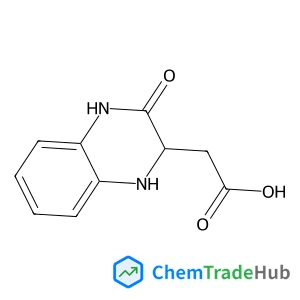
(3-Oxo-1,2,3,4-tetrahydro-2-quinoxalinyl)acetic acid
CAS Number:
136584-14-0
Molecular Formula:
C10H10N2O3

![Pyrazolo[1,5-a]pyridine-3-carbothioamide structure](https://static.chemtradehub.com/structs/885/885275-44-5-aae0.webp "Pyrazolo[1,5-a]pyridine-3-carbothioamide structure")
Recommended Suppliers







Disclaimer
This page provides academic journal information for reference and research purposes only. We are not affiliated with any journal publishers and do not handle publication submissions. For publication-related inquiries, please contact the respective journal publishers directly.
If you notice any inaccuracies in the information displayed, please contact us at support@chemtradehub.com. We will promptly review and address your concerns.