












Electric charge of nanopatterned silica surfaces
Literature Information
Publication Date
2019-03-13
DOI
10.1039/C9CP00706G
Impact Factor
3.676
Authors
H. Gokberk Ozcelik, Murat Barisik
View Original
Abstract
The most recent technologies employ nanoscale surface patterning or roughening in order to engineer desired properties on a surface. Electrokinetic properties at the interface of such surfaces and ionic liquids show different behavior to the well-known theoretical descriptions. Basically, the ionic distribution on the surface differs due to electrical double layer overlap effects in the pits and curvature effects at the tips of surface structures. Generally, the charge density of a surface is assumed to be a material property and surface roughness effects are overlooked in most of the literature. In contrast, we properly calculated the local surface charges based on surface chemistry at the corresponding local ionic concentration (charge regulation) for various surface roughness and solution conditions. The results showed that the surface charge density of silica decreased at the pits but increased at the tips of surface patterns. Even for the simplest case of self-repeating surface structures, the average of local surface charges becomes lower than the theoretical predictions. Based on numerical calculations, a phenomenological model was developed as an extension to the existing flat surface theory, which can successfully predict the average surface charge on a nano patterned surface as a function of the surface pattern size, ionic concentration and pH.
Related Literature
Tunable thermoresponsive water-dispersed multiwalled carbon nanotubes
Gaojian Chen, Peter M. Wright, Jin Geng, Giuseppe Mantovani, David M. Haddleton
2008-02-01
Communication
DOI: 10.1039/B718112D
Diastereoselective diaza-Cope rearrangement reaction
Hyunwoo Kim, Doo Seoung Choi, Cindy Pai-Hui Yen, Alan J. Lough, Choong Eui Song, Jik Chin
2008-01-23
Communication
DOI: 10.1039/B716253G
Capturing a [c2]daisy chain using the threading-followed-by-swelling approach
Shau-Hua Ueng, Sheng-Yao Hsueh, Chien-Chen Lai, Yi-Hung Liu, Shie-Ming Peng, Sheng-Hsien Chiu
2007-12-11
Communication
DOI: 10.1039/B716331B
2-D Self-assembly of the bis(phthalocyaninato)terbium(iii) single-molecule magnet studied by scanning tunnelling microscopy
Jordi Gómez-Segura, Ismael Díez-Pérez, Naoto Ishikawa, Motohiro Nakano, Jaume Veciana, Daniel Ruiz-Molina
2006-06-15
Communication
DOI: 10.1039/B606276H
m-Benziporphodimethene: a new porphyrin analogue fluorescence zinc(ii) sensor
Chen-Hsiung Hung, Gao-Fong Chang, Anil Kumar, Geng-Fong Lin, Wei-Min Ching, Eric Wei-Guang Diau
2007-12-21
Communication
DOI: 10.1039/B714412A
Eight coordination with bis(bidentate) bridging ligands: zeolitic topology versus square grid networks
Jian-Yong Zhang, Ai-Ling Cheng, Qi Yue, Wei-Wei Sun, En-Qing Gao
2007-12-17
Communication
DOI: 10.1039/B717233H
Direct evidence for an iron(iv)-oxo porphyrin π-cation radical as an active oxidant in catalytic oxygenation reactions
Ah-Rim Han, Yu Jin Jeong, Yaeun Kang, Jung Yoon Lee, Mi Sook Seo, Wonwoo Nam
2008-01-03
Communication
DOI: 10.1039/B716558G
Molecular folding screen: folding and unfolding of 1,8-anthrylene–ethynylene oligomers by photochemical cycloaddition and thermal cycloreversion1
Shinji Toyota, Makoto Kuga, Akiko Takatsu, Michio Goichi, Tetsuo Iwanaga
2008-01-15
Communication
DOI: 10.1039/B717496A
Regulation of α-chymotrypsin activity on the surface of substrate-functionalized gold nanoparticles
Chang-Cheng You, Rochelle R. Arvizo, Vincent M. Rotello
2006-06-02
Communication
DOI: 10.1039/B605508G
You might also like
Compound Q&A
Are there alternatives to 1-(4-Chlorophenyl)-N-hydroxymethanimine (CAS: 3848-36-0) in synthesis?
When considering alternatives to 1-(4-Chlorophenyl)-N-hydroxymethanimine (CAS: 3...
3848-36-01-(4-Chlorophenyl)-N...
Compound Q&A
How should (1R,9S,10S,12S,14E,16S,19R,20R,21S,22R)-3,9,21-Trihydroxy-5,10,12,14,16,20,22-heptamethyl-23,24-dioxatetracyclo[17.3.1.1~6,9~.0~2,7~]tetracosa-2,5,7,14-tetraen-4-one (CAS: 183202-73-5) be stored?
This compound should be stored in a cool, dry place away from direct sunlight. I...
183202-73-5(1R,9S,10S,12S,14E,1...
Compound Q&A
How is 3-(4-Bromophenyl)-5-(2-fluorophenyl)-1,2,4-oxadiazole (CAS: 419553-16-5) typically synthesized?
3-(4-Bromophenyl)-5-(2-fluorophenyl)-1,2,4-oxadiazole is synthesized through a m...
419553-16-53-(4-Bromophenyl)-5-...
Compound Q&A
How is 5-Chloro-2-(4-chlorophenyl)-4-methyl-6-[3-(1-piperidinyl)propoxy]pyrimidine (CAS: 1639220-19-1) typically synthesized?
5-Chloro-2-(4-chlorophenyl)-4-methyl-6-[3-(1-piperidinyl)propoxy]pyrimidine (CAS...
1639220-19-15-Chloro-2-(4-chloro...
Compound Q&A
What industries use 2-Chloro-4-(difluoromethoxy)pyridine (CAS: 1206978-15-5)?
2-Chloro-4-(difluoromethoxy)pyridine is used in the pharmaceutical industry for ...
1206978-15-52-Chloro-4-(difluoro...
Compound Q&A
What regulatory guidelines apply to 3-Chloro-6-methylpyridazine (CAS: 1121-79-5)?
3-Chloro-6-methylpyridazine (CAS: 1121-79-5) is classified under the Globally Ha...
1121-79-53-Chloro-6-methylpyr...
Compound Q&A
Are there alternatives to Methyl 4,5-dimethyl-2-nitrobenzoate in synthesis?
Several alternatives can be used in the synthesis of Methyl 4,5-dimethyl-2-nitro...
90922-74-0Methyl 4,5-dimethyl-...
Compound Q&A
Are there alternatives to (2E,2'E)-3,3'-(1,4-Phenylene)bisacrylaldehyde in synthesis?
Alternatives to (2E,2'E)-3,3'-(1,4-Phenylene)bisacrylaldehyde include other acry...
63405-68-5(2E,2'E)-3,3'-(1,4-P...
Compound Q&A
What is 3-Amino-5-chloropyridin-2-ol hydrochloride (CAS: 1261906-29-9)?
3-Amino-5-chloropyridin-2-ol hydrochloride is an organic compound with the CAS n...
1261906-29-93-Amino-5-chloropyri...
Compound Q&A
What precautions should be taken when handling 6,7-Difluoro-2,3-dihydro-4H-chromen-4-one (CAS: 1092349-93-3)?
When handling 6,7-Difluoro-2,3-dihydro-4H-chromen-4-one, it is essential to wear...
1092349-93-36,7-Difluoro-2,3-dih...
Source Journal
Physical Chemistry Chemical Physics

CiteScore:
5.5
Self-citation Rate:
10.3%
Articles per Year:
3036
Physical Chemistry Chemical Physics (PCCP) is an international journal co-owned by 19 physical chemistry and physics societies from around the world. This journal publishes original, cutting-edge research in physical chemistry, chemical physics and biophysical chemistry. To be suitable for publication in PCCP, articles must include significant innovation and/or insight into physical chemistry; this is the most important criterion that reviewers and Editors will judge against when evaluating submissions. The journal has a broad scope and welcomes contributions spanning experiment, theory, computation and data science. Topical coverage includes spectroscopy, dynamics, kinetics, statistical mechanics, thermodynamics, electrochemistry, catalysis, surface science, quantum mechanics, quantum computing and machine learning. Interdisciplinary research areas such as polymers and soft matter, materials, nanoscience, energy, surfaces/interfaces, and biophysical chemistry are welcomed if they demonstrate significant innovation and/or insight into physical chemistry. Joined experimental/theoretical studies are particularly appreciated when complementary and based on up-to-date approaches.
Recommended Compounds
![2-{[(1R,2S)-2-Aminocyclohexyl]amino}-4-{[3-(2H-1,2,3-triazol-2-yl)phenyl]amino}-5-pyrimidinecarboxamide structure](https://static.chemtradehub.com/structs/137/1370261-96-3-40df.webp "2-{[(1R,2S)-2-Aminocyclohexyl]amino}-4-{[3-(2H-1,2,3-triazol-2-yl)phenyl]amino}-5-pyrimidinecarboxamide structure")
2-{[(1R,2S)-2-Aminocyclohexyl]amino}-4-{[3-(2H-1,2,3-triazol-2-yl)phenyl]amino}-5-pyrimidinecarboxamide
CAS Number:
1370261-96-3
Molecular Formula:
C19H23N9O
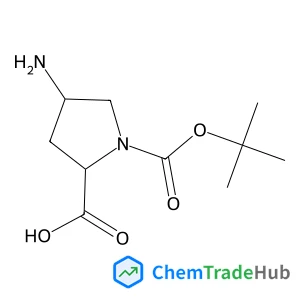
(2R,4R)-1-Boc-4-Aminopyrrolidine-2-carboxylic acid
CAS Number:
132622-98-1
Molecular Formula:
C10H18N2O4
Recommended Suppliers






Disclaimer
This page provides academic journal information for reference and research purposes only. We are not affiliated with any journal publishers and do not handle publication submissions. For publication-related inquiries, please contact the respective journal publishers directly.
If you notice any inaccuracies in the information displayed, please contact us at support@chemtradehub.com. We will promptly review and address your concerns.