













Diastereoselective diaza-Cope rearrangement reaction
Literature Information
Publication Date
2008-01-23
DOI
10.1039/B716253G
Impact Factor
6.222
Authors
Hyunwoo Kim, Doo Seoung Choi, Cindy Pai-Hui Yen, Alan J. Lough, Choong Eui Song, Jik Chin
View Original
Abstract
Steric effect is used to obtain a highly diastereoselective rearrangement reaction.
Recommended Journals
Related Literature
Highly sensitive oxygen sensors based on Cu(i) complex–polystyrene composite nanofibrous membranes prepared by electrospinning
Bin Li, Zhongmin Su
2009-08-12
Communication
DOI: 10.1039/B910305H
Construction of protected hydroxylated pyrrolidines using nitrogen-centered radical cyclizations
Huimin Zhai, Maria Zlotorzynska, Glenn Sammis
2009-09-02
Communication
DOI: 10.1039/B914757H
Construction of well-defined multifunctional dendrimers using a trifunctional core
Cátia Ornelas, Marcus Weck
2009-08-18
Communication
DOI: 10.1039/B913139F
Electrochemically promoted C-3 amination of 2H-indazoles
Yuhui Zhou, Laiqiang Li, Yongmin Ma, Pinhua Li
2020-12-11
Research Article
DOI: 10.1039/D0QO01088J
The preparation of the MF6− (M = As, Sb) salts of 1,4-benzoquinodal bridged bis-1,3,2-dithiazolylium utilizing the cycloaddition and oxidative dehydrogenation chemistry of SNSMF6 and observation of a hybrid semiquinoidal–thiazyl radical-cation by EPR
Andreas Decken, Aaron Mailman, Jack Passmore
2009-08-25
Communication
DOI: 10.1039/B910338D
Insertion reactions of a two-coordinate iron diaryl with dioxygen and carbon monoxide
Chengbao Ni, Philip P. Power
2009-08-17
Communication
DOI: 10.1039/B912312A
Exploring the size dependence of cyclic and acyclic π-systems on cation–π binding
Dolly Vijay, G. Narahari Sastry
2007-11-21
Paper
DOI: 10.1039/B713703F
Modulating the properties of buckybowls containing multiple heteroatoms
Guanxing Zhu, Yujun Song, Qianyu Zhang, Weiwei Ding, Xinxin Chen, Yuannan Wang, Gang Zhang
2020-12-14
Research Article
DOI: 10.1039/D0QO01452D
Probing molecular chirality by CD-sensitive dimeric metalloporphyrin hosts
Nina Berova, Gennaro Pescitelli, Ana G. Petrovic, Gloria Proni
2009-09-16
Feature Article
DOI: 10.1039/B909582A
You might also like
Compound Q&A
Are there alternatives to 1-(4-Chlorophenyl)-N-hydroxymethanimine (CAS: 3848-36-0) in synthesis?
When considering alternatives to 1-(4-Chlorophenyl)-N-hydroxymethanimine (CAS: 3...
3848-36-01-(4-Chlorophenyl)-N...
Compound Q&A
How should (1R,9S,10S,12S,14E,16S,19R,20R,21S,22R)-3,9,21-Trihydroxy-5,10,12,14,16,20,22-heptamethyl-23,24-dioxatetracyclo[17.3.1.1~6,9~.0~2,7~]tetracosa-2,5,7,14-tetraen-4-one (CAS: 183202-73-5) be stored?
This compound should be stored in a cool, dry place away from direct sunlight. I...
183202-73-5(1R,9S,10S,12S,14E,1...
Compound Q&A
How is 3-(4-Bromophenyl)-5-(2-fluorophenyl)-1,2,4-oxadiazole (CAS: 419553-16-5) typically synthesized?
3-(4-Bromophenyl)-5-(2-fluorophenyl)-1,2,4-oxadiazole is synthesized through a m...
419553-16-53-(4-Bromophenyl)-5-...
Compound Q&A
How is 5-Chloro-2-(4-chlorophenyl)-4-methyl-6-[3-(1-piperidinyl)propoxy]pyrimidine (CAS: 1639220-19-1) typically synthesized?
5-Chloro-2-(4-chlorophenyl)-4-methyl-6-[3-(1-piperidinyl)propoxy]pyrimidine (CAS...
1639220-19-15-Chloro-2-(4-chloro...
Compound Q&A
What industries use 2-Chloro-4-(difluoromethoxy)pyridine (CAS: 1206978-15-5)?
2-Chloro-4-(difluoromethoxy)pyridine is used in the pharmaceutical industry for ...
1206978-15-52-Chloro-4-(difluoro...
Compound Q&A
What regulatory guidelines apply to 3-Chloro-6-methylpyridazine (CAS: 1121-79-5)?
3-Chloro-6-methylpyridazine (CAS: 1121-79-5) is classified under the Globally Ha...
1121-79-53-Chloro-6-methylpyr...
Compound Q&A
Are there alternatives to Methyl 4,5-dimethyl-2-nitrobenzoate in synthesis?
Several alternatives can be used in the synthesis of Methyl 4,5-dimethyl-2-nitro...
90922-74-0Methyl 4,5-dimethyl-...
Compound Q&A
Are there alternatives to (2E,2'E)-3,3'-(1,4-Phenylene)bisacrylaldehyde in synthesis?
Alternatives to (2E,2'E)-3,3'-(1,4-Phenylene)bisacrylaldehyde include other acry...
63405-68-5(2E,2'E)-3,3'-(1,4-P...
Compound Q&A
What is 3-Amino-5-chloropyridin-2-ol hydrochloride (CAS: 1261906-29-9)?
3-Amino-5-chloropyridin-2-ol hydrochloride is an organic compound with the CAS n...
1261906-29-93-Amino-5-chloropyri...
Compound Q&A
What precautions should be taken when handling 6,7-Difluoro-2,3-dihydro-4H-chromen-4-one (CAS: 1092349-93-3)?
When handling 6,7-Difluoro-2,3-dihydro-4H-chromen-4-one, it is essential to wear...
1092349-93-36,7-Difluoro-2,3-dih...
Source Journal
Chemical Communications

CiteScore:
8.6
Self-citation Rate:
4.7%
Articles per Year:
2458
ChemComm publishes urgent research which is of outstanding significance and interest to experts in the field, while also appealing to the journal’s broad chemistry readership. Our communication format is ideally suited to short, urgent studies that are of such importance that they require accelerated publication. Our scope covers all topics in chemistry, and research at the interface of chemistry and other disciplines (such as materials science, nanoscience, physics, engineering and biology) where there is a significant novelty in the chemistry aspects. Major topic areas covered include: Analytical Chemistry Catalysis Chemical Biology and medicinal chemistry Computational Chemistry and Machine Learning Energy and sustainable chemistry Environmental Chemistry Green Chemistry Inorganic Chemistry Materials Chemistry Nanoscience Organic Chemistry Physical Chemistry Polymer Chemistry Supramolecular Chemistry
Recommended Compounds
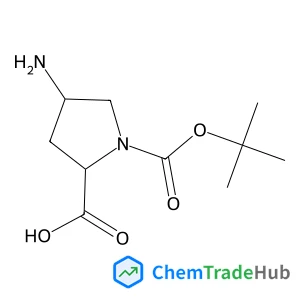
(2R,4R)-1-Boc-4-Aminopyrrolidine-2-carboxylic acid
CAS Number:
132622-98-1
Molecular Formula:
C10H18N2O4
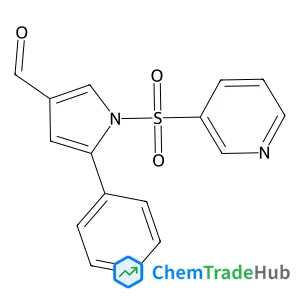
5-Phenyl-1-(pyridin-3-ylsulfonyl)-1H-pyrrole-3-carbaldehyde
CAS Number:
881676-90-0
Molecular Formula:
C16H12N2O3S


tert-Butyl 4-(2-(p-Tolylsulfonyl)hydrazono)piperidine-1-carboxylate
CAS Number:
1046478-89-0
Molecular Formula:
C17H25N3O4S
Recommended Suppliers





Disclaimer
This page provides academic journal information for reference and research purposes only. We are not affiliated with any journal publishers and do not handle publication submissions. For publication-related inquiries, please contact the respective journal publishers directly.
If you notice any inaccuracies in the information displayed, please contact us at support@chemtradehub.com. We will promptly review and address your concerns.