


Eight coordination with bis(bidentate) bridging ligands: zeolitic topology versus square grid networks
Literature Information
Publication Date
2007-12-17
DOI
10.1039/B717233H
Impact Factor
6.222
Authors
Jian-Yong Zhang, Ai-Ling Cheng, Qi Yue, Wei-Wei Sun, En-Qing Gao
View Original
Abstract
The assembly of the asymmetric bis(bidentate) 2-pyrimidinecarboxylate ligand with CdII produces a metal–organic framework with the RHO zeolitic topology, while 5-(2′-pyrimidyl)tetrazolate with CdII leads to square grid networks.
Recommended Journals

Journal of Heterocyclic Chemistry

European Journal of Wood and Wood Products

Fibre Chemistry

Journal of Catalysis

Molecular Pharmacology

Proceedings of the National Academy of Sciences of the United States of America

Pure and Applied Chemistry

Organic Preparations and Procedures International

Planta Medica

Science Progress
Related Literature
Synthesis and preliminary biological evaluations of [18F]-1-deoxy-1-fluoro-scyllo-inositol
Jason Chio, Mark Nitz, JoAnne McLaurin, Raymond M. Reilly
2009-08-11
Communication
DOI: 10.1039/B913317H
Chiral Pd aqua complex-catalyzed asymmetric C–C bond-forming reactions: a Brønsted acid–base cooperative system
Mikiko Sodeoka, Yoshitaka Hamashima
2009-08-17
Feature Article
DOI: 10.1039/B911015A
A synthetic receptor for hydrogen-bonding to fluorines of trifluoroborates
Per Restorp, Orion B. Berryman, Aaron C. Sather, Dariush Ajami, Julius Rebek Jr.
2009-09-04
Communication
DOI: 10.1039/B914171E
Exploring the size dependence of cyclic and acyclic π-systems on cation–π binding
Dolly Vijay, G. Narahari Sastry
2007-11-21
Paper
DOI: 10.1039/B713703F
The VUV electronic spectroscopy of acetone studied by synchrotron radiation
M. Nobre, A. Fernandes, F. Ferreira da Silva, R. Antunes, D. Almeida, V. Kokhan, S. V. Hoffmann, N. J. Mason, S. Eden
2007-11-16
Paper
DOI: 10.1039/B708580J
A novel smart organogel which could allow a two channel anion response by proton controlled reversible sol–gel transition and color changes
You-Ming Zhang, Qi Lin, Tai-Bao Wei, Xiao-Ping Qin, Yan Li
2009-08-27
Communication
DOI: 10.1039/B911125E
Mapping the resources and approaches facilitating computer-aided synthesis planning
Zheng Wang, Wei Zhao, Gefei Hao, Baoan Song
2020-08-28
Review Article
DOI: 10.1039/D0QO00946F
Single layer growth of sub-micron metal–organic framework crystals observed by in situatomic force microscopy
Neena S. John, Camilla Scherb, Maryiam Shöâeè, Michael W. Anderson, Martin P. Attfield, Thomas Bein
2009-09-07
Communication
DOI: 10.1039/B908299A
A sensitive and specific electrochemiluminescentl sensor for lead based on DNAzyme
Xi Zhu, Zhenyu Lin, Lifeng Chen, Bin Qiu, Guonan Chen
2009-08-21
Communication
DOI: 10.1039/B911191C
You might also like
Compound Q&A
Are there alternatives to 1-(4-Chlorophenyl)-N-hydroxymethanimine (CAS: 3848-36-0) in synthesis?
When considering alternatives to 1-(4-Chlorophenyl)-N-hydroxymethanimine (CAS: 3...
3848-36-01-(4-Chlorophenyl)-N...
Compound Q&A
How should (1R,9S,10S,12S,14E,16S,19R,20R,21S,22R)-3,9,21-Trihydroxy-5,10,12,14,16,20,22-heptamethyl-23,24-dioxatetracyclo[17.3.1.1~6,9~.0~2,7~]tetracosa-2,5,7,14-tetraen-4-one (CAS: 183202-73-5) be stored?
This compound should be stored in a cool, dry place away from direct sunlight. I...
183202-73-5(1R,9S,10S,12S,14E,1...
Compound Q&A
How is 3-(4-Bromophenyl)-5-(2-fluorophenyl)-1,2,4-oxadiazole (CAS: 419553-16-5) typically synthesized?
3-(4-Bromophenyl)-5-(2-fluorophenyl)-1,2,4-oxadiazole is synthesized through a m...
419553-16-53-(4-Bromophenyl)-5-...
Compound Q&A
How is 5-Chloro-2-(4-chlorophenyl)-4-methyl-6-[3-(1-piperidinyl)propoxy]pyrimidine (CAS: 1639220-19-1) typically synthesized?
5-Chloro-2-(4-chlorophenyl)-4-methyl-6-[3-(1-piperidinyl)propoxy]pyrimidine (CAS...
1639220-19-15-Chloro-2-(4-chloro...
Compound Q&A
What industries use 2-Chloro-4-(difluoromethoxy)pyridine (CAS: 1206978-15-5)?
2-Chloro-4-(difluoromethoxy)pyridine is used in the pharmaceutical industry for ...
1206978-15-52-Chloro-4-(difluoro...
Compound Q&A
What regulatory guidelines apply to 3-Chloro-6-methylpyridazine (CAS: 1121-79-5)?
3-Chloro-6-methylpyridazine (CAS: 1121-79-5) is classified under the Globally Ha...
1121-79-53-Chloro-6-methylpyr...
Compound Q&A
Are there alternatives to Methyl 4,5-dimethyl-2-nitrobenzoate in synthesis?
Several alternatives can be used in the synthesis of Methyl 4,5-dimethyl-2-nitro...
90922-74-0Methyl 4,5-dimethyl-...
Compound Q&A
Are there alternatives to (2E,2'E)-3,3'-(1,4-Phenylene)bisacrylaldehyde in synthesis?
Alternatives to (2E,2'E)-3,3'-(1,4-Phenylene)bisacrylaldehyde include other acry...
63405-68-5(2E,2'E)-3,3'-(1,4-P...
Compound Q&A
What is 3-Amino-5-chloropyridin-2-ol hydrochloride (CAS: 1261906-29-9)?
3-Amino-5-chloropyridin-2-ol hydrochloride is an organic compound with the CAS n...
1261906-29-93-Amino-5-chloropyri...
Compound Q&A
What precautions should be taken when handling 6,7-Difluoro-2,3-dihydro-4H-chromen-4-one (CAS: 1092349-93-3)?
When handling 6,7-Difluoro-2,3-dihydro-4H-chromen-4-one, it is essential to wear...
1092349-93-36,7-Difluoro-2,3-dih...
Source Journal
Chemical Communications

CiteScore:
8.6
Self-citation Rate:
4.7%
Articles per Year:
2458
ChemComm publishes urgent research which is of outstanding significance and interest to experts in the field, while also appealing to the journal’s broad chemistry readership. Our communication format is ideally suited to short, urgent studies that are of such importance that they require accelerated publication. Our scope covers all topics in chemistry, and research at the interface of chemistry and other disciplines (such as materials science, nanoscience, physics, engineering and biology) where there is a significant novelty in the chemistry aspects. Major topic areas covered include: Analytical Chemistry Catalysis Chemical Biology and medicinal chemistry Computational Chemistry and Machine Learning Energy and sustainable chemistry Environmental Chemistry Green Chemistry Inorganic Chemistry Materials Chemistry Nanoscience Organic Chemistry Physical Chemistry Polymer Chemistry Supramolecular Chemistry
Recommended Compounds
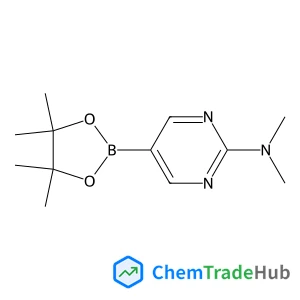
N,N-Dimethyl-5-(4,4,5,5-tetramethyl-1,3,2-dioxaborolan-2-yl)-2-pyrimidinamine
CAS Number:
1032759-30-0
Molecular Formula:
C12H20BN3O2
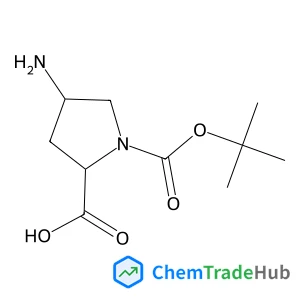
(2R,4R)-1-Boc-4-Aminopyrrolidine-2-carboxylic acid
CAS Number:
132622-98-1
Molecular Formula:
C10H18N2O4
Recommended Suppliers





Disclaimer
This page provides academic journal information for reference and research purposes only. We are not affiliated with any journal publishers and do not handle publication submissions. For publication-related inquiries, please contact the respective journal publishers directly.
If you notice any inaccuracies in the information displayed, please contact us at support@chemtradehub.com. We will promptly review and address your concerns.