












A unified mechanism for ice and water electrical conductivity from direct current to terahertz
Literature Information
Publication Date
2019-03-22
DOI
10.1039/C9CP00257J
Impact Factor
3.676
Authors
View Original
Abstract
Knowledge of the electrical properties of liquid and solid water is extremely important for a detailed understanding of their structures. Though the macroscopic parameters differ, ice and water still have much in common from the dielectric spectroscopy viewpoint and should thus be considered on the same footing for the study of their electrical properties. In this work, we treat the complete dielectric spectra of ice and water, covering fourteen orders in frequency magnitude. Introducing the notion of ‘excess proton gas’ we explain the similarities between ice and water, and derive a model which links together the infrared vibrations and the static conductivity and dielectric constant. This model provides a very good description of spectra up to 10 THz and reproduces well the temperature dependence of the dielectric constant for both ice and water. A new intermolecular polarization mechanism suitable for ice and water provides good insights for the understanding of their electrical properties.
Related Literature
[Zn(H2O)4][Zn2Sn3Se9(MeNH2)]: a robust open framework chalcogenide with a large nonlinear optical response
Manolis J. Manos, Joon I. Jang, John B. Ketterson, Mercouri G. Kanatzidis
2007-12-18
Communication
DOI: 10.1039/B712732D
Hydrogen adsorption in microporous hypercrosslinked polymers
Jun-Young Lee, Colin D. Wood, Darren Bradshaw, Matthew J. Rosseinsky, Andrew I. Cooper
2006-05-19
Communication
DOI: 10.1039/B604625H
Synthesis of para-sulfonatocalix[4]arene-modified silver nanoparticles as colorimetric histidine probes
Dejun Xiong, Mingliang Chen, Haibing Li
2007-12-18
Communication
DOI: 10.1039/B716270G
Highly active iridium(i) complexes for catalytic hydrogen isotope exchange
Jack A. Brown, Stephanie Irvine, Alan R. Kennedy, William J. Kerr, Shalini Andersson, Göran N. Nilsson
2008-01-03
Communication
DOI: 10.1039/B715938B
Molecular folding screen: folding and unfolding of 1,8-anthrylene–ethynylene oligomers by photochemical cycloaddition and thermal cycloreversion1
Shinji Toyota, Makoto Kuga, Akiko Takatsu, Michio Goichi, Tetsuo Iwanaga
2008-01-15
Communication
DOI: 10.1039/B717496A
First C-3 lithiation of DMAP: a new entry into chemical tuning of acylation catalysts
Philippe C. Gros, Abdelatif Doudouh, Christopher Woltermann
2006-05-22
Communication
DOI: 10.1039/B605170G
Active peroxo titanium complexes: syntheses, characterization and their potential in the photooxidation of 2-propanol
Markus Rohe, Klaus Merz
2007-12-19
Communication
DOI: 10.1039/B716199A
Direct synthesis of the 1,2,3-[C6H4PPP]− anion, isoelectronic with the indenyl anion [C6H4CHCHCH]−
Felipe García, Robert J. Less, Vesal Naseri, Mary McPartlin, Jeremy M. Rawson, Maria Sancho Tomas, Dominic S. Wright
2008-01-15
Communication
DOI: 10.1039/B718425E
Nickeladihydrofuran. Key intermediate for nickel-catalyzed reaction of alkyne and aldehyde
Sensuke Ogoshi, Tomoya Arai, Masato Ohashi, Hideo Kurosawa
2008-01-21
Communication
DOI: 10.1039/B717261C
Enantioselective synthesis of α-terpineol and nephthenol by intramolecular acyloxazolidinone enolate alkylations
Yinghua Jin, Robert M. Coates
2006-06-02
Communication
DOI: 10.1039/B605346G
You might also like
Compound Q&A
Are there alternatives to 1-(4-Chlorophenyl)-N-hydroxymethanimine (CAS: 3848-36-0) in synthesis?
When considering alternatives to 1-(4-Chlorophenyl)-N-hydroxymethanimine (CAS: 3...
3848-36-01-(4-Chlorophenyl)-N...
Compound Q&A
How should (1R,9S,10S,12S,14E,16S,19R,20R,21S,22R)-3,9,21-Trihydroxy-5,10,12,14,16,20,22-heptamethyl-23,24-dioxatetracyclo[17.3.1.1~6,9~.0~2,7~]tetracosa-2,5,7,14-tetraen-4-one (CAS: 183202-73-5) be stored?
This compound should be stored in a cool, dry place away from direct sunlight. I...
183202-73-5(1R,9S,10S,12S,14E,1...
Compound Q&A
How is 3-(4-Bromophenyl)-5-(2-fluorophenyl)-1,2,4-oxadiazole (CAS: 419553-16-5) typically synthesized?
3-(4-Bromophenyl)-5-(2-fluorophenyl)-1,2,4-oxadiazole is synthesized through a m...
419553-16-53-(4-Bromophenyl)-5-...
Compound Q&A
How is 5-Chloro-2-(4-chlorophenyl)-4-methyl-6-[3-(1-piperidinyl)propoxy]pyrimidine (CAS: 1639220-19-1) typically synthesized?
5-Chloro-2-(4-chlorophenyl)-4-methyl-6-[3-(1-piperidinyl)propoxy]pyrimidine (CAS...
1639220-19-15-Chloro-2-(4-chloro...
Compound Q&A
What industries use 2-Chloro-4-(difluoromethoxy)pyridine (CAS: 1206978-15-5)?
2-Chloro-4-(difluoromethoxy)pyridine is used in the pharmaceutical industry for ...
1206978-15-52-Chloro-4-(difluoro...
Compound Q&A
What regulatory guidelines apply to 3-Chloro-6-methylpyridazine (CAS: 1121-79-5)?
3-Chloro-6-methylpyridazine (CAS: 1121-79-5) is classified under the Globally Ha...
1121-79-53-Chloro-6-methylpyr...
Compound Q&A
Are there alternatives to Methyl 4,5-dimethyl-2-nitrobenzoate in synthesis?
Several alternatives can be used in the synthesis of Methyl 4,5-dimethyl-2-nitro...
90922-74-0Methyl 4,5-dimethyl-...
Compound Q&A
Are there alternatives to (2E,2'E)-3,3'-(1,4-Phenylene)bisacrylaldehyde in synthesis?
Alternatives to (2E,2'E)-3,3'-(1,4-Phenylene)bisacrylaldehyde include other acry...
63405-68-5(2E,2'E)-3,3'-(1,4-P...
Compound Q&A
What is 3-Amino-5-chloropyridin-2-ol hydrochloride (CAS: 1261906-29-9)?
3-Amino-5-chloropyridin-2-ol hydrochloride is an organic compound with the CAS n...
1261906-29-93-Amino-5-chloropyri...
Compound Q&A
What precautions should be taken when handling 6,7-Difluoro-2,3-dihydro-4H-chromen-4-one (CAS: 1092349-93-3)?
When handling 6,7-Difluoro-2,3-dihydro-4H-chromen-4-one, it is essential to wear...
1092349-93-36,7-Difluoro-2,3-dih...
Source Journal
Physical Chemistry Chemical Physics

CiteScore:
5.5
Self-citation Rate:
10.3%
Articles per Year:
3036
Physical Chemistry Chemical Physics (PCCP) is an international journal co-owned by 19 physical chemistry and physics societies from around the world. This journal publishes original, cutting-edge research in physical chemistry, chemical physics and biophysical chemistry. To be suitable for publication in PCCP, articles must include significant innovation and/or insight into physical chemistry; this is the most important criterion that reviewers and Editors will judge against when evaluating submissions. The journal has a broad scope and welcomes contributions spanning experiment, theory, computation and data science. Topical coverage includes spectroscopy, dynamics, kinetics, statistical mechanics, thermodynamics, electrochemistry, catalysis, surface science, quantum mechanics, quantum computing and machine learning. Interdisciplinary research areas such as polymers and soft matter, materials, nanoscience, energy, surfaces/interfaces, and biophysical chemistry are welcomed if they demonstrate significant innovation and/or insight into physical chemistry. Joined experimental/theoretical studies are particularly appreciated when complementary and based on up-to-date approaches.
Recommended Compounds
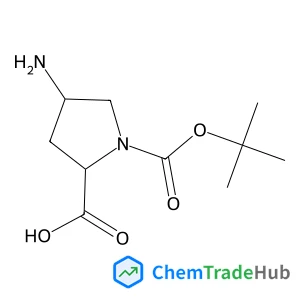
(2R,4R)-1-Boc-4-Aminopyrrolidine-2-carboxylic acid
CAS Number:
132622-98-1
Molecular Formula:
C10H18N2O4
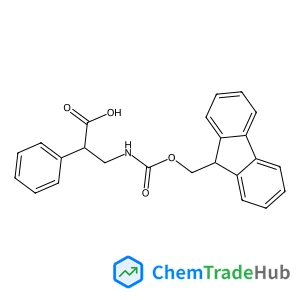
(S)-3-((((9H-Fluoren-9-yl)methoxy)carbonyl)amino)-2-phenylpropanoic acid
CAS Number:
1217663-60-9
Molecular Formula:
C24H21NO4
![2-{[(1R,2S)-2-Aminocyclohexyl]amino}-4-{[3-(2H-1,2,3-triazol-2-yl)phenyl]amino}-5-pyrimidinecarboxamide structure](https://static.chemtradehub.com/structs/137/1370261-96-3-40df.webp "2-{[(1R,2S)-2-Aminocyclohexyl]amino}-4-{[3-(2H-1,2,3-triazol-2-yl)phenyl]amino}-5-pyrimidinecarboxamide structure")
2-{[(1R,2S)-2-Aminocyclohexyl]amino}-4-{[3-(2H-1,2,3-triazol-2-yl)phenyl]amino}-5-pyrimidinecarboxamide
CAS Number:
1370261-96-3
Molecular Formula:
C19H23N9O
Recommended Suppliers




Disclaimer
This page provides academic journal information for reference and research purposes only. We are not affiliated with any journal publishers and do not handle publication submissions. For publication-related inquiries, please contact the respective journal publishers directly.
If you notice any inaccuracies in the information displayed, please contact us at support@chemtradehub.com. We will promptly review and address your concerns.