












![4-{1-[4-(4,4,5,5-Tetramethyl-1,3,2-dioxaborolan-2-yl)phenyl]cyclopropyl}morpholine structure](https://static.chemtradehub.com/structs/120/1206594-08-2-7afb.webp "4-{1-[4-(4,4,5,5-Tetramethyl-1,3,2-dioxaborolan-2-yl)phenyl]cyclopropyl}morpholine structure")
4-{1-[4-(4,4,5,5-Tetramethyl-1,3,2-dioxaborolan-2-yl)phenyl]cyclopropyl}morpholine
CAS Number:
1206594-08-2
Molecular Formula:
C19H28BNO3
Yaqing Zhang, Xiaoxi Chang, Xin Wang
In this study, a novel combination of quadruple-labeling luminescence strategy multiplexed immunoassay (QLL-MIA) and an automated pretreatment system for simultaneous extraction and determination of 20 fluoroquinolones (FQs), 15 β-lactams, 15 sulfonamides (SAs), and chloramphenicol (CAP) in milk was developed. The strategy integrated 2 fluorescence probes, and 2 chemiluminescence probes to achieve signal separation, and a new combination of a nucleic acid extraction system and immunomagnetic beads (IMBs) as the automated pretreatment system to achieve simultaneous determination of 51 drugs. Taking advantage of automated pretreatment system for concentrating milk sample with 5 times and saving the extraction time, the limits of detection (LODs) for FQs, β-lactams, SAs, and CAP in the QLL-MIA range from 29.1 ng L−1 for ciprofloxacin (CIP) to 8000.0 ng L−1 (8.0 μg L−1) for trovafloxacin (TRO), 20.0 ng L−1 for ceftiofur (CEF) to 3409.1 ng L−1 (3.4 μg L−1) for cephalexin (CEL), 8.6 ng L−1 for sulfadimethoxine (SDM) to 328.2 ng L−1 (0.3 μg L−1) for sulfadiazine (SDZ), and 6.0 ng L−1 for CAP. The recoveries ranged from 80.6% to 105.5% at a fortified concentration of LOD and 2 LOD, with a coefficient of variation <15%. Analysis of field milk samples by the combination of QLL-MIA and the automated pretreatment system (the developed QLL-MIA) was in accordance with that of liquid chromatography coupled with tandem mass spectrometry (LC-MS/MS). The above results demonstrated that the developed QLL-MIA could simultaneously screen trace amounts of FQs, β-lactams, SAs, and CAP in field samples, suitable for high-throughput screening of low-molecular weight contaminants.
M. Tsuji, Y. Tamaura
DOI: 10.1039/A907614J
Jinfeng Ma, Liandong Deng
DOI: 10.1039/C7PY02021J
Alexandre Simula, Vasiliki Nikolaou, Fehaid Alsubaie
DOI: 10.1039/C7PY90191G
S. Jagiella, H. G. Libuda, F. Zabel
DOI: 10.1039/A909557H
Jochen Willersinn, Bernhard V. K. J. Schmidt
DOI: 10.1039/C7PY01214D
Kengo Suzuki, Attila Demeter, Wolfgang Kühnle, Erich Tauer, Klaas A. Zachariasse, Seiji Tobita, Haruo Shizuka
DOI: 10.1039/A908924A
Abeer A. Alzahrani, Mohand Saed, Christopher M. Yakacki, Han Byul Song, Nancy Sowan, Joshua J. Walston, Parag K. Shah, Matthew K. McBride
DOI: 10.1039/C7PY01121K
Paul Winget, Eric J. Weber, Christopher J. Cramer, Donald G. Truhlar
DOI: 10.1039/A909076B
Xue Gu, Liuqiao Zhang, Ying Li, Wei Zhang, Jian Zhu, Zhengbiao Zhang
DOI: 10.1039/C7PY02125A
Ethyl 4-chlorothieno[2,3-b]pyridine-5-carboxylate (CAS: 59713-58-5) can be synth...
5-Methyl-1H-indole-3-carbaldehyde (CAS: 52562-50-2) is subject to various regula...
(1,3-Dimethyl-2,4-dioxo-1,2,3,4-tetrahydro-5-pyrimidinyl)boronic acid is a white...
Waste containing Sulfocostunolide A (CAS: 1016983-51-9) should be handled with c...
When handling Murraxocin (CAS: 88478-44-8), ensure proper personal protective eq...
Formvar (CAS: 63148-64-1) is an alkyd resin characterized by a high molecular we...
(S)-4-benzyl-2-((benzyloxy)methyl)morpholine is generally safe when handled with...
Methyl 1-(5-bromo-2-pyrimidinyl)cyclopropanecarboxylate (CAS: 1447607-69-3) is p...
2-Methyl-1-phenyl-1-propanamine hydrochloride (CAS: 24290-47-9) is generally con...
3-(4-Bromophenyl)-2-methylpropanoic acid is synthesized through a multi-step pro...
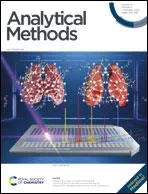
Analytical Methods welcomes early applications of new analytical and bioanalytical methods and technology demonstrating the potential for societal impact. We require that methods and technology reported in the journal are sufficiently innovative, robust, accurate, and compared to other available methods for the intended application. Developments with interdisciplinary approaches are particularly welcome. Systems should be proven with suitably complex and analytically challenging samples. We encourage developments within, but not limited to, the following technologies and applications: global health, point-of-care and molecular diagnostics biosensors and bioengineering drug development and pharmaceutical analysis applied microfluidics and nanotechnology omics studies, such as proteomics, metabolomics or glycomics environmental, agricultural and food science neuroscience biochemical and clinical analysis forensic analysis industrial process and method development
![Imidazo[1,5-a]pyrazine structure](https://static.chemtradehub.com/structs/274/274-49-7-d749.webp "Imidazo[1,5-a]pyrazine structure")
![9H-Fluoren-9-ylmethyl [(2S)-1-hydroxy-3-(1H-indol-3-yl)-2-propanyl]carbamate structure](https://static.chemtradehub.com/structs/153/153815-60-2-a67d.webp "9H-Fluoren-9-ylmethyl [(2S)-1-hydroxy-3-(1H-indol-3-yl)-2-propanyl]carbamate structure")






