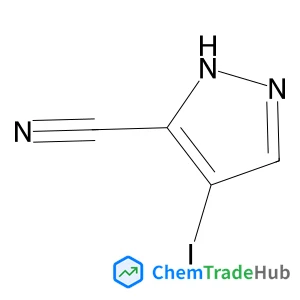
![4-[(1-Methyl-1H-pyrrol-2-yl)methylene]-1,3(2H,4H)-isoquinolinedione structure](https://static.chemtradehub.com/structs/110/1104546-89-5-a600.webp "4-[(1-Methyl-1H-pyrrol-2-yl)methylene]-1,3(2H,4H)-isoquinolinedione structure")
4-[(1-Methyl-1H-pyrrol-2-yl)methylene]-1,3(2H,4H)-isoquinolinedione
CAS Number:
1104546-89-5
Molecular Formula:
C15H12N2O2
Abeer A. Alzahrani, Mohand Saed, Christopher M. Yakacki, Han Byul Song, Nancy Sowan, Joshua J. Walston, Parag K. Shah, Matthew K. McBride
This study is the first to employ the use of the copper-catalyzed azide–alkyne cycloaddition (CuAAC) polymerization to form a tough and stiff, porous material from a well-defined network possessing a high glass transition temperature. The effect of the network linkages formed as a product of the CuAAC reaction, i.e., the triazoles, on the mechanical behavior at high strain was evaluated by comparing the CuAAC foam to an epoxy-amine-based foam, which consisted of monomers with similar backbone structures and mechanical properties (i.e., Tg of 115 °C and a rubbery modulus of 1.0 MPa for the CuAAC foam, Tg of 125 °C and a rubbery modulus of 1.2 MPa for the epoxy-amine foam). When each foam was compressed uniformly to 80% strain at ambient temperature, the epoxy-amine foam was severely damaged after only reaching 70% strain in the first compression cycle with a toughness of 300 MJ m−3. In contrast, the CuAAC foam exhibited pronounced ductile behavior in the glassy state with three times higher toughness of 850 MJ m−3 after the first cycle of compression to 80% strain. Additionally, when the CuAAC foam was heated above Tg after each of five compression cycles to 80% strain at ambient temperature, the foam completely recovered its original shape while exhibiting a gradual decrease in mechanical performance over the multiple compression cycles. The foam demonstrated almost complete shape fixity and recovery ratios even through five successive cycles, indicative of “reversible plasticity”, making it highly desirable as a glassy shape memory foams.

Journal of Medicinal Chemistry

Journal of Catalysis

Organic Preparations and Procedures International

Kinetics and Catalysis

Proceedings of the National Academy of Sciences of the United States of America

Helvetica Chimica Acta

Israel Journal of Chemistry

Russian Chemical Reviews

Journal of Heterocyclic Chemistry

Journal of Organometallic Chemistry
Ju-Won Jeon, Yuguang Ma, Jared F. Mike, Lin Shao, Perla B. Balbuena, Jodie L. Lutkenhaus
DOI: 10.1039/C3CP51620B
Anastasia Filtschew, Dominic Stranz, Christian Hess
DOI: 10.1039/C3CP51441B
Cheng-Tar Wu, Jin Qu, Joseph Elliott, Kai Man Kerry Yu, Shik Chi Edman Tsang
DOI: 10.1039/C3CP51619A
Sergei D. Ivanov, Alexander Witt, Dominik Marx
DOI: 10.1039/C3CP44523B
Els De Canck, Isabelle Ascoop, Abdelhamid Sayari, Pascal Van Der Voort
DOI: 10.1039/C3CP50393C
Wenliang Wang, Daodao Hu, Jian Lü
DOI: 10.1039/C3CP51275D
Siv G. Aalbergsjø, Eli O. Hole, Einar Sagstuen
DOI: 10.1039/C3CP50789K
De-Gong Wang, Li-Gang Niu, Bin-Bin Xu, Jun-Feng Song, Qi-Dai Chen, Hong-Bo Sun
DOI: 10.1039/C3CP44051F
Ethyl 4-chlorothieno[2,3-b]pyridine-5-carboxylate (CAS: 59713-58-5) can be synth...
5-Methyl-1H-indole-3-carbaldehyde (CAS: 52562-50-2) is subject to various regula...
(1,3-Dimethyl-2,4-dioxo-1,2,3,4-tetrahydro-5-pyrimidinyl)boronic acid is a white...
Waste containing Sulfocostunolide A (CAS: 1016983-51-9) should be handled with c...
When handling Murraxocin (CAS: 88478-44-8), ensure proper personal protective eq...
Formvar (CAS: 63148-64-1) is an alkyd resin characterized by a high molecular we...
(S)-4-benzyl-2-((benzyloxy)methyl)morpholine is generally safe when handled with...
Methyl 1-(5-bromo-2-pyrimidinyl)cyclopropanecarboxylate (CAS: 1447607-69-3) is p...
2-Methyl-1-phenyl-1-propanamine hydrochloride (CAS: 24290-47-9) is generally con...
3-(4-Bromophenyl)-2-methylpropanoic acid is synthesized through a multi-step pro...

Polymer Chemistry welcomes submissions in all areas of polymer science that have a strong focus on macromolecular chemistry. Manuscripts may cover a broad range of fields, yet no direct application focus is required.
![Sodium 6-amino-3-[(E)-{4-[(E)-(4-aminophenyl)diazenyl]-2-methoxy-5-methylphenyl}diazenyl]-4-hydroxy-2-naphthalenesulfonate structure](https://static.chemtradehub.com/structs/294/2945-96-2-092f.webp "Sodium 6-amino-3-[(E)-{4-[(E)-(4-aminophenyl)diazenyl]-2-methoxy-5-methylphenyl}diazenyl]-4-hydroxy-2-naphthalenesulfonate structure")
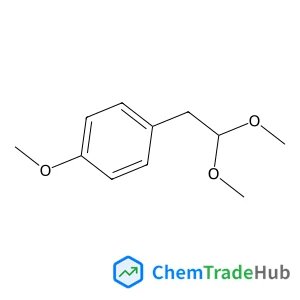
![2-Methyl-2-propanyl 1,6-diazaspiro[3.4]octane-6-carboxylate structure](https://static.chemtradehub.com/structs/115/1158749-79-1-81ee.webp "2-Methyl-2-propanyl 1,6-diazaspiro[3.4]octane-6-carboxylate structure")