












Pure hydrophilic block copolymer vesicles with redox- and pH-cleavable crosslinks
Literature Information
Publication Date
2017-08-22
DOI
10.1039/C7PY01214D
Impact Factor
5.582
Authors
Jochen Willersinn, Bernhard V. K. J. Schmidt
View Original
Abstract
The self-assembly of a novel double hydrophilic block copolymer consisting of biocompatible blocks, namely pullulan-b-poly(N-vinylpyrrolidone), is presented. Completely hydrophilic spherical structures with an average apparent radius of 800 nm at increased concentrations in water are observed via dynamic light scattering as well as cryo scanning electron microscopy and confocal laser scanning microscopy techniques. Moreover, the pullulan block is converted to present aldehyde groups acting as anchor point for crosslinker attachments. It is demonstrated, that the oxidized self-assembled particles could be crosslinked via the bifunctional crosslinker cystamine forming dynamic covalent imine linkages with aldehyde groups. The afforded vesicles with an average diameter of 700 nm are stable upon high dilution and could be observed via cryo scanning electron microscopy and transmission electron microscopy. Furthermore, it is possible to cleave the crosslinking bonds with the treatment of acid or the application of a reducing agent. The responsivity is a key feature taking future applications in the biomedical sector into account.
Recommended Journals
Related Literature
Theoretical prediction of new noble-gas molecules FNgBNR (Ng = Ar, Kr, and Xe; R = H, CH3, CCH, CHCH2, F, and OH)
Jien-Lian Chen, Chang-Yu Yang, Hsiao-Jing Lin, Wei-Ping Hu
2013-04-11
Paper
DOI: 10.1039/C3CP50447F
pH in atomic scale simulations of electrochemical interfaces
Jan Rossmeisl, Rizwan Ahmed, Vladimir Tripković, Mårten E. Björketun
2013-05-10
Communication
DOI: 10.1039/C3CP51083B
Catalyst driven optical properties of the self – assembled ZnS nanostructures
M. Hafeez, S. Rehman, U. Manzoor, M. A. Khan, A. S. Bhatti
2013-04-15
Paper
DOI: 10.1039/C3CP50534K
Mechanism of NO2 storage in ceria studied using combined in situ Raman/FT-IR spectroscopy
Anastasia Filtschew, Dominic Stranz, Christian Hess
2013-04-26
Communication
DOI: 10.1039/C3CP51441B
Hydroxyl radical oxidation of phospholipid-coated NaCl particles
Christopher W. Dilbeck, Barbara J. Finlayson-Pitts
2013-05-02
Paper
DOI: 10.1039/C3CP51237A
Stepping stones in the electron transport from cells to electrodes in Geobacter sulfurreducens biofilms
Pablo Sebastián Bonanni, Diego Massazza, Juan Pablo Busalmen
2013-05-01
Perspective
DOI: 10.1039/C3CP50411E
C72: gaudiene, a hollow and aromatic all-carbon molecule
Dage Sundholm
2013-04-18
Communication
DOI: 10.1039/C3CP51042E
Plasmonic staining of DNA molecules with photo-induced Ag nanoparticles monitored using dark-field microscopy‡
Yuko S. Yamamoto, Ken Hirano, Tomomi Ishido, Norio Murase, Tamitake Itoh
2013-05-09
Communication
DOI: 10.1039/C3CP51494C
Unraveling the adsorption mechanism of aromatic and aliphatic diols on the TiO2 surface: a density functional theory analysis
Hiroshi Segawa, Koichi Yamashita
2013-04-08
Paper
DOI: 10.1039/C3CP50879J
You might also like
Compound Q&A
How is Ethyl 4-chlorothieno[2,3-b]pyridine-5-carboxylate (CAS: 59713-58-5) typically synthesized?
Ethyl 4-chlorothieno[2,3-b]pyridine-5-carboxylate (CAS: 59713-58-5) can be synth...
59713-58-5Ethyl 4-chlorothieno...
Compound Q&A
What regulatory guidelines apply to 5-Methyl-1H-indole-3-carbaldehyde (CAS: 52562-50-2)?
5-Methyl-1H-indole-3-carbaldehyde (CAS: 52562-50-2) is subject to various regula...
52562-50-25-Methyl-1H-indole-3...
Compound Q&A
What are the physical and chemical properties of (1,3-Dimethyl-2,4-dioxo-1,2,3,4-tetrahydro-5-pyrimidinyl)boronic acid (CAS: 223418-73-3)?
(1,3-Dimethyl-2,4-dioxo-1,2,3,4-tetrahydro-5-pyrimidinyl)boronic acid is a white...
223418-73-3(1,3-Dimethyl-2,4-di...
Compound Q&A
How should waste containing Sulfocostunolide A (CAS: 1016983-51-9) be handled?
Waste containing Sulfocostunolide A (CAS: 1016983-51-9) should be handled with c...
1016983-51-9Sulfocostunolide A
Compound Q&A
What precautions should be taken when handling Murraxocin (CAS: 88478-44-8)?
When handling Murraxocin (CAS: 88478-44-8), ensure proper personal protective eq...
88478-44-8Murraxocin
Compound Q&A
What are the physical and chemical properties of Formvar (CAS: 63148-64-1)?
Formvar (CAS: 63148-64-1) is an alkyd resin characterized by a high molecular we...
63148-64-1Formvar(R)
Compound Q&A
Is (S)-4-benzyl-2-((benzyloxy)methyl)morpholine (CAS: 205242-66-6) safe?
(S)-4-benzyl-2-((benzyloxy)methyl)morpholine is generally safe when handled with...
205242-66-6(S)-4-benzyl-2-((ben...
Compound Q&A
What industries use Methyl 1-(5-bromo-2-pyrimidinyl)cyclopropanecarboxylate (CAS: 1447607-69-3)?
Methyl 1-(5-bromo-2-pyrimidinyl)cyclopropanecarboxylate (CAS: 1447607-69-3) is p...
1447607-69-3Methyl 1-(5-bromo-2-...
Compound Q&A
Is 2-Methyl-1-phenyl-1-propanamine hydrochloride (CAS: 24290-47-9) safe?
2-Methyl-1-phenyl-1-propanamine hydrochloride (CAS: 24290-47-9) is generally con...
24290-47-92-Methyl-1-phenyl-1-...
Compound Q&A
How is 3-(4-Bromophenyl)-2-methylpropanoic acid (CAS: 66735-01-1) typically synthesized?
3-(4-Bromophenyl)-2-methylpropanoic acid is synthesized through a multi-step pro...
66735-01-13-(4-Bromophenyl)-2-...
Source Journal
Polymer Chemistry

CiteScore:
8.6
Self-citation Rate:
7.3%
Articles per Year:
457
Polymer Chemistry welcomes submissions in all areas of polymer science that have a strong focus on macromolecular chemistry. Manuscripts may cover a broad range of fields, yet no direct application focus is required.
Recommended Compounds
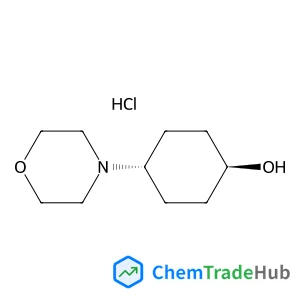
trans-4-(4-Morpholinyl)cyclohexanol hydrochloride (1:1)
CAS Number:
1588441-09-1
Molecular Formula:
C10H20ClNO2
![[2-(Benzyloxy)-3-bromo-5-methylphenyl]boronic acid structure](https://static.chemtradehub.com/structs/870/870777-20-1-24ac.webp "[2-(Benzyloxy)-3-bromo-5-methylphenyl]boronic acid structure")
[2-(Benzyloxy)-3-bromo-5-methylphenyl]boronic acid
CAS Number:
870777-20-1
Molecular Formula:
C14H14BBrO3
Recommended Suppliers




Disclaimer
This page provides academic journal information for reference and research purposes only. We are not affiliated with any journal publishers and do not handle publication submissions. For publication-related inquiries, please contact the respective journal publishers directly.
If you notice any inaccuracies in the information displayed, please contact us at support@chemtradehub.com. We will promptly review and address your concerns.