


Disassembly-driven signal turn-on probes for bimodal detection of DNA with 19F NMR and fluorescence
Literature Information
Publication Date
2018-09-14
DOI
10.1039/C8OB02218F
Impact Factor
3.876
Authors
Takashi Sakamoto, Daisaku Hasegawa, Kenzo Fujimoto
View Original
Abstract
To image DNAs in vivo, molecular probes that can detect DNA with a highly transparent signal are required. In this study, we designed and synthesized amphiphilic molecular probes that can detect DNA with a highly transparent 19F NMR signal in a signal turn-on manner based on the self-assembly and target-dependent-disassembly of the probe molecules in aqueous solution. Fluorescence and dynamic light scattering studies revealed that these amphiphilic probes consisting of bisbenzimide H 33258 and 3,5-bis(trifluoromethyl)benzene are assembled and form aggregates in aqueous solution, and that the aggregates are collapsed when the probes bind to double-stranded DNA via selective interaction between the bisbenzimide H 33258 moiety and AATT double-stranded region of DNA. Since the target-dependent-disassembly of the probes caused turn-on of 19F NMR and fluorescence signals, bimodal detection of double-stranded DNA was successfully achieved.
Recommended Journals

Current Opinion in Solid State & Materials Science

Nature Medicine

Russian Journal of Applied Chemistry

Crystallography Reports

Russian Journal of Coordination Chemistry

Chemistry Education Research and Practice

New Journal of Chemistry

Journal of Natural Medicines

Saudi Pharmaceutical Journal

Journal of Peptide Science
Related Literature
Synthesis and optoelectronic properties of benzodithiophene-based conjugated polymers with hydrogen bonding nucleobase side chain functionality
Sina Sabury, Tyler J. Adams, Margaret Kocherga, Michael G. Walter
2020-08-11
Paper
DOI: 10.1039/D0PY00972E
Direct fluorination as a one-step ATRP initiator immobilization for convenient surface grafting of phenyl ring-containing substrates
Taijun He, Zhenyu Xing, Yixing Wang, Difeng Wu, Yang Liu, Xiangyang Liu
2020-07-31
Paper
DOI: 10.1039/D0PY00860E
Propylene homopolymerization and copolymerization with ethylene by acenaphthene-based α-diimine nickel complexes to access EPR-like elastomers
Heng Liu, Chunyu Zhang, Xuequan Zhang
2021-10-12
Paper
DOI: 10.1039/D1PY00923K
Recent developments in stimuli-responsive luminescent polymers composed of boron compounds
Shunichiro Ito, Masayuki Gon, Kazuo Tanaka, Yoshiki Chujo
2021-10-01
Review Article
DOI: 10.1039/D1PY01170G
Block copolymers comprising degradable poly(2-ethyl-2-oxazoline) analogues via copper-free click chemistry
2021-08-20
Paper
DOI: 10.1039/D1PY00853F
Biobased poly(ester-co-glycoside) from reactive natural Brønsted acidic deep eutectic solvent analogue
Gabriel Duaux, Etienne Fleury, Daniel Portinha
2021-08-27
Paper
DOI: 10.1039/D1PY00990G
High-performance polyamides with engineered disorder
Julien Cretenoud, Sandor Balog, Véronique Michaud, Jean-Marc Chenal, Olivier Lame, Christopher J. G. Plummer, Holger Frauenrath
2021-10-15
Paper
DOI: 10.1039/D1PY01225H
Synthesis and sequencing of informational poly(amino phosphodiester)s
Ian Roszak, Laurence Oswald, Abdelaziz Al Ouahabi, Eline Laurent, Olivier Felix, Isaure Carvin-Sergent, Laurence Charles, Jean-François Lutz
2021-09-13
Communication
DOI: 10.1039/D1PY01052B
Impact of multi-vinyl taxogen dimensions on high molecular weight soluble polymer synthesis using transfer-dominated branching radical telomerisation
Oliver B. Penrhyn-Lowe, Sean Flynn, Savannah R. Cassin, Samuel Mckeating, Sarah Lomas, Stephen Wright, Pierre Chambon, Steve P. Rannard
2021-10-22
Paper
DOI: 10.1039/D1PY01103K
You might also like
Compound Q&A
What is the market or research trend for N-(4-Methoxybenzyl)-2-pyridinamine (CAS: 52818-63-0)?
N-(4-Methoxybenzyl)-2-pyridinamine (CAS: 52818-63-0) is increasingly being used ...
52818-63-0N-(4-Methoxybenzyl)-...
Compound Q&A
What precautions should be taken when handling Ethyl 4-(2-chlorophenyl)-1,3-thiazole-2-carboxylate (CAS: 1050507-06-6)?
When handling Ethyl 4-(2-chlorophenyl)-1,3-thiazole-2-carboxylate, appropriate p...
1050507-06-6Ethyl 4-(2-chlorophe...
Compound Q&A
What regulatory guidelines apply to diethyldiselane (CAS: 628-39-7)?
Diethyldiselane (CAS: 628-39-7) is classified under the Globally Harmonized Syst...
628-39-7Diethyldiselane
Compound Q&A
What is the market or research trend for oxocopper (CAS: 12053-18-8)?
The market for oxocopper (CAS: 12053-18-8) is primarily driven by its use in cat...
12053-18-8oxocopper; oxo-(oxoc...
Compound Q&A
What is the market or research trend for 5-{[(2-Methyl-2-propanyl)oxy]carbonyl}-5-azaspiro[2.4]heptane-7-carboxylic acid?
The market for 5-{[(2-Methyl-2-propanyl)oxy]carbonyl}-5-azaspiro[2.4]heptane-7-c...
1268519-54-55-{[(2-Methyl-2-prop...
Compound Q&A
What is 2-(1-Pyrrolidinyl)-4-pyridinamine (CAS: 35981-63-6)?
2-(1-Pyrrolidinyl)-4-pyridinamine is a chemical compound with the CAS number 359...
35981-63-62-(1-Pyrrolidinyl)-4...
Compound Q&A
What are the physical and chemical properties of 2-(3-Pyridinyl)-1-azabicyclo[2.2.2]octane (CAS: 91556-75-1)?
2-(3-Pyridinyl)-1-azabicyclo[2.2.2]octane (CAS: 91556-75-1) is a crystalline sol...
91556-75-12-(3-Pyridinyl)-1-az...
Compound Q&A
How is (S)-Alpha-allyl-proline hydrochloride (CAS: 129704-91-2) typically synthesized?
(S)-Alpha-allyl-proline hydrochloride is usually synthesized via a Wittig reacti...
129704-91-2(S)-Alpha-allyl-prol...
Compound Q&A
What is 3-Methyl-1,2-oxazole-5-carboxylic acid (CAS: 4857-42-5)?
3-Methyl-1,2-oxazole-5-carboxylic acid (CAS: 4857-42-5) is an organic compound w...
4857-42-53-Methyl-1,2-oxazole...
Compound Q&A
How is Lys-SMCC-DM1 (CAS: 1281816-04-3) typically synthesized?
Lys-SMCC-DM1 is synthesized via a multi-step process involving the coupling of S...
1281816-04-3Lys-SMCC-DM1
Source Journal
Organic & Biomolecular Chemistry

CiteScore:
3.4
Self-citation Rate:
10.3%
Articles per Year:
1041
Organic & Biomolecular Chemistry (OBC) publishes original and high impact research and reviews in organic chemistry. We welcome research that shows new or significantly improved protocols or methodologies in total synthesis, synthetic methodology or physical and theoretical organic chemistry as well as research that shows a significant advance in the organic chemistry or molecular design aspects of chemical biology, catalysis, supramolecular and macromolecular chemistry, theoretical chemistry, mechanism-oriented physical organic chemistry, medicinal chemistry or natural products. Articles published in the journal should report new work which makes a highly-significant impact in the field. Routine and incremental work is generally not suitable for publication in the journal. More details about key areas of our scope are below. In all cases authors should include in their article clear rationale for why their research has been carried out.
Recommended Compounds

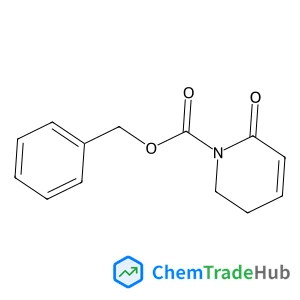
Benzyl 6-oxo-3,6-dihydro-1(2H)-pyridinecarboxylate
CAS Number:
725746-35-0
Molecular Formula:
C13H13NO3
Recommended Suppliers







Disclaimer
This page provides academic journal information for reference and research purposes only. We are not affiliated with any journal publishers and do not handle publication submissions. For publication-related inquiries, please contact the respective journal publishers directly.
If you notice any inaccuracies in the information displayed, please contact us at support@chemtradehub.com. We will promptly review and address your concerns.