












Impact of multi-vinyl taxogen dimensions on high molecular weight soluble polymer synthesis using transfer-dominated branching radical telomerisation
Literature Information
Publication Date
2021-10-22
DOI
10.1039/D1PY01103K
Impact Factor
5.582
Authors
Oliver B. Penrhyn-Lowe, Sean Flynn, Savannah R. Cassin, Samuel Mckeating, Sarah Lomas, Stephen Wright, Pierre Chambon, Steve P. Rannard
View Original
Abstract
Complex macromolecular architectures offer innovation opportunities through the formation of new polymers with novel physical and chemical behaviour. Optimally existing commercial feedstocks are used as the introduction of new small molecule chemistries may extend regulatory requirements at high expense. In a highly orthogonal synthesis strategy, we recently utilised telomerisation approaches, conventionally targeting small molecule dimerisation, to generate high molecular weight branched polymers. Transfer-dominated Branching Radical Telomerisation (TBRT) employs radical reactions, but yields branched polymers with extended backbones resembling those conventionally formed via step-growth polymerisation. Here we examine the impact of taxogen dimensions on the outcomes of TBRT using multi-vinyl taxogens ethylene glycol dimethacrylate (EGDMA), 1,6-hexanediol dimethacrylate (HDMA) and 1,12-dodecanediol dimethacrylate (LDMA). Marked differences in gelation behaviours were correlated to the dimensions of the taxogen, notably due to the shifting balance of intermolecular and intramolecular branching processes occuring during TBRT.
Related Literature
A dual chemosensor for Cu2+ and Hg2+ based on a rhodamine-terminated water-soluble polymer in 100% aqueous solution
Guang Li, Liping Bai, Farong Tao, Aixia Deng, Liping Wang
2018-09-17
Paper
DOI: 10.1039/C8AN01130C
Estimating and correcting interference fringes in infrared spectra in infrared hyperspectral imaging
Ghazal Azarfar, Ebrahim Aboualizadeh, Nicholas M. Walter, Simona Ratti, Camilla Olivieri, Alessandra Norici, Michael Nasse, Achim Kohler, Mario Giordano
2018-09-03
Paper
DOI: 10.1039/C8AN00093J
Pushing the frontiers: boron-11 NMR as a method for quantitative boron analysis and its application to determine boric acid in commercial biocides
Luis Manuel Aguilera-Sáez, José Raúl Belmonte-Sánchez, Roberto Romero-González, José Luis Martínez Vidal, Francisco Javier Arrebola, Antonia Garrido Frenich, Ignacio Fernández
2018-09-05
Paper
DOI: 10.1039/C8AN00505B
A novel electrochemical immunoassay for carcinoembryonic antigen based on glucose oxidase-encapsulated nanogold hollow spheres with a pH meter readout
Yu Jiang, Zhiying Su, Jian Zhang, Meijiao Cai, Lili Wu
2018-09-13
Paper
DOI: 10.1039/C8AN01436A
On-line coupling between capillary electrophoresis and microscale thermophoresis (CE–MST); the proof-of-concept
Paweł M. Nowak, Michał Woźniakiewicz
2018-09-07
Communication
DOI: 10.1039/C8AN01191E
Can all bulk-phase reactions be accelerated in microdroplets?
Shibdas Banerjee, Elumalai Gnanamani, Xin Yan, Richard N. Zare
2017-03-14
Perspective
DOI: 10.1039/C6AN02225A
Raman spectroscopy and multivariate analysis for the non invasive diagnosis of clinically inconclusive vulval lichen sclerosus
Linmarie Ludeman, Kathryn Hillaby, Robert Gornall, Gavin Lloyd, Catherine Kendall, Angela C. Shore, Nick Stone
2016-11-03
Paper
DOI: 10.1039/C6AN02009G
Simultaneous viscosity and density measurement of small volumes of liquids using a vibrating microcantilever
A. F. Payam, W. Trewby, K. Voïtchovsky
2017-03-20
Paper
DOI: 10.1039/C6AN02674E
An up-converting phosphor technology-based lateral flow assay for point-of-collection detection of morphine and methamphetamine in saliva
Qiushi Hu, Qiaozhen Wei, Pingping Zhang, Shuang Li, Lei Xue, Ruifu Yang, Lei Zhou
2018-08-01
Paper
DOI: 10.1039/C8AN00651B
Near-infrared broadband cavity-enhanced sensor system for methane detection using a wavelet-denoising assisted Fourier-transform spectrometer
Kaiyuan Zheng, Chuantao Zheng, Zidi Liu, Qixin He, Qiaoling Du, Yu Zhang, Yiding Wang, Frank K. Tittel
2018-08-29
Paper
DOI: 10.1039/C8AN01290C
You might also like
Compound Q&A
What is the market or research trend for N-(4-Methoxybenzyl)-2-pyridinamine (CAS: 52818-63-0)?
N-(4-Methoxybenzyl)-2-pyridinamine (CAS: 52818-63-0) is increasingly being used ...
52818-63-0N-(4-Methoxybenzyl)-...
Compound Q&A
What precautions should be taken when handling Ethyl 4-(2-chlorophenyl)-1,3-thiazole-2-carboxylate (CAS: 1050507-06-6)?
When handling Ethyl 4-(2-chlorophenyl)-1,3-thiazole-2-carboxylate, appropriate p...
1050507-06-6Ethyl 4-(2-chlorophe...
Compound Q&A
What regulatory guidelines apply to diethyldiselane (CAS: 628-39-7)?
Diethyldiselane (CAS: 628-39-7) is classified under the Globally Harmonized Syst...
628-39-7Diethyldiselane
Compound Q&A
What is the market or research trend for oxocopper (CAS: 12053-18-8)?
The market for oxocopper (CAS: 12053-18-8) is primarily driven by its use in cat...
12053-18-8oxocopper; oxo-(oxoc...
Compound Q&A
What is the market or research trend for 5-{[(2-Methyl-2-propanyl)oxy]carbonyl}-5-azaspiro[2.4]heptane-7-carboxylic acid?
The market for 5-{[(2-Methyl-2-propanyl)oxy]carbonyl}-5-azaspiro[2.4]heptane-7-c...
1268519-54-55-{[(2-Methyl-2-prop...
Compound Q&A
What is 2-(1-Pyrrolidinyl)-4-pyridinamine (CAS: 35981-63-6)?
2-(1-Pyrrolidinyl)-4-pyridinamine is a chemical compound with the CAS number 359...
35981-63-62-(1-Pyrrolidinyl)-4...
Compound Q&A
What are the physical and chemical properties of 2-(3-Pyridinyl)-1-azabicyclo[2.2.2]octane (CAS: 91556-75-1)?
2-(3-Pyridinyl)-1-azabicyclo[2.2.2]octane (CAS: 91556-75-1) is a crystalline sol...
91556-75-12-(3-Pyridinyl)-1-az...
Compound Q&A
How is (S)-Alpha-allyl-proline hydrochloride (CAS: 129704-91-2) typically synthesized?
(S)-Alpha-allyl-proline hydrochloride is usually synthesized via a Wittig reacti...
129704-91-2(S)-Alpha-allyl-prol...
Compound Q&A
What is 3-Methyl-1,2-oxazole-5-carboxylic acid (CAS: 4857-42-5)?
3-Methyl-1,2-oxazole-5-carboxylic acid (CAS: 4857-42-5) is an organic compound w...
4857-42-53-Methyl-1,2-oxazole...
Compound Q&A
How is Lys-SMCC-DM1 (CAS: 1281816-04-3) typically synthesized?
Lys-SMCC-DM1 is synthesized via a multi-step process involving the coupling of S...
1281816-04-3Lys-SMCC-DM1
Source Journal
Polymer Chemistry

CiteScore:
8.6
Self-citation Rate:
7.3%
Articles per Year:
457
Polymer Chemistry welcomes submissions in all areas of polymer science that have a strong focus on macromolecular chemistry. Manuscripts may cover a broad range of fields, yet no direct application focus is required.
Recommended Compounds
![5'-Fluoro-[2,3'-biindolinylidene]-2',3-dione structure](https://static.chemtradehub.com/structs/251/251903-00-1-9cb1.webp "5'-Fluoro-[2,3'-biindolinylidene]-2',3-dione structure")
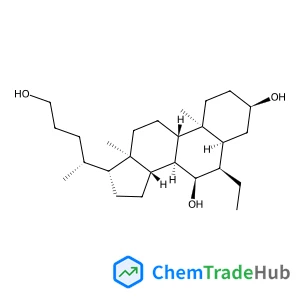
(3alpha,5beta,6alpha,7alpha)-6-Ethylcholane-3,7,24-triol
CAS Number:
1537866-49-1
Molecular Formula:
C26H46O3
Recommended Suppliers





Disclaimer
This page provides academic journal information for reference and research purposes only. We are not affiliated with any journal publishers and do not handle publication submissions. For publication-related inquiries, please contact the respective journal publishers directly.
If you notice any inaccuracies in the information displayed, please contact us at support@chemtradehub.com. We will promptly review and address your concerns.