












Analysis of poly(ADP-ribose) polymerase-1 by enzyme-initiated auto-PARylation-controlled aggregation of hemin-graphene nanocomposites
Literature Information
Publication Date
2018-04-04
DOI
10.1039/C8AN00009C
Impact Factor
4.616
Authors
Yong Liu, Xiaolin Xu, Ensheng Xu, Shuangshuang Wu, Wei Wei, Jin Chen
View Original
Abstract
Poly(ADP-ribose) polymerase-1 (PARP-1) is a highly conserved nuclear enzyme, which binds tightly to damaged DNA and plays a key role in DNA repair, recombination, proliferation, and genomic stability. However, due to the poor electrochemical and optical activity of PARP-1 and its product PAR, only a few studies on its activity detection method have been reported. Herein, we report a simple and sensitive colorimetric strategy to monitor PARP-1 activity based on enzyme-initiated auto-PARylation-controlled aggregation of hemin-graphene nanocomposites (H-GNs). PARP, activated by dsDNA, catalyzed its substrate nicotinamide adenine dinucleotide (NAD+) to polymerize as a poly(ADP-ribose) polymer (PAR). PAR possesses several negative charges, and its charge density is twice that of a single-stranded DNA, which greatly impacts the dispersibility of H-GNs; due to their peroxidase-like catalytic activities, H-GNs can catalyze the chromogenic reaction of TMB and H2O2. As a result, in the presence of different PARP-1 activities, the supernatant of the corresponding solution contained different amounts of dispersed H-GNs and showed different colors after the chromogenic reaction that could be discerned easily by the absorbance or the color changes of the solution. The method was simple, sensitive, and reliable. The proposed method displays a linear range from 0.05 to 1 U with a detection limit of 0.03 U. In addition, this new method has been successfully applied to detect PARP-1 activity in human serum and different cancer cells and evaluate PARP-1 inhibitors.
Related Literature
Thermo-osmotic pressure and resistance to mass transport in a vapor-gap membrane
Michael T. Rauter, Sondre K. Schnell, Bjørn Hafskjold, Signe Kjelstrup
2021-06-04
Paper
DOI: 10.1039/D0CP06556K
The origin of the faster mechanism of partial enthalpy recovery deep in the glassy state of polymers
2021-05-24
Paper
DOI: 10.1039/D1CP01445E
Molecular insights into the binding variance of the SARS-CoV-2 spike with human, cat and dog ACE2 proteins
Yongjian Zang, Xuhua Li, Yizhen Zhao, He Wang, Dongxiao Hao, Lei Zhang, Zhiwei Yang, Xiaohui Yuan, Shengli Zhang
2021-06-03
Paper
DOI: 10.1039/D1CP01611C
Controlled 2H/1T phase transition in MoS2 monolayers by a strong interface with M2C MXenes: a computational study
Zhongxu Wang, Yu Liu, FengYu Li, Jingxiang Zhao
2021-08-25
Paper
DOI: 10.1039/D1CP02648H
The necessity of periodic boundary conditions for the accurate calculation of crystalline terahertz spectra
Peter A. Banks, Luke Burgess, Michael T. Ruggiero
2021-09-08
Perspective
DOI: 10.1039/D1CP02496E
Entropic analysis of bistability and the general evolution criterion
David Hochberg, Josep M. Ribó
2021-06-01
Paper
DOI: 10.1039/D1CP01236C
Photophysical properties of N-methyl and N-acetyl substituted alloxazines: a theoretical investigation
Huimin Guo, Xiaolin Ma, Zhiwen Lei, Yang Qiu, Jianzhang Zhao, Bernhard Dick
2021-05-25
Paper
DOI: 10.1039/D1CP01201K
Gaseous cyclodextrin-closo-dodecaborate complexes χCD·B12X122− (χ = α, β, and γ; X = F, Cl, Br, and I): electronic structures and intramolecular interactions
Yanrong Jiang, Qinqin Yuan, Wenjin Cao, Marc C. Nierstenhöfer, Zhipeng Li, Yan Yang, Cheng Zhong, Carsten Jenne, Xue-Bin Wang
2021-04-26
Paper
DOI: 10.1039/D1CP01131F
Surface electronic states mediate concerted electron and proton transfer at metal nanoscale interfaces for catalytic hydride reduction of –NO2 to –NH2
Bing-Qian Shan, Jia-Feng Zhou, Meng Ding, Xiao-Dan Hu
2021-05-25
Communication
DOI: 10.1039/D1CP01792F
You might also like
Compound Q&A
What is the market or research trend for N-(4-Methoxybenzyl)-2-pyridinamine (CAS: 52818-63-0)?
N-(4-Methoxybenzyl)-2-pyridinamine (CAS: 52818-63-0) is increasingly being used ...
52818-63-0N-(4-Methoxybenzyl)-...
Compound Q&A
What precautions should be taken when handling Ethyl 4-(2-chlorophenyl)-1,3-thiazole-2-carboxylate (CAS: 1050507-06-6)?
When handling Ethyl 4-(2-chlorophenyl)-1,3-thiazole-2-carboxylate, appropriate p...
1050507-06-6Ethyl 4-(2-chlorophe...
Compound Q&A
What regulatory guidelines apply to diethyldiselane (CAS: 628-39-7)?
Diethyldiselane (CAS: 628-39-7) is classified under the Globally Harmonized Syst...
628-39-7Diethyldiselane
Compound Q&A
What is the market or research trend for oxocopper (CAS: 12053-18-8)?
The market for oxocopper (CAS: 12053-18-8) is primarily driven by its use in cat...
12053-18-8oxocopper; oxo-(oxoc...
Compound Q&A
What is the market or research trend for 5-{[(2-Methyl-2-propanyl)oxy]carbonyl}-5-azaspiro[2.4]heptane-7-carboxylic acid?
The market for 5-{[(2-Methyl-2-propanyl)oxy]carbonyl}-5-azaspiro[2.4]heptane-7-c...
1268519-54-55-{[(2-Methyl-2-prop...
Compound Q&A
What is 2-(1-Pyrrolidinyl)-4-pyridinamine (CAS: 35981-63-6)?
2-(1-Pyrrolidinyl)-4-pyridinamine is a chemical compound with the CAS number 359...
35981-63-62-(1-Pyrrolidinyl)-4...
Compound Q&A
What are the physical and chemical properties of 2-(3-Pyridinyl)-1-azabicyclo[2.2.2]octane (CAS: 91556-75-1)?
2-(3-Pyridinyl)-1-azabicyclo[2.2.2]octane (CAS: 91556-75-1) is a crystalline sol...
91556-75-12-(3-Pyridinyl)-1-az...
Compound Q&A
How is (S)-Alpha-allyl-proline hydrochloride (CAS: 129704-91-2) typically synthesized?
(S)-Alpha-allyl-proline hydrochloride is usually synthesized via a Wittig reacti...
129704-91-2(S)-Alpha-allyl-prol...
Compound Q&A
What is 3-Methyl-1,2-oxazole-5-carboxylic acid (CAS: 4857-42-5)?
3-Methyl-1,2-oxazole-5-carboxylic acid (CAS: 4857-42-5) is an organic compound w...
4857-42-53-Methyl-1,2-oxazole...
Compound Q&A
How is Lys-SMCC-DM1 (CAS: 1281816-04-3) typically synthesized?
Lys-SMCC-DM1 is synthesized via a multi-step process involving the coupling of S...
1281816-04-3Lys-SMCC-DM1
Source Journal
Analyst

CiteScore:
7.8
Self-citation Rate:
5.6%
Articles per Year:
653
Analyst publishes analytical and bioanalytical research that reports premier fundamental discoveries and inventions, and the applications of those discoveries, unconfined by traditional discipline barriers.
Recommended Compounds
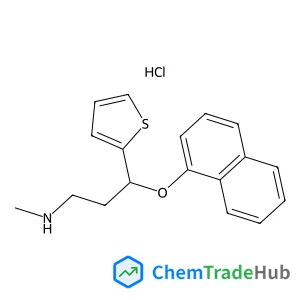
N-Methyl-3-(1-naphthyloxy)-3-(2-thienyl)-1-propanamine hydrochloride (1:1)
CAS Number:
1188266-11-6
Molecular Formula:
C18H20ClNOS
![1-[6-(1H-Imidazol-1-yl)-3-pyridinyl]methanamine structure](https://static.chemtradehub.com/structs/914/914637-08-4-8825.webp "1-[6-(1H-Imidazol-1-yl)-3-pyridinyl]methanamine structure")
Recommended Suppliers





Disclaimer
This page provides academic journal information for reference and research purposes only. We are not affiliated with any journal publishers and do not handle publication submissions. For publication-related inquiries, please contact the respective journal publishers directly.
If you notice any inaccuracies in the information displayed, please contact us at support@chemtradehub.com. We will promptly review and address your concerns.