












In vitro diagnosis of DNA methylation biomarkers with digital PCR in breast tumors
Literature Information
Publication Date
2018-04-18
DOI
10.1039/C8AN00205C
Impact Factor
4.616
Authors
Shan Huang, Tian Jian Lu
View Original
Abstract
Liquid biopsy of cancers using DNA methylation biomarkers has received significant interest, where the quantification of multiple biomarkers is generally needed for improving the sensitivity and specificity of cancer diagnosis. However, the inefficiency of the traditional quantitative polymerase chain reaction (qPCR)-based MethyLight assay for detecting the extremely low concentration of methylated DNA fragments in body fluids limits its clinical applications. Here, we developed an ultrasensitive microwell chip digital polymerase chain reaction (dPCR)-based MethyLight assay. Using the synthesized samples, the developed MethyLight assay can achieve 103–104-fold lower limit of detection and 1–16-fold lower limit of quantification than the traditional MethyLight assay. Four hypermethylated alleles (RARβ2, BRCA1, GSTP1 and RASSF1A) related to breast cancer in twenty-three clinical samples were tested using the microwell chip dPCR-based MethyLight assay. The results showed that the dPCR assay achieves ∼2 times enhancement in the cancer detection rate over the traditional quantitative PCR. Furthermore, the dPCR can detect the healthy and benign samples, which are undetectable using the traditional MethyLight assay. In multiple gene analysis, we achieved the highest detection rate of 93.3% (in the “OR” format of RARβ2 and GSTP1). Lastly, the estimated cut-off values in the dPCR assay were: <1, ∼1 to 100 and >100 (copies per μL) referring to the healthy, benign and malignant breast cancers, respectively. Therefore, the developed microwell chip dPCR-based MethyLight assay could provide a powerful tool for cancer biopsy diagnosis and disease monitoring.
Related Literature
Thermal conductivity and electrical resistivity of single copper nanowires
Wei-Tsu Peng, Fu-Ren Chen, Ming-Chang Lu
2021-08-26
Paper
DOI: 10.1039/D1CP02774C
Bayesian phase difference estimation: a general quantum algorithm for the direct calculation of energy gaps
Chikako Sakai, Kazuo Toyota, Kazunobu Sato, Daisuke Shiomi
2021-09-02
Paper
DOI: 10.1039/D1CP03156B
Atmospheric oxidation of fluoroalcohols initiated by ˙OH radicals in the presence of water and mineral dusts: mechanism, kinetics, and risk assessment
Feng-Yang Bai, Ming-Shuai Deng, Mei-Yan Chen, Lian Kong, Shuang Ni, Xiu-Mei Pan
2021-04-29
Paper
DOI: 10.1039/D1CP01324F
Surface electronic states mediate concerted electron and proton transfer at metal nanoscale interfaces for catalytic hydride reduction of –NO2 to –NH2
Bing-Qian Shan, Jia-Feng Zhou, Meng Ding, Xiao-Dan Hu
2021-05-25
Communication
DOI: 10.1039/D1CP01792F
Mode-specific dynamics in multichannel reaction NH+ + H2
Weiliang Shi, Kun Wang, Ping Zhang, Le Yu, Anyang Li
2021-08-20
Paper
DOI: 10.1039/D1CP02603H
The origin of the faster mechanism of partial enthalpy recovery deep in the glassy state of polymers
2021-05-24
Paper
DOI: 10.1039/D1CP01445E
Perspective of structural flexibility on selective inhibition towards CYP1B1 over CYP1A1 by α-naphthoflavone analogs
Ying Wang, Yupeng Zhang, Dong Wang, Zhaohu Luo, Fengjiao Zhang
2021-09-02
Paper
DOI: 10.1039/D1CP02541D
Interfacial photoinduced carrier dynamics tuned by polymerization of coronene molecules encapsulated in carbon nanotubes: bridging type-I and type-II heterojunctions
Xiao-Ying Xie, Jia-Jia Yang, Xiang-Yang Liu, Qiu Fang, Wei-Hai Fang, Ganglong Cui
2021-05-24
Paper
DOI: 10.1039/D1CP01008E
Experimental and DFT studies on oxygen release and migration mechanisms of LaAl-type perovskites as catalyst supports in biomass-to-H2 conversion
Tao Deng, Yujie Zheng, Changlei Qin, Zhiliang Ou, Hongqiang Xia, Zhonghui Zhang
2021-05-19
Paper
DOI: 10.1039/D1CP01372F
Origin of asynchronicity in Diels–Alder reactions
Pascal Vermeeren, Trevor A. Hamlin
2021-09-03
Paper
DOI: 10.1039/D1CP02456F
You might also like
Compound Q&A
What is the market or research trend for N-(4-Methoxybenzyl)-2-pyridinamine (CAS: 52818-63-0)?
N-(4-Methoxybenzyl)-2-pyridinamine (CAS: 52818-63-0) is increasingly being used ...
52818-63-0N-(4-Methoxybenzyl)-...
Compound Q&A
What precautions should be taken when handling Ethyl 4-(2-chlorophenyl)-1,3-thiazole-2-carboxylate (CAS: 1050507-06-6)?
When handling Ethyl 4-(2-chlorophenyl)-1,3-thiazole-2-carboxylate, appropriate p...
1050507-06-6Ethyl 4-(2-chlorophe...
Compound Q&A
What regulatory guidelines apply to diethyldiselane (CAS: 628-39-7)?
Diethyldiselane (CAS: 628-39-7) is classified under the Globally Harmonized Syst...
628-39-7Diethyldiselane
Compound Q&A
What is the market or research trend for oxocopper (CAS: 12053-18-8)?
The market for oxocopper (CAS: 12053-18-8) is primarily driven by its use in cat...
12053-18-8oxocopper; oxo-(oxoc...
Compound Q&A
What is the market or research trend for 5-{[(2-Methyl-2-propanyl)oxy]carbonyl}-5-azaspiro[2.4]heptane-7-carboxylic acid?
The market for 5-{[(2-Methyl-2-propanyl)oxy]carbonyl}-5-azaspiro[2.4]heptane-7-c...
1268519-54-55-{[(2-Methyl-2-prop...
Compound Q&A
What is 2-(1-Pyrrolidinyl)-4-pyridinamine (CAS: 35981-63-6)?
2-(1-Pyrrolidinyl)-4-pyridinamine is a chemical compound with the CAS number 359...
35981-63-62-(1-Pyrrolidinyl)-4...
Compound Q&A
What are the physical and chemical properties of 2-(3-Pyridinyl)-1-azabicyclo[2.2.2]octane (CAS: 91556-75-1)?
2-(3-Pyridinyl)-1-azabicyclo[2.2.2]octane (CAS: 91556-75-1) is a crystalline sol...
91556-75-12-(3-Pyridinyl)-1-az...
Compound Q&A
How is (S)-Alpha-allyl-proline hydrochloride (CAS: 129704-91-2) typically synthesized?
(S)-Alpha-allyl-proline hydrochloride is usually synthesized via a Wittig reacti...
129704-91-2(S)-Alpha-allyl-prol...
Compound Q&A
What is 3-Methyl-1,2-oxazole-5-carboxylic acid (CAS: 4857-42-5)?
3-Methyl-1,2-oxazole-5-carboxylic acid (CAS: 4857-42-5) is an organic compound w...
4857-42-53-Methyl-1,2-oxazole...
Compound Q&A
How is Lys-SMCC-DM1 (CAS: 1281816-04-3) typically synthesized?
Lys-SMCC-DM1 is synthesized via a multi-step process involving the coupling of S...
1281816-04-3Lys-SMCC-DM1
Source Journal
Analyst

CiteScore:
7.8
Self-citation Rate:
5.6%
Articles per Year:
653
Analyst publishes analytical and bioanalytical research that reports premier fundamental discoveries and inventions, and the applications of those discoveries, unconfined by traditional discipline barriers.
Recommended Compounds
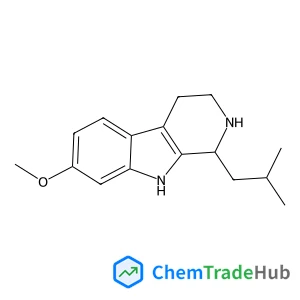
1-Isobutyl-7-methoxy-2,3,4,9-tetrahydro-1H-beta-carboline
CAS Number:
175975-76-5
Molecular Formula:
C16H22N2O
![(2R,6S)-6-[(Benzyloxy)methyl]-4-{[(2-methyl-2-propanyl)oxy]carbonyl}-2-morpholinecarboxylic acid structure](https://static.chemtradehub.com/structs/109/1093085-91-6-3382.webp "(2R,6S)-6-[(Benzyloxy)methyl]-4-{[(2-methyl-2-propanyl)oxy]carbonyl}-2-morpholinecarboxylic acid structure")
(2R,6S)-6-[(Benzyloxy)methyl]-4-{[(2-methyl-2-propanyl)oxy]carbonyl}-2-morpholinecarboxylic acid
CAS Number:
1093085-91-6
Molecular Formula:
C18H25NO6
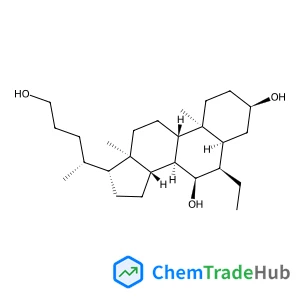
(3alpha,5beta,6alpha,7alpha)-6-Ethylcholane-3,7,24-triol
CAS Number:
1537866-49-1
Molecular Formula:
C26H46O3
Recommended Suppliers






Disclaimer
This page provides academic journal information for reference and research purposes only. We are not affiliated with any journal publishers and do not handle publication submissions. For publication-related inquiries, please contact the respective journal publishers directly.
If you notice any inaccuracies in the information displayed, please contact us at support@chemtradehub.com. We will promptly review and address your concerns.