












![1-(1-Benzyl-1,2,3,6-tetrahydropyridin-4-yl)-1H-benzo[d]imidazol-2(3H)-one structure](https://static.chemtradehub.com/structs/603/60373-71-9-7dfb.webp "1-(1-Benzyl-1,2,3,6-tetrahydropyridin-4-yl)-1H-benzo[d]imidazol-2(3H)-one structure")
1-(1-Benzyl-1,2,3,6-tetrahydropyridin-4-yl)-1H-benzo[d]imidazol-2(3H)-one
CAS Number:
60373-71-9
Molecular Formula:
C19H19N3O
Feng Liu, Guoqing Zhao, Weiqi Cai, Dongfang Xu, Baoguo Zhao
Chiral exocylic vicinal diamines are biologically and chemically important compounds, but they are not easy to make. In this paper, an interesting aminative Umpolung cyclization process has been developed. Aromatic aldehydes 6 bearing an electrophilic chiral sulfinimine group underwent imine formation with 2,2-diphenylglycine (2), decarboxylation, and subsequent Umpolung cyclization, producing various trans-diamines 10 in 84–96% yields with high trans/cis ratios under very mild conditions. This work not only provides an efficient, clean, and mild method for the synthesis of chiral exocyclic vicinal diamines in one step but also represents a new application of aminative Umpolung strategy on intramolecular reactions.
Tomislav Friščić, László Fábián, Jonathan C. Burley, David G. Reid, Melinda J. Duer, William Jones
DOI: 10.1039/B717532A
Preston A. Chase, Titel Jurca, Douglas W. Stephan
DOI: 10.1039/B718598G
Matthew J. Fuchter, Catherine J. Smith, Alistair Boyer, Simon Saubern, John H. Ryan, Andrew B. Holmes
DOI: 10.1039/B801537F
Luc Alaerts, Joos Wahlen, Pierre A. Jacobs, Dirk E. De Vos
DOI: 10.1039/B715691J
Elisa Biavardi, Gionata Battistini, Marco Montalti, Roger M. Yebeutchou, Luca Prodi, Enrico Dalcanale
DOI: 10.1039/B801729H
Emanuela Berni, Joachim Garric, Corinne Lamit, Brice Kauffmann, Jean-Michel Léger, Ivan Huc
DOI: 10.1039/B719712H
Ying-Feng Han, Yue-Jian Lin, Wei-Guo Jia, Guo-Liang Wang, Guo-Xin Jin
DOI: 10.1039/B717554J
Mendel In’t Veld, Patrizia Iavicoli, Sam Haq, David B. Amabilino, Rasmita Raval
DOI: 10.1039/B718865J
Hideyuki Yoshiyama, Norio Shibata, Takefumi Sato, Shuichi Nakamura, Takeshi Toru
DOI: 10.1039/B800918J
N-(4-Methoxybenzyl)-2-pyridinamine (CAS: 52818-63-0) is increasingly being used ...
When handling Ethyl 4-(2-chlorophenyl)-1,3-thiazole-2-carboxylate, appropriate p...
Diethyldiselane (CAS: 628-39-7) is classified under the Globally Harmonized Syst...
The market for oxocopper (CAS: 12053-18-8) is primarily driven by its use in cat...
The market for 5-{[(2-Methyl-2-propanyl)oxy]carbonyl}-5-azaspiro[2.4]heptane-7-c...
2-(1-Pyrrolidinyl)-4-pyridinamine is a chemical compound with the CAS number 359...
2-(3-Pyridinyl)-1-azabicyclo[2.2.2]octane (CAS: 91556-75-1) is a crystalline sol...
(S)-Alpha-allyl-proline hydrochloride is usually synthesized via a Wittig reacti...
3-Methyl-1,2-oxazole-5-carboxylic acid (CAS: 4857-42-5) is an organic compound w...
Lys-SMCC-DM1 is synthesized via a multi-step process involving the coupling of S...

Organic & Biomolecular Chemistry (OBC) publishes original and high impact research and reviews in organic chemistry. We welcome research that shows new or significantly improved protocols or methodologies in total synthesis, synthetic methodology or physical and theoretical organic chemistry as well as research that shows a significant advance in the organic chemistry or molecular design aspects of chemical biology, catalysis, supramolecular and macromolecular chemistry, theoretical chemistry, mechanism-oriented physical organic chemistry, medicinal chemistry or natural products. Articles published in the journal should report new work which makes a highly-significant impact in the field. Routine and incremental work is generally not suitable for publication in the journal. More details about key areas of our scope are below. In all cases authors should include in their article clear rationale for why their research has been carried out.
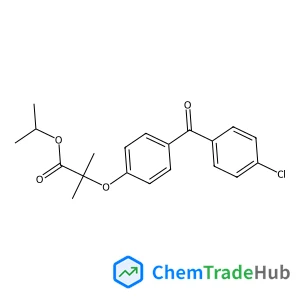
![5'-Fluoro-[2,3'-biindolinylidene]-2',3-dione structure](https://static.chemtradehub.com/structs/251/251903-00-1-9cb1.webp "5'-Fluoro-[2,3'-biindolinylidene]-2',3-dione structure")
![N-{15-[(2,5-Dioxo-1-pyrrolidinyl)oxy]-15-oxo-3,6,9,12-tetraoxapentadec-1-yl}-2-(2-propyn-1-yloxy)acetamide structure](https://static.chemtradehub.com/structs/210/2101206-92-0-2eb5.webp "N-{15-[(2,5-Dioxo-1-pyrrolidinyl)oxy]-15-oxo-3,6,9,12-tetraoxapentadec-1-yl}-2-(2-propyn-1-yloxy)acetamide structure")
![1-{3-[4-Amino-3-(4-phenoxyphenyl)-1H-pyrazolo[3,4-d]pyrimidin-1-yl]-1-piperidinyl}-2,3-dihydroxy-1-propanone structure](https://static.chemtradehub.com/structs/122/1226872-27-0-e037.webp "1-{3-[4-Amino-3-(4-phenoxyphenyl)-1H-pyrazolo[3,4-d]pyrimidin-1-yl]-1-piperidinyl}-2,3-dihydroxy-1-propanone structure")




