












Recent progress in the immobilization of catalysts for selective oxidation in the liquid phase
Literature Information
Publication Date
2008-01-08
DOI
10.1039/B715691J
Impact Factor
6.222
Authors
Luc Alaerts, Joos Wahlen, Pierre A. Jacobs, Dirk E. De Vos
View Original
Abstract
Reliable strategies are presented for the immobilization of molecular catalysts for selective oxidation in the liquid phase. Besides classical strategies such as ion exchange or covalent anchoring, new approaches are emerging, e.g. based on supported ionic-liquid phases or on incorporation of the active centre in a coordination polymer or a metal–organic framework.
Related Literature
Stereoselective organic reactions promoted by immobilized chiral catalysts in continuous flow systems
Alessandra Puglisi, Maurizio Benaglia, Valerio Chiroli
2013-05-01
Tutorial Review
DOI: 10.1039/C3GC40195B
Base initiated depolymerization of polycarbonates to epoxide and carbon dioxide co-monomers: a computational study
Donald J. Darensbourg, Andrew D. Yeung, Sheng-Hsuan Wei
2013-04-09
Paper
DOI: 10.1039/C3GC40475G
Benzylic hydroxylation of aromatic compounds by P450 BM3
Katharina Neufeld, Jan Marienhagen, Ulrich Schwaneberg
2013-07-08
Paper
DOI: 10.1039/C3GC40838H
Retracted Article: One-pot synthesis of glycidol from glycerol and dimethyl carbonate over a highly efficient and easily available solid catalyst NaAlO2
Rongxian Bai, Hongkun Zhang, Fuming Mei, Shu Wang, Tao Li, Guangxing Li
2013-08-02
Paper
DOI: 10.1039/C3GC40855H
Conversion of fructose into 5-hydroxymethylfurfural and alkyl levulinates catalyzed by sulfonic acid-functionalized carbon materials
Jinzhu Chen, Xing Huang, Limin Chen, Longlong Ma, Xinjun Li
2013-08-06
Paper
DOI: 10.1039/C3GC41139G
Synthesis of phenacyl bromides via K2S2O8-mediated tandem hydroxybromination and oxidation of styrenes in water
Qing Jiang, Cancheng Guo
2013-05-14
Paper
DOI: 10.1039/C3GC40515J
Quantitative structure–property relationships prediction of some physico-chemical properties of glycerol based solvents
José I. García, Héctor García-Marín, Pascual Pérez
2013-06-12
Paper
DOI: 10.1039/C3GC40694F
Methods for the regeneration of nicotinamidecoenzymes
Hong Wu, Chunyong Tian, Xiaokai Song, Chuang Liu, Dong Yang, Zhongyi Jiang
2013-04-03
Critical Review
DOI: 10.1039/C3GC37129H
Benzoylation for the recovery of structure directing agent (di-n-propylamine) from the process effluent of aluminophosphate synthesis
Nageswara N. Rao, Smita Masid
2013-04-26
Communication
DOI: 10.1039/C3GC40759D
You might also like
Compound Q&A
What precautions should be taken when handling 4-Methyl-6-(trifluoromethyl)quinoline (CAS: 40716-16-3)?
When handling 4-Methyl-6-(trifluoromethyl)quinoline (CAS: 40716-16-3), safety go...
40716-16-34-Methyl-6-(trifluor...
Compound Q&A
What is 4-(3,5-Difluorophenyl)aniline (CAS: 405058-00-6)?
4-(3,5-Difluorophenyl)aniline is an aromatic organic compound with the CAS numbe...
405058-00-64-(3,5-Difluoropheny...
Compound Q&A
How is 5-{[4-(Trifluoromethyl)phenyl]sulfanyl}-1,2,3-thiadiazole-4-carboxylic acid (CAS: 338982-07-3) typically synthesized?
5-{[4-(Trifluoromethyl)phenyl]sulfanyl}-1,2,3-thiadiazole-4-carboxylic acid can ...
338982-07-35-{[4-(Trifluorometh...
Compound Q&A
What is the market or research trend for 4-Benzylaniline hydrochloride (CAS: 6317-57-3)?
The market for 4-Benzylaniline hydrochloride (CAS: 6317-57-3) is steadily growin...
6317-57-34-Benzylaniline hydr...
Compound Q&A
Is [3-(Diethylsulfamoyl)phenyl]boronic acid (CAS: 871329-58-7) safe?
[3-(Diethylsulfamoyl)phenyl]boronic acid is generally considered safe when handl...
871329-58-7[3-(Diethylsulfamoyl...
Compound Q&A
What are the main uses of 3-Bromo-2,5-dimethoxyaniline (CAS: 115929-62-9)?
3-Bromo-2,5-dimethoxyaniline is mainly used in the pharmaceutical and chemical i...
115929-62-93-Bromo-2,5-dimethox...
Compound Q&A
What regulatory guidelines apply to N-Methyl-1-(5-methyl-1H-indol-3-yl)methanamine (CAS: 915922-67-7)?
N-Methyl-1-(5-methyl-1H-indol-3-yl)methanamine (CAS: 915922-67-7) is subject to ...
915922-67-7N-Methyl-1-(5-methyl...
Compound Q&A
What industries use Carbamic acid, N-[(5S)-5,6-diamino-6-oxohexyl]-, 1,1-dimethylethyl ester (CAS: 24828-96-4)?
This compound is primarily used in the pharmaceutical industry for the synthesis...
24828-96-4Carbamic acid, N-[(5...
Compound Q&A
How should 2-Methyl-2-propanyl [(1S,3R)-3-aminocyclohexyl]carbamate (CAS: 1298101-47-9) be stored?
2-Methyl-2-propanyl [(1S,3R)-3-aminocyclohexyl]carbamate (CAS: 1298101-47-9) sho...
1298101-47-92-Methyl-2-propanyl ...
Compound Q&A
What industries use Ethyl 2-bromo-4,4,4-trifluorobutanoate (CAS: 367-33-9)?
Ethyl 2-bromo-4,4,4-trifluorobutanoate (CAS: 367-33-9) is utilized in the pharma...
367-33-9Ethyl 2-bromo-4,4,4-...
Source Journal
Chemical Communications

CiteScore:
8.6
Self-citation Rate:
4.7%
Articles per Year:
2458
ChemComm publishes urgent research which is of outstanding significance and interest to experts in the field, while also appealing to the journal’s broad chemistry readership. Our communication format is ideally suited to short, urgent studies that are of such importance that they require accelerated publication. Our scope covers all topics in chemistry, and research at the interface of chemistry and other disciplines (such as materials science, nanoscience, physics, engineering and biology) where there is a significant novelty in the chemistry aspects. Major topic areas covered include: Analytical Chemistry Catalysis Chemical Biology and medicinal chemistry Computational Chemistry and Machine Learning Energy and sustainable chemistry Environmental Chemistry Green Chemistry Inorganic Chemistry Materials Chemistry Nanoscience Organic Chemistry Physical Chemistry Polymer Chemistry Supramolecular Chemistry
Recommended Compounds
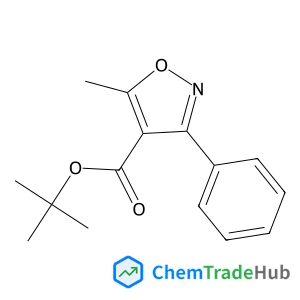
2-Methyl-2-propanyl 5-methyl-3-phenyl-1,2-oxazole-4-carboxylate
CAS Number:
211429-79-7
Molecular Formula:
C15H17NO3
Recommended Suppliers





Disclaimer
This page provides academic journal information for reference and research purposes only. We are not affiliated with any journal publishers and do not handle publication submissions. For publication-related inquiries, please contact the respective journal publishers directly.
If you notice any inaccuracies in the information displayed, please contact us at support@chemtradehub.com. We will promptly review and address your concerns.