











![1-{3-[4-Amino-3-(4-phenoxyphenyl)-1H-pyrazolo[3,4-d]pyrimidin-1-yl]-1-piperidinyl}-2,3-dihydroxy-1-propanone structure](https://static.chemtradehub.com/structs/122/1226872-27-0-e037.webp "1-{3-[4-Amino-3-(4-phenoxyphenyl)-1H-pyrazolo[3,4-d]pyrimidin-1-yl]-1-piperidinyl}-2,3-dihydroxy-1-propanone structure")
1-{3-[4-Amino-3-(4-phenoxyphenyl)-1H-pyrazolo[3,4-d]pyrimidin-1-yl]-1-piperidinyl}-2,3-dihydroxy-1-propanone
CAS Number:
1226872-27-0
Molecular Formula:
C25H26N6O4
Coralie De Schutter, Vincent Roy, Patrick Favetta, Corentin Pavageau, Stéphane Maisonneuve, Nicolas Bogliotti, Juan Xie, Luigi A. Agrofoglio
Hitherto unknown chromophoric nucleosides are reported. This novel set of visibly coloured dye-labeled 5′-nucleosides, including 1,2,4,5-tetrazine, dicyanomethylene-4H-pyran, benzophenoxazinone, 9,10-anthraquinone and azobenzene chromophores, were prepared mainly under Cu-catalyzed azide–alkyne cycloaddition (CuAAC). The design criteria are outlined. Several derivatives possess in supplement a fluorescence property. The absorption and fluorescence spectra of all coloured nucleosides were recorded to study their potential as visible-range probes. Such nucleodyes are of great interest for future competitive lateral flow test MIP-based strips.
Krisda Sudprasert, Ratthasart Amarit, Armote Somboonkaew, Boonsong Sutapun, Apirom Vongsakulyanon, Wuttigrai Seedacoon, Pimpun Kitpoka, Mongkol Kunakorn
DOI: 10.1039/C7AN00027H
Borja Cantero-Tubilla, Larry P. Walker
DOI: 10.1039/C8AN01137K
Yunlei Zhou, Huanshun Yin, Yue Wang, Chengji Sui, Minghui Wang, Shiyun Ai
DOI: 10.1039/C8AN01356J
Shibdas Banerjee, Elumalai Gnanamani, Xin Yan, Richard N. Zare
DOI: 10.1039/C6AN02225A
Jiawei Wu, Lixia Zhang, Xiangfeng Bu, Peng Li, Bing Zhao, Yuan Tian
DOI: 10.1039/C8AN01286E
Dalton T. Snyder, Lucas J. Szalwinski, J. Mitchell Wells, R. Graham Cooks
DOI: 10.1039/C8AN01661E
DaeHan Ahn, JiYeong Lee, SangJun Moon, Taejoon Park
DOI: 10.1039/C8AN01056K
Sudkate Chaiyo, Kurt Kalcher, Amara Apilux, Orawon Chailapakul, Weena Siangproh
DOI: 10.1039/C8AN01122B
A. F. Payam, W. Trewby, K. Voïtchovsky
DOI: 10.1039/C6AN02674E
N-(4-Methoxybenzyl)-2-pyridinamine (CAS: 52818-63-0) is increasingly being used ...
When handling Ethyl 4-(2-chlorophenyl)-1,3-thiazole-2-carboxylate, appropriate p...
Diethyldiselane (CAS: 628-39-7) is classified under the Globally Harmonized Syst...
The market for oxocopper (CAS: 12053-18-8) is primarily driven by its use in cat...
The market for 5-{[(2-Methyl-2-propanyl)oxy]carbonyl}-5-azaspiro[2.4]heptane-7-c...
2-(1-Pyrrolidinyl)-4-pyridinamine is a chemical compound with the CAS number 359...
2-(3-Pyridinyl)-1-azabicyclo[2.2.2]octane (CAS: 91556-75-1) is a crystalline sol...
(S)-Alpha-allyl-proline hydrochloride is usually synthesized via a Wittig reacti...
3-Methyl-1,2-oxazole-5-carboxylic acid (CAS: 4857-42-5) is an organic compound w...
Lys-SMCC-DM1 is synthesized via a multi-step process involving the coupling of S...

Organic & Biomolecular Chemistry (OBC) publishes original and high impact research and reviews in organic chemistry. We welcome research that shows new or significantly improved protocols or methodologies in total synthesis, synthetic methodology or physical and theoretical organic chemistry as well as research that shows a significant advance in the organic chemistry or molecular design aspects of chemical biology, catalysis, supramolecular and macromolecular chemistry, theoretical chemistry, mechanism-oriented physical organic chemistry, medicinal chemistry or natural products. Articles published in the journal should report new work which makes a highly-significant impact in the field. Routine and incremental work is generally not suitable for publication in the journal. More details about key areas of our scope are below. In all cases authors should include in their article clear rationale for why their research has been carried out.
![1-(1-Benzyl-1,2,3,6-tetrahydropyridin-4-yl)-1H-benzo[d]imidazol-2(3H)-one structure](https://static.chemtradehub.com/structs/603/60373-71-9-7dfb.webp "1-(1-Benzyl-1,2,3,6-tetrahydropyridin-4-yl)-1H-benzo[d]imidazol-2(3H)-one structure")
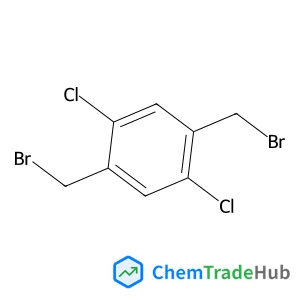
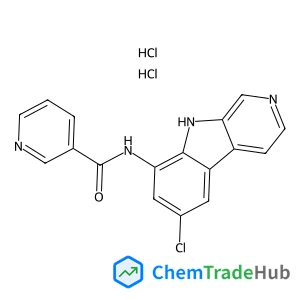
![1-[6-(1H-Imidazol-1-yl)-3-pyridinyl]methanamine structure](https://static.chemtradehub.com/structs/914/914637-08-4-8825.webp "1-[6-(1H-Imidazol-1-yl)-3-pyridinyl]methanamine structure")






