












Thermodynamics of adsorption of lysozyme on gold nanoparticles from second harmonic light scattering
Literature Information
Publication Date
2019-03-13
DOI
10.1039/C8CP07299J
Impact Factor
3.676
Authors
Kamini Mishra, Puspendu K. Das
View Original
Abstract
Gold nanoparticle (GNP) interaction with hen egg white lysozyme (Lyz) has been investigated by many groups in order to understand protein mediated aggregation of GNPs and the underlying mechanism of aggregation. In this article, we have studied the interaction of citrate-capped GNPs of 16, 28, 41, and 69 nm sizes with Lyz by the non-destructive label-free second harmonic light scattering (SHLS) technique at physiological pH in phosphate buffer. The surface sensitivity of the nonlinear optical SHLS technique is very high and we have looked at the GNP–Lyz interaction at nanomolar concentrations. We have followed the increase in the SHLS intensity of GNPs as a function of the added concentration of Lyz in small aliquots. The SH intensity profile exhibits saturation behaviour and was fitted with a modified Langmuir adsorption model which yielded the binding constant (Kb), the binding stoichiometry (nsat) at saturation and the free energy change (ΔG) in the adsorption process. The free energy change was further decomposed into changes in the enthalpy (ΔH) and entropy (ΔS) of adsorption by carrying out temperature dependent SHLS measurements in a specially designed cell. The thermodynamic quantities extracted from the measurements show that the binding is exothermic (ΔH < 0) as well as spontaneous (ΔS > 0). We find that the first step in the adsorption of Lyz on the GNP surface is nanoparticle protein corona (NP-PC) formation driven predominantly by electrostatic attraction. In the second step of adsorption, the adsorbed lysozymes on the surface form a bridge between two or more GNPs leading to the latter's aggregation, which is the main reason for the enhancement of the SH scattering signal. Although the interaction between the GNPs and Lyz is driven by strong electrostatic attraction, the thermodynamic quantities reported here indicate that the protein is physisorbed on the nanoparticle surface. We have also demonstrated that SHLS provides a new tool for full thermodynamic characterization of protein adsorption on metal nanoparticles at ultralow concentrations.
Related Literature
A new, simple approach to confer permanent antimicrobial properties to hydroxylated surfaces by surface functionalization
Othman Bouloussa
2008-01-03
Communication
DOI: 10.1039/B716026G
2-D Self-assembly of the bis(phthalocyaninato)terbium(iii) single-molecule magnet studied by scanning tunnelling microscopy
Jordi Gómez-Segura, Ismael Díez-Pérez, Naoto Ishikawa, Motohiro Nakano, Jaume Veciana, Daniel Ruiz-Molina
2006-06-15
Communication
DOI: 10.1039/B606276H
An imidazole-functionalized polyacetylene: convenient synthesis and selective chemosensor for metal ions and cyanide
Qi Zeng, Ping Cai, Zhen Li, Jingui Qin, Ben Zhong Tang
2008-01-29
Communication
DOI: 10.1039/B717764J
Synthesis of a coumarin compound from phenanthrene by a TiO2-photocatalyzed reaction
Suguru Higashida, Aiko Harada, Rikako Kawakatsu, Noriko Fujiwara, Michio Matsumura
2006-05-31
Communication
DOI: 10.1039/B604332A
How to achieve self-assembly in polar solvents based on specific interactions? Some general guidelines
Thomas Rehm, Carsten Schmuck
2007-11-29
Feature Article
DOI: 10.1039/B710951M
Direct evidence for an iron(iv)-oxo porphyrin π-cation radical as an active oxidant in catalytic oxygenation reactions
Ah-Rim Han, Yu Jin Jeong, Yaeun Kang, Jung Yoon Lee, Mi Sook Seo, Wonwoo Nam
2008-01-03
Communication
DOI: 10.1039/B716558G
Eight coordination with bis(bidentate) bridging ligands: zeolitic topology versus square grid networks
Jian-Yong Zhang, Ai-Ling Cheng, Qi Yue, Wei-Wei Sun, En-Qing Gao
2007-12-17
Communication
DOI: 10.1039/B717233H
Biomimetic synthesis of marine sponge metabolite spiculoic acid A and establishment of the absolute configuration of the natural product
James E. D. Kirkham, Victor Lee, Jack E. Baldwin
2006-06-12
Communication
DOI: 10.1039/B607035C
Versatile and efficient functionalisation of multiallylic dendronised polymers: can dense packing be reached?
Firmin Moingeon, Patrick Masson, Françoise Arnaud, Stéphane Méry
2008-01-23
Communication
DOI: 10.1039/B718318F
Second harmonic generation from multilayered hybrid polymer nanoassemblies enhanced by coupled surface plasmon resonance
Miki Ishifuji, Masaya Mitsuishi, Tokuji Miyashita
2007-10-24
Communication
DOI: 10.1039/B714832A
You might also like
Compound Q&A
Are there alternatives to 1-(4-Chlorophenyl)-N-hydroxymethanimine (CAS: 3848-36-0) in synthesis?
When considering alternatives to 1-(4-Chlorophenyl)-N-hydroxymethanimine (CAS: 3...
3848-36-01-(4-Chlorophenyl)-N...
Compound Q&A
How should (1R,9S,10S,12S,14E,16S,19R,20R,21S,22R)-3,9,21-Trihydroxy-5,10,12,14,16,20,22-heptamethyl-23,24-dioxatetracyclo[17.3.1.1~6,9~.0~2,7~]tetracosa-2,5,7,14-tetraen-4-one (CAS: 183202-73-5) be stored?
This compound should be stored in a cool, dry place away from direct sunlight. I...
183202-73-5(1R,9S,10S,12S,14E,1...
Compound Q&A
How is 3-(4-Bromophenyl)-5-(2-fluorophenyl)-1,2,4-oxadiazole (CAS: 419553-16-5) typically synthesized?
3-(4-Bromophenyl)-5-(2-fluorophenyl)-1,2,4-oxadiazole is synthesized through a m...
419553-16-53-(4-Bromophenyl)-5-...
Compound Q&A
How is 5-Chloro-2-(4-chlorophenyl)-4-methyl-6-[3-(1-piperidinyl)propoxy]pyrimidine (CAS: 1639220-19-1) typically synthesized?
5-Chloro-2-(4-chlorophenyl)-4-methyl-6-[3-(1-piperidinyl)propoxy]pyrimidine (CAS...
1639220-19-15-Chloro-2-(4-chloro...
Compound Q&A
What industries use 2-Chloro-4-(difluoromethoxy)pyridine (CAS: 1206978-15-5)?
2-Chloro-4-(difluoromethoxy)pyridine is used in the pharmaceutical industry for ...
1206978-15-52-Chloro-4-(difluoro...
Compound Q&A
What regulatory guidelines apply to 3-Chloro-6-methylpyridazine (CAS: 1121-79-5)?
3-Chloro-6-methylpyridazine (CAS: 1121-79-5) is classified under the Globally Ha...
1121-79-53-Chloro-6-methylpyr...
Compound Q&A
Are there alternatives to Methyl 4,5-dimethyl-2-nitrobenzoate in synthesis?
Several alternatives can be used in the synthesis of Methyl 4,5-dimethyl-2-nitro...
90922-74-0Methyl 4,5-dimethyl-...
Compound Q&A
Are there alternatives to (2E,2'E)-3,3'-(1,4-Phenylene)bisacrylaldehyde in synthesis?
Alternatives to (2E,2'E)-3,3'-(1,4-Phenylene)bisacrylaldehyde include other acry...
63405-68-5(2E,2'E)-3,3'-(1,4-P...
Compound Q&A
What is 3-Amino-5-chloropyridin-2-ol hydrochloride (CAS: 1261906-29-9)?
3-Amino-5-chloropyridin-2-ol hydrochloride is an organic compound with the CAS n...
1261906-29-93-Amino-5-chloropyri...
Compound Q&A
What precautions should be taken when handling 6,7-Difluoro-2,3-dihydro-4H-chromen-4-one (CAS: 1092349-93-3)?
When handling 6,7-Difluoro-2,3-dihydro-4H-chromen-4-one, it is essential to wear...
1092349-93-36,7-Difluoro-2,3-dih...
Source Journal
Physical Chemistry Chemical Physics

CiteScore:
5.5
Self-citation Rate:
10.3%
Articles per Year:
3036
Physical Chemistry Chemical Physics (PCCP) is an international journal co-owned by 19 physical chemistry and physics societies from around the world. This journal publishes original, cutting-edge research in physical chemistry, chemical physics and biophysical chemistry. To be suitable for publication in PCCP, articles must include significant innovation and/or insight into physical chemistry; this is the most important criterion that reviewers and Editors will judge against when evaluating submissions. The journal has a broad scope and welcomes contributions spanning experiment, theory, computation and data science. Topical coverage includes spectroscopy, dynamics, kinetics, statistical mechanics, thermodynamics, electrochemistry, catalysis, surface science, quantum mechanics, quantum computing and machine learning. Interdisciplinary research areas such as polymers and soft matter, materials, nanoscience, energy, surfaces/interfaces, and biophysical chemistry are welcomed if they demonstrate significant innovation and/or insight into physical chemistry. Joined experimental/theoretical studies are particularly appreciated when complementary and based on up-to-date approaches.
Recommended Compounds
![4-[(3-Chloro-2-fluorophenyl)amino]-7-methoxy-6-quinazolinyl acetate structure](https://static.chemtradehub.com/structs/740/740081-22-5-f58f.webp "4-[(3-Chloro-2-fluorophenyl)amino]-7-methoxy-6-quinazolinyl acetate structure")
4-[(3-Chloro-2-fluorophenyl)amino]-7-methoxy-6-quinazolinyl acetate
CAS Number:
740081-22-5
Molecular Formula:
C17H13ClFN3O3
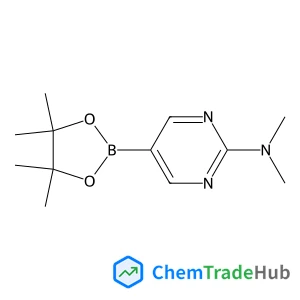
N,N-Dimethyl-5-(4,4,5,5-tetramethyl-1,3,2-dioxaborolan-2-yl)-2-pyrimidinamine
CAS Number:
1032759-30-0
Molecular Formula:
C12H20BN3O2
Recommended Suppliers






Disclaimer
This page provides academic journal information for reference and research purposes only. We are not affiliated with any journal publishers and do not handle publication submissions. For publication-related inquiries, please contact the respective journal publishers directly.
If you notice any inaccuracies in the information displayed, please contact us at support@chemtradehub.com. We will promptly review and address your concerns.