












How to achieve self-assembly in polar solvents based on specific interactions? Some general guidelines
Literature Information
Publication Date
2007-11-29
DOI
10.1039/B710951M
Impact Factor
6.222
Authors
Thomas Rehm, Carsten Schmuck
View Original
Abstract
In general, self-assembly in polar solutions requires a combination of several non-covalent interactions within one binding motif. Besides the combination of H-bonds and hydrophobic or aromatic stacking interactions, in the last few years H-bonded ion pairs have been proven useful in this context. Also the molecular rigidity and the extent of intra- versus intermolecular interactions within the monomer play an important role in determining the self-assembling properties of a given monomer. We present some general guidelines and illustrative examples of various approaches that have been pursued in the literature before finally concentrating on a case study from our own work, the dimerization of a guanidiniocarbonyl pyrrole carboxylate zwitterion. This zwitterion forms stable dimers with K > 109 M−1 in DMSO and >102 M−1 even in water and can not only be used to study the importance of various non-covalent interactions for self-assembly in polar solvents but also to construct large nanostructures.
Recommended Journals
Related Literature
Polymorph selection in 2D crystals by phase transition blocking
Leo Merz, Tobias Bauert, Manfred Parschau, Georg Koller, Jay S. Siegel
2009-08-14
Communication
DOI: 10.1039/B911056A
Easy preparation of a reticular nickel film deposited on a barrel-plating gold electrode with a high catalytic activity towards the oxidation of glucose
Chun-Yen Tai, Jen-Lin Chang, Jyh-Myng Zen
2009-08-25
Communication
DOI: 10.1039/B912442J
Photocatalytic intramolecular radical cyclization involved synergistic SET and HAT: synthesis of 3,3-difluoro-γ-lactams
Xiaohui Zhuang, Xiayue Shi, Rui Zhu, Bin Sun
2020-12-16
Research Article
DOI: 10.1039/D0QO01188F
Arylation of enelactams using TIPSOTf: reaction scope and mechanistic insight
Tomasz J. Idzik, Zofia M. Myk, Łukasz Struk, Magdalena Perużyńska, Gabriela Maciejewska, Marek Droździk, Jacek G. Sośnicki
2020-12-07
Research Article
DOI: 10.1039/D0QO01396J
Dual reactivity of a photochemically-generated cyclic enyne–allene
Alexander V. Kuzmin, Vladimir V. Popik
2009-08-14
Communication
DOI: 10.1039/B911871C
A novel smart organogel which could allow a two channel anion response by proton controlled reversible sol–gel transition and color changes
You-Ming Zhang, Qi Lin, Tai-Bao Wei, Xiao-Ping Qin, Yan Li
2009-08-27
Communication
DOI: 10.1039/B911125E
Catalytic stereoselective benzylic C–H functionalizations by oxidative C–H activation and organocatalysis
Fides Benfatti, Montse Guiteras Capdevila, Luca Zoli, Elena Benedetto, Pier Giorgio Cozzi
2009-08-18
Communication
DOI: 10.1039/B910185C
Cationic guest inclusion in widemouthed Schiff base macrocycles
Jian Jiang, Mark J. MacLachlan
2009-08-27
Communication
DOI: 10.1039/B914564H
Enantio- and stereoselective route to the phoslactomycin family of antibiotics: formal synthesis of (+)-fostriecin and (+)-phoslactomycin B
Shaheen M. Sarkar, Everlyne N. Wanzala, Setsuya Shibahara, Keisuke Takahashi, Jun Ishihara, Susumi Hatakeyama
2009-08-10
Communication
DOI: 10.1039/B912267B
Insertion reactions of a two-coordinate iron diaryl with dioxygen and carbon monoxide
Chengbao Ni, Philip P. Power
2009-08-17
Communication
DOI: 10.1039/B912312A
You might also like
Compound Q&A
Are there alternatives to 1-(4-Chlorophenyl)-N-hydroxymethanimine (CAS: 3848-36-0) in synthesis?
When considering alternatives to 1-(4-Chlorophenyl)-N-hydroxymethanimine (CAS: 3...
3848-36-01-(4-Chlorophenyl)-N...
Compound Q&A
How should (1R,9S,10S,12S,14E,16S,19R,20R,21S,22R)-3,9,21-Trihydroxy-5,10,12,14,16,20,22-heptamethyl-23,24-dioxatetracyclo[17.3.1.1~6,9~.0~2,7~]tetracosa-2,5,7,14-tetraen-4-one (CAS: 183202-73-5) be stored?
This compound should be stored in a cool, dry place away from direct sunlight. I...
183202-73-5(1R,9S,10S,12S,14E,1...
Compound Q&A
How is 3-(4-Bromophenyl)-5-(2-fluorophenyl)-1,2,4-oxadiazole (CAS: 419553-16-5) typically synthesized?
3-(4-Bromophenyl)-5-(2-fluorophenyl)-1,2,4-oxadiazole is synthesized through a m...
419553-16-53-(4-Bromophenyl)-5-...
Compound Q&A
How is 5-Chloro-2-(4-chlorophenyl)-4-methyl-6-[3-(1-piperidinyl)propoxy]pyrimidine (CAS: 1639220-19-1) typically synthesized?
5-Chloro-2-(4-chlorophenyl)-4-methyl-6-[3-(1-piperidinyl)propoxy]pyrimidine (CAS...
1639220-19-15-Chloro-2-(4-chloro...
Compound Q&A
What industries use 2-Chloro-4-(difluoromethoxy)pyridine (CAS: 1206978-15-5)?
2-Chloro-4-(difluoromethoxy)pyridine is used in the pharmaceutical industry for ...
1206978-15-52-Chloro-4-(difluoro...
Compound Q&A
What regulatory guidelines apply to 3-Chloro-6-methylpyridazine (CAS: 1121-79-5)?
3-Chloro-6-methylpyridazine (CAS: 1121-79-5) is classified under the Globally Ha...
1121-79-53-Chloro-6-methylpyr...
Compound Q&A
Are there alternatives to Methyl 4,5-dimethyl-2-nitrobenzoate in synthesis?
Several alternatives can be used in the synthesis of Methyl 4,5-dimethyl-2-nitro...
90922-74-0Methyl 4,5-dimethyl-...
Compound Q&A
Are there alternatives to (2E,2'E)-3,3'-(1,4-Phenylene)bisacrylaldehyde in synthesis?
Alternatives to (2E,2'E)-3,3'-(1,4-Phenylene)bisacrylaldehyde include other acry...
63405-68-5(2E,2'E)-3,3'-(1,4-P...
Compound Q&A
What is 3-Amino-5-chloropyridin-2-ol hydrochloride (CAS: 1261906-29-9)?
3-Amino-5-chloropyridin-2-ol hydrochloride is an organic compound with the CAS n...
1261906-29-93-Amino-5-chloropyri...
Compound Q&A
What precautions should be taken when handling 6,7-Difluoro-2,3-dihydro-4H-chromen-4-one (CAS: 1092349-93-3)?
When handling 6,7-Difluoro-2,3-dihydro-4H-chromen-4-one, it is essential to wear...
1092349-93-36,7-Difluoro-2,3-dih...
Source Journal
Chemical Communications

CiteScore:
8.6
Self-citation Rate:
4.7%
Articles per Year:
2458
ChemComm publishes urgent research which is of outstanding significance and interest to experts in the field, while also appealing to the journal’s broad chemistry readership. Our communication format is ideally suited to short, urgent studies that are of such importance that they require accelerated publication. Our scope covers all topics in chemistry, and research at the interface of chemistry and other disciplines (such as materials science, nanoscience, physics, engineering and biology) where there is a significant novelty in the chemistry aspects. Major topic areas covered include: Analytical Chemistry Catalysis Chemical Biology and medicinal chemistry Computational Chemistry and Machine Learning Energy and sustainable chemistry Environmental Chemistry Green Chemistry Inorganic Chemistry Materials Chemistry Nanoscience Organic Chemistry Physical Chemistry Polymer Chemistry Supramolecular Chemistry
Recommended Compounds
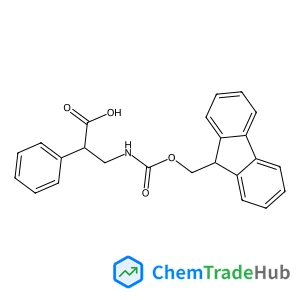
(S)-3-((((9H-Fluoren-9-yl)methoxy)carbonyl)amino)-2-phenylpropanoic acid
CAS Number:
1217663-60-9
Molecular Formula:
C24H21NO4
![2-{[(1R,2S)-2-Aminocyclohexyl]amino}-4-{[3-(2H-1,2,3-triazol-2-yl)phenyl]amino}-5-pyrimidinecarboxamide structure](https://static.chemtradehub.com/structs/137/1370261-96-3-40df.webp "2-{[(1R,2S)-2-Aminocyclohexyl]amino}-4-{[3-(2H-1,2,3-triazol-2-yl)phenyl]amino}-5-pyrimidinecarboxamide structure")
2-{[(1R,2S)-2-Aminocyclohexyl]amino}-4-{[3-(2H-1,2,3-triazol-2-yl)phenyl]amino}-5-pyrimidinecarboxamide
CAS Number:
1370261-96-3
Molecular Formula:
C19H23N9O
Recommended Suppliers



Disclaimer
This page provides academic journal information for reference and research purposes only. We are not affiliated with any journal publishers and do not handle publication submissions. For publication-related inquiries, please contact the respective journal publishers directly.
If you notice any inaccuracies in the information displayed, please contact us at support@chemtradehub.com. We will promptly review and address your concerns.