












Regulating ancillary ligands of Ru(ii) complexes with square-planar quadridentate ligands for more efficient sensitizers in dye-sensitized solar cells: insights from theoretical investigations
Literature Information
Publication Date
2016-09-08
DOI
10.1039/C6CP05649K
Impact Factor
3.676
Authors
Teng-Fei Lu, Wei Li, Jie Chen, Fu-Quan Bai, Jian Wang, Ling-Jun He, Hong-Xing Zhang
View Original
Abstract
In this work, we designed three dyes (Ru1, Ru2, and Ru3) by modifying the square-planar quadridentate ligand of the experimental Ru(II) complex K1, [RuL(trans-NCS)2] with L = dimethyl-6,60-bis(methyl-2-pyridylamino)-2,20-bipyridine-4,40-dicarboxylate, from a theoretical viewpoint. As is known, K1 shows obvious advantages over the famous dye N749 in light absorption ability because of its highly conjugated ancillary ligands. Density functional theory and time-dependent density functional theory methods were used to determine the geometrical structures, electronic structures and absorption spectra of the dye complexes. A quantum dynamics method in conjunction with extended Hückel theory was used to simulate the interfacial electron transfer process at the dye–TiO2 interface. The calculated results suggest that Ru1, which contains arylmethane groups, presents improved light absorption and efficient interfacial electron transfer compared with the reference dye K1. We also verified that the position of the anchoring carboxylic acid groups could largely guide the rate of interfacial electron transfer. Ru3, whose anchoring groups are attached to pyridine rings, would have significantly faster interfacial electron transfer than Ru2, whose anchoring groups are attached to the pyrrole ligands; this is because varying the position of the anchoring group results in a difference in the extent of electron donor–acceptor orbital interactions. We expect that the current study will provide some theoretical guidelines for the experimental synthesis of novel Ru(II) complex dyes.
Related Literature
First-principles studies of a two-dimensional electron gas at the interface of polar/polar LaAlO3/KNbO3 superlattices
Qiang Zhu
2019-03-18
Paper
DOI: 10.1039/C8CP07202G
Al solubility in (Ti1−cAlc)NiSn half-Heusler alloy
David Fuks, Yaniv Gelbstein
2019-03-15
Paper
DOI: 10.1039/C9CP00764D
Correction: 3T1R model and tuning of thermoluminescence intensity by optimization of dopant concentration in monoclinic Gd2O3:Er3+;Yb3+ co-doped phosphor
Raunak Kumar Tamrakar, Kanchan Upadhyay, D. P. Bisen
2019-01-11
Correction
DOI: 10.1039/C9CP90011J
Dissociative photodetachment vs. photodissociation of aromatic carboxylates: the benzoate and naphthoate anions
Juan P. Aranguren-Abrate, Claude Dedonder-Lardeux, Christophe Jouvet
2018-12-26
Paper
DOI: 10.1039/C8CP07162D
The impact on the ring related vibrational frequencies of pyridine of hydrogen bonds with haloforms – a topology perspective
Kamila Akhmetova, Haiyan Fan
2018-12-19
Paper
DOI: 10.1039/C8CP04789H
Self-emitting blue and red EuOX (X = F, Cl, Br, I) materials: band structure, charge transfer energy, and emission energy
Donghyeon Kim, Jae Ryeol Jeong, Yujin Jang, Jong-Seong Bae, In Chung, Runli Liang, Dong-Kyun Seo, Seung-Joo Kim, Jung-Chul Park
2018-12-27
Paper
DOI: 10.1039/C8CP06470A
The effect of Fe vacancies and Cu adhesion on the magnetic properties of Fe3GeTe2
Jia Liu, Anping Wang, Kaisong Pu, Shaozheng Zhang, Terence Musho, Liang Chen
2019-03-12
Paper
DOI: 10.1039/C9CP00151D
Depletion driven self-assembly of block copolymer solutions by homopolymers
Tao Yang, Zhen Lei, Shuang Yang, Er-Qiang Chen
2019-01-03
Paper
DOI: 10.1039/C8CP06679E
On the involvement of d-electrons in superatomic shells: the group 3 and 4 transition metals
J. T. A. Gilmour, N. Gaston
2019-03-25
Paper
DOI: 10.1039/C9CP00323A
The relationship between the asymmetric magnetoresistive effect and the magnetocaloric effect in Ni43Co7Mn39−xCrxSn11 Heusler alloys
Yunli Xu, Dongchao Yang, Linjie Ding, Lizhi Yi, Shuaiwei Fan, Liqing Pan, Jia Li, Fengxia Hu, Guanghua Yu, John Q. Xiao
2019-03-19
Paper
DOI: 10.1039/C9CP00145J
You might also like
Compound Q&A
Are there alternatives to 1-(4-Chlorophenyl)-N-hydroxymethanimine (CAS: 3848-36-0) in synthesis?
When considering alternatives to 1-(4-Chlorophenyl)-N-hydroxymethanimine (CAS: 3...
3848-36-01-(4-Chlorophenyl)-N...
Compound Q&A
How should (1R,9S,10S,12S,14E,16S,19R,20R,21S,22R)-3,9,21-Trihydroxy-5,10,12,14,16,20,22-heptamethyl-23,24-dioxatetracyclo[17.3.1.1~6,9~.0~2,7~]tetracosa-2,5,7,14-tetraen-4-one (CAS: 183202-73-5) be stored?
This compound should be stored in a cool, dry place away from direct sunlight. I...
183202-73-5(1R,9S,10S,12S,14E,1...
Compound Q&A
How is 3-(4-Bromophenyl)-5-(2-fluorophenyl)-1,2,4-oxadiazole (CAS: 419553-16-5) typically synthesized?
3-(4-Bromophenyl)-5-(2-fluorophenyl)-1,2,4-oxadiazole is synthesized through a m...
419553-16-53-(4-Bromophenyl)-5-...
Compound Q&A
How is 5-Chloro-2-(4-chlorophenyl)-4-methyl-6-[3-(1-piperidinyl)propoxy]pyrimidine (CAS: 1639220-19-1) typically synthesized?
5-Chloro-2-(4-chlorophenyl)-4-methyl-6-[3-(1-piperidinyl)propoxy]pyrimidine (CAS...
1639220-19-15-Chloro-2-(4-chloro...
Compound Q&A
What industries use 2-Chloro-4-(difluoromethoxy)pyridine (CAS: 1206978-15-5)?
2-Chloro-4-(difluoromethoxy)pyridine is used in the pharmaceutical industry for ...
1206978-15-52-Chloro-4-(difluoro...
Compound Q&A
What regulatory guidelines apply to 3-Chloro-6-methylpyridazine (CAS: 1121-79-5)?
3-Chloro-6-methylpyridazine (CAS: 1121-79-5) is classified under the Globally Ha...
1121-79-53-Chloro-6-methylpyr...
Compound Q&A
Are there alternatives to Methyl 4,5-dimethyl-2-nitrobenzoate in synthesis?
Several alternatives can be used in the synthesis of Methyl 4,5-dimethyl-2-nitro...
90922-74-0Methyl 4,5-dimethyl-...
Compound Q&A
Are there alternatives to (2E,2'E)-3,3'-(1,4-Phenylene)bisacrylaldehyde in synthesis?
Alternatives to (2E,2'E)-3,3'-(1,4-Phenylene)bisacrylaldehyde include other acry...
63405-68-5(2E,2'E)-3,3'-(1,4-P...
Compound Q&A
What is 3-Amino-5-chloropyridin-2-ol hydrochloride (CAS: 1261906-29-9)?
3-Amino-5-chloropyridin-2-ol hydrochloride is an organic compound with the CAS n...
1261906-29-93-Amino-5-chloropyri...
Compound Q&A
What precautions should be taken when handling 6,7-Difluoro-2,3-dihydro-4H-chromen-4-one (CAS: 1092349-93-3)?
When handling 6,7-Difluoro-2,3-dihydro-4H-chromen-4-one, it is essential to wear...
1092349-93-36,7-Difluoro-2,3-dih...
Source Journal
Physical Chemistry Chemical Physics

CiteScore:
5.5
Self-citation Rate:
10.3%
Articles per Year:
3036
Physical Chemistry Chemical Physics (PCCP) is an international journal co-owned by 19 physical chemistry and physics societies from around the world. This journal publishes original, cutting-edge research in physical chemistry, chemical physics and biophysical chemistry. To be suitable for publication in PCCP, articles must include significant innovation and/or insight into physical chemistry; this is the most important criterion that reviewers and Editors will judge against when evaluating submissions. The journal has a broad scope and welcomes contributions spanning experiment, theory, computation and data science. Topical coverage includes spectroscopy, dynamics, kinetics, statistical mechanics, thermodynamics, electrochemistry, catalysis, surface science, quantum mechanics, quantum computing and machine learning. Interdisciplinary research areas such as polymers and soft matter, materials, nanoscience, energy, surfaces/interfaces, and biophysical chemistry are welcomed if they demonstrate significant innovation and/or insight into physical chemistry. Joined experimental/theoretical studies are particularly appreciated when complementary and based on up-to-date approaches.
Recommended Compounds
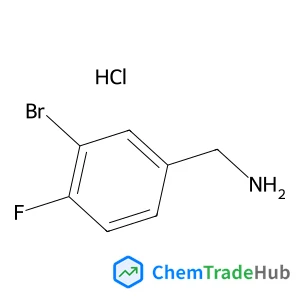
1-(3-Bromo-4-fluorophenyl)methanamine hydrochloride (1:1)
CAS Number:
202865-68-7
Molecular Formula:
C7H8BrClFN
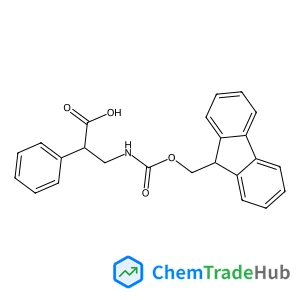
(S)-3-((((9H-Fluoren-9-yl)methoxy)carbonyl)amino)-2-phenylpropanoic acid
CAS Number:
1217663-60-9
Molecular Formula:
C24H21NO4
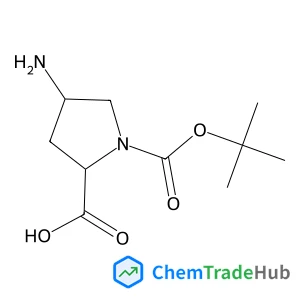
(2R,4R)-1-Boc-4-Aminopyrrolidine-2-carboxylic acid
CAS Number:
132622-98-1
Molecular Formula:
C10H18N2O4
Recommended Suppliers




Disclaimer
This page provides academic journal information for reference and research purposes only. We are not affiliated with any journal publishers and do not handle publication submissions. For publication-related inquiries, please contact the respective journal publishers directly.
If you notice any inaccuracies in the information displayed, please contact us at support@chemtradehub.com. We will promptly review and address your concerns.