












Low energy electron catalyst: the electronic origin of catalytic strategies‡
Literature Information
Publication Date
2016-09-12
DOI
10.1039/C6CP05480C
Impact Factor
3.676
Authors
Daly Davis, Y. Sajeev
View Original
Abstract
Using a low energy electron (LEE) as a catalyst, the electronic origin of the catalytic strategies corresponding to substrate selectivity, reaction specificity and reaction rate enhancement is investigated for a reversible unimolecular elementary reaction. An electronic energy complementarity between the catalyst and the substrate molecule is the origin of substrate selectivity and reaction specificity. The electronic energy complementarity is induced by tuning the electronic energy of the catalyst. The energy complementarity maximizes the binding forces between the catalyst and the molecule. Consequently, a new electronically metastable high-energy reactant state and a corresponding new low barrier reaction path are resonantly created for a specific reaction of the substrate through the formation of a catalyst-substrate transient adduct. The LEE catalysis also reveals a fundamental structure-energy correspondence in the formation of the catalyst-substrate transient adduct. Since the energy complementarities corresponding to the substrate molecules of the forward and the backward steps of the reversible reactions are not the same due to their structural differences, the LEE catalyst exhibits a unique one-way catalytic strategy, i.e., the LEE catalyst favors the reversible reaction more effectively in one direction. A characteristic stronger binding of the catalyst to the transition state of the reaction than in the initial reactant state and the final product state is the molecular origin of barrier lowering.
Related Literature
Using hydrogenated and perfluorinated gases to probe the interactions and structure of fluorinated ionic liquids
Luiz Fernando Lepre, Laure Pison, Ines Otero, Arnaud Gautier, Julien Dévemy, Pascale Husson, Agilio A. H. Pádua, Margarida Costa Gomes
2019-04-09
Paper
DOI: 10.1039/C9CP00593E
Computational models explain how copper binding to amyloid-β peptide oligomers enhances oxidative pathways
2019-04-02
Paper
DOI: 10.1039/C9CP00293F
Plasmon-mediated chemical transformation from alkane to alkene on a silver nanoparticle array under 532 nm excitation
Yuki Takeuchi, Tetsuya Fujita, Nobuyuki Takeyasu
2019-03-11
Paper
DOI: 10.1039/C9CP00129H
Theoretical insight into the photophysical properties of long-lifetime Ir(iii) and Rh(iii) complexes for two-photon photodynamic therapy
Xue Yin, Xiao-Yong Lai, Xin Wang, Ying-Tao Liu
2019-03-20
Paper
DOI: 10.1039/C9CP00512A
Quantum cutting using organic molecules
Michael D. LaCount, Mark T. Lusk
2019-03-26
Paper
DOI: 10.1039/C9CP00329K
Understanding methane/carbon dioxide partitioning in clay nano- and meso-pores with constant reservoir composition molecular dynamics modeling
Narasimhan Loganathan, Geoffrey M. Bowers, Brice F. Ngouana Wakou, Andrey G. Kalinichev
2019-03-07
Paper
DOI: 10.1039/C9CP00851A
On the involvement of d-electrons in superatomic shells: the group 3 and 4 transition metals
J. T. A. Gilmour, N. Gaston
2019-03-25
Paper
DOI: 10.1039/C9CP00323A
Phase stability of intercalated V2O5 battery cathodes elucidated through the Goldschmidt tolerance factor
Kit McColl, Furio Corà
2019-02-12
Paper
DOI: 10.1039/C9CP00170K
Towards capturing cellular complexity: combining encapsulation and macromolecular crowding in a reverse micelle
Philipp Honegger, Othmar Steinhauser
2019-03-25
Paper
DOI: 10.1039/C9CP00053D
You might also like
Compound Q&A
Are there alternatives to 1-(4-Chlorophenyl)-N-hydroxymethanimine (CAS: 3848-36-0) in synthesis?
When considering alternatives to 1-(4-Chlorophenyl)-N-hydroxymethanimine (CAS: 3...
3848-36-01-(4-Chlorophenyl)-N...
Compound Q&A
How should (1R,9S,10S,12S,14E,16S,19R,20R,21S,22R)-3,9,21-Trihydroxy-5,10,12,14,16,20,22-heptamethyl-23,24-dioxatetracyclo[17.3.1.1~6,9~.0~2,7~]tetracosa-2,5,7,14-tetraen-4-one (CAS: 183202-73-5) be stored?
This compound should be stored in a cool, dry place away from direct sunlight. I...
183202-73-5(1R,9S,10S,12S,14E,1...
Compound Q&A
How is 3-(4-Bromophenyl)-5-(2-fluorophenyl)-1,2,4-oxadiazole (CAS: 419553-16-5) typically synthesized?
3-(4-Bromophenyl)-5-(2-fluorophenyl)-1,2,4-oxadiazole is synthesized through a m...
419553-16-53-(4-Bromophenyl)-5-...
Compound Q&A
How is 5-Chloro-2-(4-chlorophenyl)-4-methyl-6-[3-(1-piperidinyl)propoxy]pyrimidine (CAS: 1639220-19-1) typically synthesized?
5-Chloro-2-(4-chlorophenyl)-4-methyl-6-[3-(1-piperidinyl)propoxy]pyrimidine (CAS...
1639220-19-15-Chloro-2-(4-chloro...
Compound Q&A
What industries use 2-Chloro-4-(difluoromethoxy)pyridine (CAS: 1206978-15-5)?
2-Chloro-4-(difluoromethoxy)pyridine is used in the pharmaceutical industry for ...
1206978-15-52-Chloro-4-(difluoro...
Compound Q&A
What regulatory guidelines apply to 3-Chloro-6-methylpyridazine (CAS: 1121-79-5)?
3-Chloro-6-methylpyridazine (CAS: 1121-79-5) is classified under the Globally Ha...
1121-79-53-Chloro-6-methylpyr...
Compound Q&A
Are there alternatives to Methyl 4,5-dimethyl-2-nitrobenzoate in synthesis?
Several alternatives can be used in the synthesis of Methyl 4,5-dimethyl-2-nitro...
90922-74-0Methyl 4,5-dimethyl-...
Compound Q&A
Are there alternatives to (2E,2'E)-3,3'-(1,4-Phenylene)bisacrylaldehyde in synthesis?
Alternatives to (2E,2'E)-3,3'-(1,4-Phenylene)bisacrylaldehyde include other acry...
63405-68-5(2E,2'E)-3,3'-(1,4-P...
Compound Q&A
What is 3-Amino-5-chloropyridin-2-ol hydrochloride (CAS: 1261906-29-9)?
3-Amino-5-chloropyridin-2-ol hydrochloride is an organic compound with the CAS n...
1261906-29-93-Amino-5-chloropyri...
Compound Q&A
What precautions should be taken when handling 6,7-Difluoro-2,3-dihydro-4H-chromen-4-one (CAS: 1092349-93-3)?
When handling 6,7-Difluoro-2,3-dihydro-4H-chromen-4-one, it is essential to wear...
1092349-93-36,7-Difluoro-2,3-dih...
Source Journal
Physical Chemistry Chemical Physics

CiteScore:
5.5
Self-citation Rate:
10.3%
Articles per Year:
3036
Physical Chemistry Chemical Physics (PCCP) is an international journal co-owned by 19 physical chemistry and physics societies from around the world. This journal publishes original, cutting-edge research in physical chemistry, chemical physics and biophysical chemistry. To be suitable for publication in PCCP, articles must include significant innovation and/or insight into physical chemistry; this is the most important criterion that reviewers and Editors will judge against when evaluating submissions. The journal has a broad scope and welcomes contributions spanning experiment, theory, computation and data science. Topical coverage includes spectroscopy, dynamics, kinetics, statistical mechanics, thermodynamics, electrochemistry, catalysis, surface science, quantum mechanics, quantum computing and machine learning. Interdisciplinary research areas such as polymers and soft matter, materials, nanoscience, energy, surfaces/interfaces, and biophysical chemistry are welcomed if they demonstrate significant innovation and/or insight into physical chemistry. Joined experimental/theoretical studies are particularly appreciated when complementary and based on up-to-date approaches.
Recommended Compounds
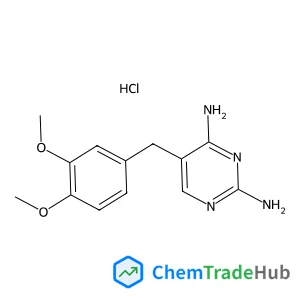
5-(3,4-Dimethoxybenzyl)-2,4-pyrimidinediamine hydrochloride (1:1)
CAS Number:
2507-23-5
Molecular Formula:
C13H17ClN4O2
Recommended Suppliers






Disclaimer
This page provides academic journal information for reference and research purposes only. We are not affiliated with any journal publishers and do not handle publication submissions. For publication-related inquiries, please contact the respective journal publishers directly.
If you notice any inaccuracies in the information displayed, please contact us at support@chemtradehub.com. We will promptly review and address your concerns.