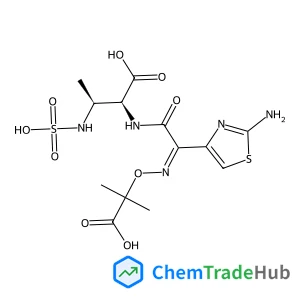
Aztreonam USP Related Compound A (Open-ring Aztreonam)
CAS Number:
87500-74-1
Molecular Formula:
C13H19N5O9S2
Germán Molpeceres, Johannes Kästner
We investigated the behavior of H2, the main constituent of the gas phase in dense clouds, after collision with amorphous solid water (ASW) surfaces, one of the most abundant chemical species of interstellar ices. We developed a general framework to study the adsorption dynamics of light species on interstellar ices. We provide binding energies and their distribution, sticking probabilities for incident energies between 1 meV and 60 meV, and thermal sticking coefficients between 10 and 300 K for surface temperatures from 10 to 110 K. We found that the sticking probability depends strongly on the adsorbate kinetic energy and the surface temperature, but hardly on the angle of incidence. We observed finite sticking probabilities above the thermal desorption temperature. Adsorption and thermal desorption should be considered as separate events with separate time scales. Laboratory results for these species have shown a gap in the trends attributed to the differently utilized experimental techniques. Our results complement observations and extend them, increasing the range of gas temperatures under consideration. We plan to use our method to study a variety of adsorbates, including radicals and charged species.
Tianran Chen, Benjamin J. Foley, Madhusudan Tyagi, John R. D. Copley, Joshua J. Choi, Seung-Hun Lee
DOI: 10.1039/C5CP05348J
S. Ali, V. S. Myasnichenko, E. C. Neyts
DOI: 10.1039/C5CP06153A
V. Balos, M. Bonn, J. Hunger
DOI: 10.1039/C5CP90226F
Gregorio García, Mert Atilhan, Santiago Aparicio
DOI: 10.1039/C5CP05376E
Talal M. Althagafi, Saud A. Algarni, Abdullah Al Naim, Javed Mazher, Martin Grell
DOI: 10.1039/C5CP03326H
Arya Shafiefarhood, Joseph Clay Hamill, Luke Michael Neal, Fanxing Li
DOI: 10.1039/C5CP05583K
Manish Chopra, Niharendu Choudhury
DOI: 10.1039/C5CP90224J
Yong Seok Hwang, Valery I. Levitas
DOI: 10.1039/C5CP04443J
Yuanhui Sun, Guangtao Yu, Jingwei Liu, Xiaopeng Shen, Xuri Huang, Wei Chen
DOI: 10.1039/C5CP06069A
6-(3-Fluorophenyl)picolinic acid is generally considered safe for laboratory use...
(3R)-3-Pyrrolidinol is used in the pharmaceutical industry as a precursor for dr...
When handling (4R,5R)-4,5-Diethoxycarbonyl-2,2-dimethyldioxolane (CAS: 59779-75-...
1-(6-Chloroimidazo[1,2-b]pyridazin-3-yl)ethanone is often synthesized via a mult...
The market for N-Ethyl-3,4-dimethylbenzylamine (CAS: 39180-83-1) remains steady,...
Tert-butyl 3-(pyrrolidin-1-yl)azetidine-1-carboxylate is a chemical compound wit...
1-Bromo-3-chloro-2,4-dimethoxybenzene (CAS: 1228956-93-1) falls under the classi...
The safety of 8-Bromo-2-methyl-3,4-dihydroisoquinolin-1(2H)-one (CAS: 1368622-07...
Benzyl [(3S)-2,6-dioxo-3-piperidinyl]carbamate is generally safe when handled wi...
1-{[4-(4,4,5,5-Tetramethyl-1,3,2-dioxaborolan-2-yl)phenyl]sulfonyl}pyrrolidine s...

Physical Chemistry Chemical Physics (PCCP) is an international journal co-owned by 19 physical chemistry and physics societies from around the world. This journal publishes original, cutting-edge research in physical chemistry, chemical physics and biophysical chemistry. To be suitable for publication in PCCP, articles must include significant innovation and/or insight into physical chemistry; this is the most important criterion that reviewers and Editors will judge against when evaluating submissions. The journal has a broad scope and welcomes contributions spanning experiment, theory, computation and data science. Topical coverage includes spectroscopy, dynamics, kinetics, statistical mechanics, thermodynamics, electrochemistry, catalysis, surface science, quantum mechanics, quantum computing and machine learning. Interdisciplinary research areas such as polymers and soft matter, materials, nanoscience, energy, surfaces/interfaces, and biophysical chemistry are welcomed if they demonstrate significant innovation and/or insight into physical chemistry. Joined experimental/theoretical studies are particularly appreciated when complementary and based on up-to-date approaches.
![Benzyl spiro[indole-3,4'-piperidine]-1(2H)-carboxylate hydrochloride (1:1) structure](https://static.chemtradehub.com/structs/159/159635-46-8-8de0.webp "Benzyl spiro[indole-3,4'-piperidine]-1(2H)-carboxylate hydrochloride (1:1) structure")