













Tunable mosaic structures in van der Waals layered materials
Literature Information
Publication Date
2018-09-10
DOI
10.1039/C8CP04360D
Impact Factor
3.676
Authors
Silong Quan, Linghui He, Yong Ni
View Original
Abstract
Intrinsic mosaic structures composed of distinctive stacking domains separated by domain walls (DWs) show the potential to regulate many outstanding properties of van der Waals layered materials. A comprehensive simulation at the atomic scale is performed to explore how the lattice/twist mismatch and the interlayer interaction influence the mosaic configuration from the incommensurate Moiré pattern to commensurate mosaic structures by adapting a complex amplitude version of the phase field crystal method. It is found that after an incommensurate–commensurate transition occurs, the topology of the mosaic structure indicated by different domain wall (DW) patterns can be drastically changed. An experimentally observed intriguing spiral domain wall (SDW) network is revealed as result of the emergent mixed dislocation driven by minimizing the elastic and interlayer energies in the presence of both lattice and twist mismatches. The transition process from a herringbone domain wall (HBDW) network to a SDW network is also simulated, elucidated by a dislocation reaction and in good agreement with the experimental observations.
Related Literature
Polymerization of alkyl diazoacetates initiated by the amidinate/Pd system: efficient synthesis of high molecular weight poly(alkoxycarbonylmethylene)s with moderate stereoregularity
Hiroaki Shimomoto, Junya Kawamata, Hirokazu Murakami, Kazuki Yamashita, Tomomichi Itoh, Eiji Ihara
2017-06-19
Paper
DOI: 10.1039/C7PY00816C
Carbazole-based copolymers via direct arylation polymerization (DArP) for Suzuki-convergent polymer solar cell performance
Nemal S. Gobalasingham, Seyma Ekiz, Robert M. Pankow, Eva Bundgaard, Barry C. Thompson
2017-06-28
Paper
DOI: 10.1039/C7PY00859G
Ultra-fast aqueous polymerisation of acrylamides by high power visible light direct photoactivation RAFT polymerisation
Reece W. Lewis, Richard A. Evans, Nino Malic, Kei Saito
2017-11-27
Paper
DOI: 10.1039/C7PY01752A
Synthesis and properties of poly(trifluoroethylene) via a persistent radical mediated polymerization of trifluoroethylene
Maxime Colpaert, Sanjib Banerjee, Vincent Ladmiral, Taizo Ono, Bruno Améduri
2018-01-24
Paper
DOI: 10.1039/C7PY02018J
Preparation of mechanoresponsive hairy particles using polymeric surfactants in emulsion polymerization
Hui Li, Yuyu Zhang, Yibin Liu, Rint P. Sijbesma, Johan P. A. Heuts, Qiuyu Zhang
2017-05-08
Paper
DOI: 10.1039/C7PY00468K
Synthesis, stereocomplex crystallization and homo-crystallization of enantiomeric poly(lactic acid-co-alanine)s with ester and amide linkages
Hideto Tsuji, Shotaro Sato, Noriaki Masaki, Yuki Arakawa
2017-12-28
Paper
DOI: 10.1039/C7PY02024D
Visible-light responsive hydrogen-bonded supramolecular polymers based on ortho-tetrafluorinated azobenzene
Meng-Di Lin, Jie Wei, Li-Juan Liu, Meng-Yan Yun, Lin Wu, Si-Tai Zheng, Huan-Huan Yin, Li-Chun Kong
2017-11-13
Paper
DOI: 10.1039/C7PY01612C
A nanoparticle-preparation kit using ethylene glycol-based block copolymers with a common temperature-responsive block
Chun Man Lee, Iren Constantinescu, Lily E. Takeuchi, Sreeparna Vappala, Ravin Narain, Takao Aoyagi
2017-11-22
Communication
DOI: 10.1039/C7PY01541K
A general route to chiral nanostructures from helical polymers: P/M switch via dynamic metal coordination
Sandra Arias, Manuel Núñez-Martínez, Emilio Quiñoá, Ricardo Riguera, Félix Freire
2017-05-19
Paper
DOI: 10.1039/C7PY00561J
You might also like
Compound Q&A
What precautions should be taken when handling 4-(2-Furylmethyl)thiomorpholine 1,1-dioxide (CAS: 79206-94-3)?
When handling 4-(2-Furylmethyl)thiomorpholine 1,1-dioxide (CAS: 79206-94-3), it ...
79206-94-34-(2-Furylmethyl)thi...
Compound Q&A
What precautions should be taken when handling 4-Chloro-N-[2-(4-morpholinyl)ethyl]benzamide (CAS: 71320-77-9)?
When handling 4-Chloro-N-[2-(4-morpholinyl)ethyl]benzamide (CAS: 71320-77-9), it...
71320-77-94-Chloro-N-[2-(4-mor...
Compound Q&A
How should waste containing 2-[2-(2-Methoxyethoxy)ethoxy]ethyl 4-methylbenzenesulfonate (CAS: 62921-74-8) be handled?
Waste containing this compound (CAS: 62921-74-8) should be handled according to ...
62921-74-82-[2-(2-Methoxyethox...
Compound Q&A
How should waste containing (S)-Methyl 2-amino-3-cyclohexylpropanoate be handled?
Waste containing (S)-Methyl 2-amino-3-cyclohexylpropanoate should be collected i...
40056-18-6(S)-Methyl 2-amino-3...
Compound Q&A
How is 5-({4-[(2S,4R)-4-Hydroxy-2-methyltetrahydro-2H-pyran-4-yl]-2-thienyl}sulfanyl)-1-methyl-1,3-dihydro-2H-indol-2-one (CAS: 166882-70-8) typically synthesized?
This compound can be synthesized using a multi-step process involving the conjug...
166882-70-85-({4-[(2S,4R)-4-Hyd...
Compound Q&A
Are there alternatives to (2E)-3-(3,4-Dichlorophenyl)acrylic acid (CAS: 7312-27-8) in synthesis?
There are several alternatives to (2E)-3-(3,4-Dichlorophenyl)acrylic acid in syn...
7312-27-8(2E)-3-(3,4-Dichloro...
Compound Q&A
How should Ethyl 6-(2-nitrophenyl)imidazo[2,1-b][1,3]thiazole-3-carboxylate (CAS: 925437-84-9) be stored?
Ethyl 6-(2-nitrophenyl)imidazo[2,1-b][1,3]thiazole-3-carboxylate (CAS: 925437-84...
925437-84-9Ethyl 6-(2-nitrophen...
Compound Q&A
How should waste containing 2-(1,3-Thiazol-2-yl)ethanamine (CAS: 18453-07-1) be handled?
Waste containing 2-(1,3-Thiazol-2-yl)ethanamine (CAS: 18453-07-1) should be coll...
18453-07-12-(1,3-Thiazol-2-yl)...
Compound Q&A
How is Methyl 5-iodo-2-methylbenzoate (CAS: 103440-54-6) typically synthesized?
Methyl 5-iodo-2-methylbenzoate can be synthesized through the iodination of meth...
103440-54-6Methyl 5-iodo-2-meth...
Compound Q&A
How is 5-Chloro[1,2,4]triazolo[1,5-a]pyridine (CAS: 1427399-34-5) typically synthesized?
5-Chloro[1,2,4]triazolo[1,5-a]pyridine is commonly synthesized via the condensat...
1427399-34-55-Chloro[1,2,4]triaz...
Source Journal
Physical Chemistry Chemical Physics

CiteScore:
5.5
Self-citation Rate:
10.3%
Articles per Year:
3036
Physical Chemistry Chemical Physics (PCCP) is an international journal co-owned by 19 physical chemistry and physics societies from around the world. This journal publishes original, cutting-edge research in physical chemistry, chemical physics and biophysical chemistry. To be suitable for publication in PCCP, articles must include significant innovation and/or insight into physical chemistry; this is the most important criterion that reviewers and Editors will judge against when evaluating submissions. The journal has a broad scope and welcomes contributions spanning experiment, theory, computation and data science. Topical coverage includes spectroscopy, dynamics, kinetics, statistical mechanics, thermodynamics, electrochemistry, catalysis, surface science, quantum mechanics, quantum computing and machine learning. Interdisciplinary research areas such as polymers and soft matter, materials, nanoscience, energy, surfaces/interfaces, and biophysical chemistry are welcomed if they demonstrate significant innovation and/or insight into physical chemistry. Joined experimental/theoretical studies are particularly appreciated when complementary and based on up-to-date approaches.
Recommended Compounds
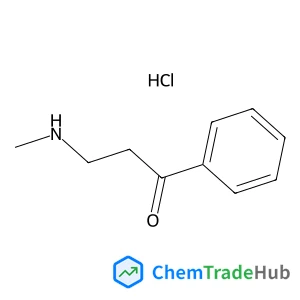
3-(Methylamino)-1-phenyl-1-propanone hydrochloride (1:1)
CAS Number:
2538-50-3
Molecular Formula:
C10H14ClNO
![[4-(Heptyloxy)phenyl]boronic acid structure](https://static.chemtradehub.com/structs/136/136370-19-9-ad33.webp "[4-(Heptyloxy)phenyl]boronic acid structure")
Recommended Suppliers






Disclaimer
This page provides academic journal information for reference and research purposes only. We are not affiliated with any journal publishers and do not handle publication submissions. For publication-related inquiries, please contact the respective journal publishers directly.
If you notice any inaccuracies in the information displayed, please contact us at support@chemtradehub.com. We will promptly review and address your concerns.