












Mechanism of enhanced triplet decay of thionucleobase by glycosylation and rate-modulating strategies
Literature Information
Publication Date
2018-05-29
DOI
10.1039/C8CP02306A
Impact Factor
3.676
Authors
Shuming Bai, Mario Barbatti
View Original
Abstract
The decay of the triplet state of photosensitizers is essential to their performance in singlet-oxygen generation. Experiments have shown that in thionucleosides, this decay is enhanced compared to that in the corresponding thionucleobases. In this work, we applied quantum-chemical methods and chemical-kinetic modeling to investigate the effects of the sugar substituent on the triplet decay of thionucleosides. The computed rates for the energetically favored conformers of thiothymidine, thiouridine, and thioguanosine (and the respective thionucleobases) show a remarkable quantitative agreement with the experimental results. We additionally show that the triplet decay enhancement is caused by the repulsion interaction between the sugar group and the sulfur atom, which reduces the activation energy for intersystem crossing by destabilizing the T1 minimum. In some instances, an intramolecular hydrogen bond stabilizes the energy of the T1/S0 crossing point, also reducing the activation energy. This molecular understanding of the mechanism of enhanced triplet decay provides a guideline to control the triplet decay rate, which was tested in new thiothymidine derivatives.
Related Literature
Properties of ionic liquids on Au surfaces: non-conventional anion exchange reactions with carbonate
Mathieu Ratel, Mathieu Branca, Julien Breault-Turcot, Sandy Shuo Zhao, Pierre Chaurand, Andreea R. Schmitzer, Jean-Francois Masson
2011-08-30
Communication
DOI: 10.1039/C1CC13914B
Functionalization of luminescent cyclometalated iridium(iii) polypyridine complexes with a fluorous moiety: photophysics, protein-binding, bioconjugation, and cellular uptake properties
Siu-Kit Leung, Hua-Wei Liu, Kenneth Kam-Wing Lo
2011-04-27
Communication
DOI: 10.1039/C1CC11423A
A gram scale synthesis of a multi-13C-labelled anthocyanin, [6,8,10,3′,5′-13C5]cyanidin-3-glucoside, for use in oral tracer studies in humans
Qingzhi Zhang, Nigel P. Botting, Colin Kay
2011-09-05
Communication
DOI: 10.1039/C1CC14323A
Diastereo- and enantioselective conjugate addition of α-substituted nitroacetates to maleimides under base-free neutral phase-transfer conditions‡
Seiji Shirakawa, Shogo J. Terao, Rongjun He, Keiji Maruoka
2011-08-25
Communication
DOI: 10.1039/C1CC14043D
Optically pure bulky (hetero)arylalkyl carbinols via kinetic resolution
Bin Hu, Meng Meng, Weimin Mo, Xinquan Hu, Wei-Ping Deng
2011-09-05
Communication
DOI: 10.1039/C1CC14591F
Novel N,O-Cu(OAc)2 complex catalysed diastereo- and enantioselective 1,4-addition of glycine derivatives to alkylidene malonates
Ming Wang, Yu-Hua Shi, Jun-Fei Luo, Wenting Du, Xiao-Xin Shi, Wei-Ping Deng
2011-02-04
Paper
DOI: 10.1039/C0CY00001A
Selective Diels–Alder cycloaddition on semiconducting single-walled carbon nanotubes for potential separation application
Jiao-Tong Sun, Lu-Yang Zhao, Chun-Yan Hong, Cai-Yuan Pan
2011-09-05
Communication
DOI: 10.1039/C1CC13437J
An energy efficient and facile synthesis of high molecular weight polyesters using ketenes
Martin Wolffs
2011-08-30
Communication
DOI: 10.1039/C1CC14055H
NbO lattice MOFs based on octahedral M(ii) and ditopic pyridyl substituted diketonate ligands: structure, encapsulation and guest-driven luminescent property
Gui-Ge Hou, Yue Liu, Qi-Kui Liu, Jian-Ping Ma, Yu-Bin Dong
2011-08-25
Communication
DOI: 10.1039/C1CC14115E
Silicananoparticles functionalised with cation coordination sites and fluorophores for the differential sensing of anions in a quencher displacement assay (QDA)
Mandy Hecht, Knut Rurack
2011-09-05
Communication
DOI: 10.1039/C1CC13039K
You might also like
Compound Q&A
What industries use (1R,3S)-1,3-Cyclopentanediol (CAS: 16326-97-9)?
(1R,3S)-1,3-Cyclopentanediol finds applications in various industries. In the ph...
16326-97-9(1R,3S)-1,3-Cyclopen...
Compound Q&A
What precautions should be taken when handling N'-[4-(Dimethylamino)phenyl]-N,N-dimethyl-1,4-benzenediamine (CAS: 637-31-0)?
When handling N'-[4-(Dimethylamino)phenyl]-N,N-dimethyl-1,4-benzenediamine, it i...
637-31-0N'-[4-(Dimethylamino...
Compound Q&A
Are there alternatives to 5-(2,4-Difluorophenyl)-2-methoxypyrimidine (CAS: 1352318-16-1) in synthesis?
There are several alternatives to 5-(2,4-Difluorophenyl)-2-methoxypyrimidine in ...
1352318-16-15-(2,4-Difluoropheny...
Compound Q&A
What regulatory guidelines apply to 1-(3-Methoxyphenoxy)propan-2-ol (CAS: 382141-68-6)?
1-(3-Methoxyphenoxy)propan-2-ol (CAS: 382141-68-6) must comply with the Globally...
382141-68-61-(3-Methoxyphenoxy)...
Compound Q&A
Is Tetrodotoxin Citrate (CAS: 18660-81-6) safe?
Tetrodotoxin Citrate is extremely dangerous and should be handled with extreme c...
18660-81-6Tetrodotoxin Citrate
Compound Q&A
What are the main uses of 2-Methyl-2-propanyl [(1R,3S)-3-hydroxycyclopentyl]carbamate (CAS: 225641-84-9)?
2-Methyl-2-propanyl [(1R,3S)-3-hydroxycyclopentyl]carbamate (CAS: 225641-84-9) i...
225641-84-92-Methyl-2-propanyl ...
Compound Q&A
How should waste containing 4-(2-Hydroxyhexafluoroisopropyl)Benzoic Acid (CAS: 16261-80-6) be handled?
Waste containing 4-(2-Hydroxyhexafluoroisopropyl)Benzoic Acid (CAS: 16261-80-6) ...
16261-80-64-(2-Hydroxyhexafluo...
Compound Q&A
How is 2-Methyl-2-proanyl {(2S)-1-[(benzyloxy)amino]-3-hydroxy-3-methyl-1-oxo-2-butanyl}carbamate (CAS: 102507-19-7) typically synthesized?
2-Methyl-2-proanyl {(2S)-1-[(benzyloxy)amino]-3-hydroxy-3-methyl-1-oxo-2-butanyl...
102507-19-72-Methyl-2-propanyl ...
Compound Q&A
What is Benzeneethanamine, α-ethyl-, hydrochloride (1:1) (CAS: 20735-15-3)?
Benzeneethanamine, α-ethyl-, hydrochloride (1:1) is an organic compound with the...
20735-15-3Benzeneethanamine, α...
Compound Q&A
Are there alternatives to 3-{(E)-[4-(Dimethylamino)phenyl]diazenyl}benzoic acid (CAS: 20691-84-3) in synthesis?
In the synthesis of compounds similar to 3-{(E)-[4-(Dimethylamino)phenyl]diazeny...
20691-84-33-{(E)-[4-(Dimethyla...
Source Journal
Physical Chemistry Chemical Physics

CiteScore:
5.5
Self-citation Rate:
10.3%
Articles per Year:
3036
Physical Chemistry Chemical Physics (PCCP) is an international journal co-owned by 19 physical chemistry and physics societies from around the world. This journal publishes original, cutting-edge research in physical chemistry, chemical physics and biophysical chemistry. To be suitable for publication in PCCP, articles must include significant innovation and/or insight into physical chemistry; this is the most important criterion that reviewers and Editors will judge against when evaluating submissions. The journal has a broad scope and welcomes contributions spanning experiment, theory, computation and data science. Topical coverage includes spectroscopy, dynamics, kinetics, statistical mechanics, thermodynamics, electrochemistry, catalysis, surface science, quantum mechanics, quantum computing and machine learning. Interdisciplinary research areas such as polymers and soft matter, materials, nanoscience, energy, surfaces/interfaces, and biophysical chemistry are welcomed if they demonstrate significant innovation and/or insight into physical chemistry. Joined experimental/theoretical studies are particularly appreciated when complementary and based on up-to-date approaches.
Recommended Compounds
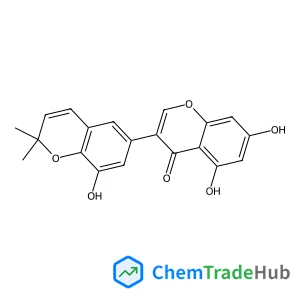
5,7,8'-Trihydroxy-2',2'-dimethyl-2'H,4H-3,6'-bichromen-4-one
CAS Number:
129280-33-7
Molecular Formula:
C20H16O6


Recommended Suppliers






Disclaimer
This page provides academic journal information for reference and research purposes only. We are not affiliated with any journal publishers and do not handle publication submissions. For publication-related inquiries, please contact the respective journal publishers directly.
If you notice any inaccuracies in the information displayed, please contact us at support@chemtradehub.com. We will promptly review and address your concerns.