












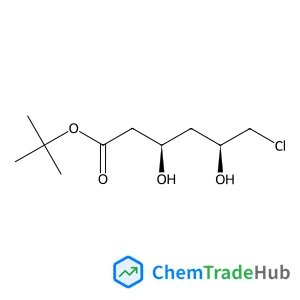
2-Methyl-2-propanyl (3R,5S)-6-chloro-3,5-dihydroxyhexanoate
CAS Number:
154026-93-4
Molecular Formula:
C10H19ClO4
Sanae Benabou, Cyril Ruckebusch, Michel Sliwa, Anna Aviñó, Ramon Eritja, Raimundo Gargallo, Anna de Juan
The i-motif is a DNA structure formed by cytosine-rich sequences, very relevant from a biochemical point of view and potentially useful in nanotechnology as pH-sensitive nanodevices or nanomotors. To provide a different view on the structural changes and dynamics of direct excitation processes involving i-motif structures, the use of rapid-scan FTIR spectroscopy is proposed. Hybrid hard- and soft-modelling based on the Multivariate Curve Resolution by Alternating Least Squares (MCR-ALS) algorithm has been used for the resolution of rapid-scan FTIR spectra and the interpretation of the photochemically induced time-dependent conformational changes of i-motif structures. The hybrid hard- and soft-modelling version of MCR-ALS (HS-MCR), which allows the introduction of kinetic models to describe process behavior, provides also rate constants associated with the transitions modeled. The results show that UV irradiation does not produce degradation of the studied sequences but induces the formation of photodimers. The presence of these affect much more the stability of i-motif structures formed by short sequences than that of those formed by longer sequences containing additional structural stabilizing elements, such as hairpins.
Davide Giust, José Luis Albasanz, Mairena Martín, Riccardo Marega, Arnaud Delforge
DOI: 10.1039/C1CC13971A
Jiao-Tong Sun, Lu-Yang Zhao, Chun-Yan Hong, Cai-Yuan Pan
DOI: 10.1039/C1CC13437J
Li Yu, Rujia Zou, Zhenyu Zhang, Guosheng Song, Zhigang Chen, Jianmao Yang, Junqing Hu
DOI: 10.1039/C1CC14159G
Swarupananda Maiti, J. Carlos Menéndez
DOI: 10.1039/C1CC11246E
Chien-Tien Chen, Jun-Qi Kao, Cheng-Yuan Liu, Ling-Yu Jiang
DOI: 10.1039/C0CY00005A
Mathieu Ratel, Mathieu Branca, Julien Breault-Turcot, Sandy Shuo Zhao, Pierre Chaurand, Andreea R. Schmitzer, Jean-Francois Masson
DOI: 10.1039/C1CC13914B
Federico Cesano, Serena Bertarione, Andrea Piovano, Giovanni Agostini, Mohammed Mastabur Rahman, Elena Groppo, Francesca Bonino, Domenica Scarano, Carlo Lamberti, Silvia Bordiga, Luciano Montanari, Lucia Bonoldi, Roberto Millini, Adriano Zecchina
DOI: 10.1039/C0CY00050G
Taichi Kano, Akira Noishiki, Ryu Sakamoto, Keiji Maruoka
DOI: 10.1039/C1CC14347F
Bin Hu, Meng Meng, Weimin Mo, Xinquan Hu, Wei-Ping Deng
DOI: 10.1039/C1CC14591F
Anne Griboval-Constant, Andrei Y. Khodakov, Fabrice Diehl
DOI: 10.1039/C1CC13800F
(1R,3S)-1,3-Cyclopentanediol finds applications in various industries. In the ph...
When handling N'-[4-(Dimethylamino)phenyl]-N,N-dimethyl-1,4-benzenediamine, it i...
There are several alternatives to 5-(2,4-Difluorophenyl)-2-methoxypyrimidine in ...
1-(3-Methoxyphenoxy)propan-2-ol (CAS: 382141-68-6) must comply with the Globally...
Tetrodotoxin Citrate is extremely dangerous and should be handled with extreme c...
2-Methyl-2-propanyl [(1R,3S)-3-hydroxycyclopentyl]carbamate (CAS: 225641-84-9) i...
Waste containing 4-(2-Hydroxyhexafluoroisopropyl)Benzoic Acid (CAS: 16261-80-6) ...
2-Methyl-2-proanyl {(2S)-1-[(benzyloxy)amino]-3-hydroxy-3-methyl-1-oxo-2-butanyl...
Benzeneethanamine, α-ethyl-, hydrochloride (1:1) is an organic compound with the...
In the synthesis of compounds similar to 3-{(E)-[4-(Dimethylamino)phenyl]diazeny...

Physical Chemistry Chemical Physics (PCCP) is an international journal co-owned by 19 physical chemistry and physics societies from around the world. This journal publishes original, cutting-edge research in physical chemistry, chemical physics and biophysical chemistry. To be suitable for publication in PCCP, articles must include significant innovation and/or insight into physical chemistry; this is the most important criterion that reviewers and Editors will judge against when evaluating submissions. The journal has a broad scope and welcomes contributions spanning experiment, theory, computation and data science. Topical coverage includes spectroscopy, dynamics, kinetics, statistical mechanics, thermodynamics, electrochemistry, catalysis, surface science, quantum mechanics, quantum computing and machine learning. Interdisciplinary research areas such as polymers and soft matter, materials, nanoscience, energy, surfaces/interfaces, and biophysical chemistry are welcomed if they demonstrate significant innovation and/or insight into physical chemistry. Joined experimental/theoretical studies are particularly appreciated when complementary and based on up-to-date approaches.

![Ethyl 3-((6-(4,5-dihydro-1H-benzo[d]azepin-3(2H)-yl)-2-(pyridin-2-yl)pyrimidin-4-yl)amino)propanoate structure](https://static.chemtradehub.com/structs/137/1373423-53-0-496a.webp "Ethyl 3-((6-(4,5-dihydro-1H-benzo[d]azepin-3(2H)-yl)-2-(pyridin-2-yl)pyrimidin-4-yl)amino)propanoate structure")
![N-[(5,6-Dichloro-1H-benzimidazol-2-yl)methyl]-9-(1-methyl-1H-pyrazol-4-yl)-2-(4-morpholinyl)-9H-purin-6-amine structure](https://static.chemtradehub.com/structs/238/2387704-62-1-25f4.webp "N-[(5,6-Dichloro-1H-benzimidazol-2-yl)methyl]-9-(1-methyl-1H-pyrazol-4-yl)-2-(4-morpholinyl)-9H-purin-6-amine structure")






