


Oxidative, photo-activated TiO2nanoparticles in the catalytic acetylation of primary alcohols
Literature Information
Publication Date
2011-01-31
DOI
10.1039/C0CY00005A
Impact Factor
6.119
Authors
Chien-Tien Chen, Jun-Qi Kao, Cheng-Yuan Liu, Ling-Yu Jiang
View Original
Abstract
A series of TiO2 particles of varying particle sizes from nano to micro scales was treated with three different oxidants (O2, TBHP, and aqueous H2O2) under irradiation conditions to form activated TiO2 particles bearing surface peroxo Ti(O2) species. The resultant, heterogeneous catalysts were tested for photo-catalytic acetylation of 2-phenylethanol by acetic anhydride in 8 different solvents. The best scenario involves the use of 32 nm grade of TiO2 nanoparticles and aqueous H2O2 for pre-activation and the use of CH2Cl2 as the reaction solvent. The 2-phenethyl acetate product can be completely formed in 10 h and isolated in essential quantitative yield. It was also found that catalysts derived from TiO2 nanoparticles are superior to those from ZrO2, Y2O3 and WO3 nanoparticles by using the oxidative, photo-activation protocol. The newly developed heterogeneous catalytic system can be smoothly applied to photocatalytic acetylation of several representative primary aliphatic and aromatic alcohols. The intermediacy of Ti–OH or TiO surface groups was proposed in the photo-catalytic acetylation conditions.
Recommended Journals

Russian Journal of Applied Chemistry

Russian Journal of Bioorganic Chemistry

Russian Journal of Organic Chemistry

Chemistry Education Research and Practice

New Journal of Chemistry

Russian Journal of General Chemistry

Organic Process Research & Development

Chemical Communications

Current Opinion in Colloid & Interface Science

Journal of Natural Medicines
Related Literature
Don't forget Langmuir–Blodgett films
Donald H. McCullough, III, Steven L. Regen
2004-11-09
Feature Article
DOI: 10.1039/B410027C
1,4-Dihydro-1,4-diphosphinine fused with two tetrathiafulvalenes
Narcis Avarvari, Marc Fourmigué
2004-11-09
Communication
DOI: 10.1039/B412193G
A two-step field-induced magnetic transition in a novel layered cobalt diphosphonate
Ping Yin, Song Gao, Li-Min Zheng, Zheming Wang, Xin-Quan Xin
2003-03-31
Communication
DOI: 10.1039/B212674E
Excimer formation by interstrand stacked pyrenes
Simon M. Langenegger, Robert Häner
2004-11-09
Communication
DOI: 10.1039/B412831A
Flexible enzymatic and chemo-enzymatic approaches to a broad range of uridine-diphospho-sugars
James C. Errey, Balaram Mukhopadhyay, K. P. Ravindranathan Kartha, Robert A. Field
2004-10-13
Communication
DOI: 10.1039/B410184G
Al(OPri)3-catalysed halogen exchange processes of relevance to atom transfer radical polymerization: the effect depends on the metal electronic structure
François Stoffelbach, Rinaldo Poli
2004-10-13
Communication
DOI: 10.1039/B409992C
Iron(iii) salen-type catalysts for the cross-coupling of aryl Grignards with alkyl halides bearing β-hydrogens
Robin B. Bedford, Duncan W. Bruce, Robert M. Frost, John W. Goodby, Michael Hird
2004-10-27
Communication
DOI: 10.1039/B413790F
Ensemble hybridisation – a new method for exploring sequence dependent fluorescence of dye–nucleic acid conjugates
Olaf Köhler, Dilip Venkatrao Jarikote, Oliver Seitz
2004-10-14
Communication
DOI: 10.1039/B411877D
Enzymatic preparation of biotinylated naturally-occurring sialylglycan and its molecular recognition on a quartz-crystal microbalance
Toshiaki Mori, Yoshimi Sekine, Kenji Yamamoto, Yoshio Okahata
2004-10-29
Communication
DOI: 10.1039/B411082J
Electrical property and water repellency of a networked monolayer film prepared from Au nanoparticles
Hiroshi Shiigi, Yojiro Yamamoto, Hidetaka Yakabe, Shiho Tokonami, Tsutomu Nagaoka
2003-04-02
Communication
DOI: 10.1039/B212226J
You might also like
Compound Q&A
What industries use (1R,3S)-1,3-Cyclopentanediol (CAS: 16326-97-9)?
(1R,3S)-1,3-Cyclopentanediol finds applications in various industries. In the ph...
16326-97-9(1R,3S)-1,3-Cyclopen...
Compound Q&A
What precautions should be taken when handling N'-[4-(Dimethylamino)phenyl]-N,N-dimethyl-1,4-benzenediamine (CAS: 637-31-0)?
When handling N'-[4-(Dimethylamino)phenyl]-N,N-dimethyl-1,4-benzenediamine, it i...
637-31-0N'-[4-(Dimethylamino...
Compound Q&A
Are there alternatives to 5-(2,4-Difluorophenyl)-2-methoxypyrimidine (CAS: 1352318-16-1) in synthesis?
There are several alternatives to 5-(2,4-Difluorophenyl)-2-methoxypyrimidine in ...
1352318-16-15-(2,4-Difluoropheny...
Compound Q&A
What regulatory guidelines apply to 1-(3-Methoxyphenoxy)propan-2-ol (CAS: 382141-68-6)?
1-(3-Methoxyphenoxy)propan-2-ol (CAS: 382141-68-6) must comply with the Globally...
382141-68-61-(3-Methoxyphenoxy)...
Compound Q&A
Is Tetrodotoxin Citrate (CAS: 18660-81-6) safe?
Tetrodotoxin Citrate is extremely dangerous and should be handled with extreme c...
18660-81-6Tetrodotoxin Citrate
Compound Q&A
What are the main uses of 2-Methyl-2-propanyl [(1R,3S)-3-hydroxycyclopentyl]carbamate (CAS: 225641-84-9)?
2-Methyl-2-propanyl [(1R,3S)-3-hydroxycyclopentyl]carbamate (CAS: 225641-84-9) i...
225641-84-92-Methyl-2-propanyl ...
Compound Q&A
How should waste containing 4-(2-Hydroxyhexafluoroisopropyl)Benzoic Acid (CAS: 16261-80-6) be handled?
Waste containing 4-(2-Hydroxyhexafluoroisopropyl)Benzoic Acid (CAS: 16261-80-6) ...
16261-80-64-(2-Hydroxyhexafluo...
Compound Q&A
How is 2-Methyl-2-proanyl {(2S)-1-[(benzyloxy)amino]-3-hydroxy-3-methyl-1-oxo-2-butanyl}carbamate (CAS: 102507-19-7) typically synthesized?
2-Methyl-2-proanyl {(2S)-1-[(benzyloxy)amino]-3-hydroxy-3-methyl-1-oxo-2-butanyl...
102507-19-72-Methyl-2-propanyl ...
Compound Q&A
What is Benzeneethanamine, α-ethyl-, hydrochloride (1:1) (CAS: 20735-15-3)?
Benzeneethanamine, α-ethyl-, hydrochloride (1:1) is an organic compound with the...
20735-15-3Benzeneethanamine, α...
Compound Q&A
Are there alternatives to 3-{(E)-[4-(Dimethylamino)phenyl]diazenyl}benzoic acid (CAS: 20691-84-3) in synthesis?
In the synthesis of compounds similar to 3-{(E)-[4-(Dimethylamino)phenyl]diazeny...
20691-84-33-{(E)-[4-(Dimethyla...
Source Journal
Catalysis Science & Technology

CiteScore:
5.91
Self-citation Rate:
4.5%
Articles per Year:
600
Catalysis Science & Technology is committed to publishing research reporting high-quality, cutting-edge developments across the catalysis community at large. The journal places equal focus on publications from the heterogeneous, homogeneous, thermo-, electro-, photo-, organo- and biocatalysis communities. Works published in the journal feature a balanced mix of fundamental, technology-oriented, experimental, computational, digital and data-driven original research, thus appealing to catalysis practitioners in both academic and industrial environments. Original research articles published in the journal must demonstrate new catalytic discoveries and/or methodological advances that represent a significant advance on previously published work, from the molecular to the process scales. We welcome rigorous research in a wide range of timely or emerging applications related to the environment, health, energy and materials. Catalysis Science & Technology publishes Communications, Articles, Reviews and Perspectives. More details regarding manuscript types may be found in the Information for Authors section.
Recommended Compounds

4-(5-(4,4,5,5-tetramethyl-1,3,2-dioxaborolan-2-yl)pyridin-2-yl)morpholine
CAS Number:
485799-04-0
Molecular Formula:
C15H23BN2O3
![N-[(9H-Fluoren-9-ylmethoxy)carbonyl]-beta-phenyl-L-phenylalanine structure](https://static.chemtradehub.com/structs/201/201484-50-6-c2fc.webp "N-[(9H-Fluoren-9-ylmethoxy)carbonyl]-beta-phenyl-L-phenylalanine structure")
N-[(9H-Fluoren-9-ylmethoxy)carbonyl]-beta-phenyl-L-phenylalanine
CAS Number:
201484-50-6
Molecular Formula:
C30H25NO4
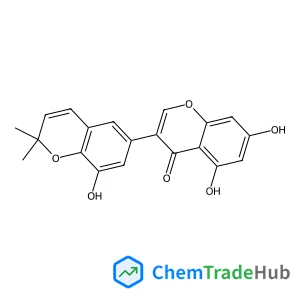
5,7,8'-Trihydroxy-2',2'-dimethyl-2'H,4H-3,6'-bichromen-4-one
CAS Number:
129280-33-7
Molecular Formula:
C20H16O6
Recommended Suppliers





Disclaimer
This page provides academic journal information for reference and research purposes only. We are not affiliated with any journal publishers and do not handle publication submissions. For publication-related inquiries, please contact the respective journal publishers directly.
If you notice any inaccuracies in the information displayed, please contact us at support@chemtradehub.com. We will promptly review and address your concerns.