












Nickel catalyzed synthesis of 4,4′-bichromenes/4,4′-bithiochromenes and their Atropisomerism
Literature Information
Publication Date
2018-11-22
DOI
10.1039/C8QO00820E
Impact Factor
5.281
Authors
Somasundaram Muthuramalingam, Jai Anand Garg, R. Karthick, Thomas Fox, Olivier Blacque, Saiganesh Ramanathan, Senthamaraikannan Kabilan, K. K. Balasubramanian
View Original
Abstract
Axially chiral molecules have established undisputed importance in both medicinal chemistry and enantiomeric catalysis. The size, shape and hybridization of the substituent adjacent to the rotational axis greatly dictate atropisomerism. Herein, we examined the tropoisomeric behavior of 4,4′-bichromenes and 4,4′-bithiochromenes derivatives that were synthesized by a nickel catalyzed reductive homocoupling strategy. The as-synthesized 3,3′-disubstituted 4,4′-bichromenes displayed atropisomerism, as evidenced by chiral stationary phase HPLC, electronic circular dichroism and single crystal XRD studies. Insights into the torsional barrier about the internuclear axis in 4,4′-bichromenes were gained both experimentally and theoretically (DFT studies). The lower activation energy barrier (Ea) of approximately 12 kcal mol−1 as compared to that of fully aromatic 1,1′-binapthyl explains the conformationally unstable nature of 3,3′-unsubstituted 4,4′-bichromenes at room temperature.
Related Literature
Qualitative evaluation of chromatographic data from quality control schemes using a support vector machine
A. Sanchez-Niubo, F. Ruiz, N. Agell, C. Angulo, A. Domingo-Salvany
2007-10-25
Paper
DOI: 10.1039/B711653P
Detection of lectin–glycan interaction using high resolution surface plasmon resonance
Kyle J. Foley, Erica S. Forzani, Lokesh Joshi, Nongjian Tao
2008-03-12
Communication
DOI: 10.1039/B719321A
Electrochemical methods for the determination of the diffusion coefficient of ionophores and ionophore–ion complexes in plasticized PVC membranes
Sándor Bodor, Justin M. Zook, Ernő Lindner
2008-02-27
Paper
DOI: 10.1039/B718110H
Selective detection of dopamine using a combined permselective film of electropolymerized (poly-tyramine and poly-pyrrole-1-propionic acid) on a boron-doped diamondelectrode
Fengjun Shang, Yali Liu, Sabahudin Hrapovic, Jeremy D. Glennon
2008-12-05
Paper
DOI: 10.1039/B814317J
Thin chitosan films as a platform for SPR sensing of ferric ions
Holly A. McIlwee, Caroline L. Schauer, Rabah Boukherroub
2008-03-26
Paper
DOI: 10.1039/B717736D
Droplet detector for the continuous flow luminol–hydrogen peroxide chemiluminescence system
Yaqiong Wen, Hongyan Yuan, Jianfei Mao, Martin M. F. Choi
2008-10-23
Paper
DOI: 10.1039/B812750F
Demonstration of sandwich and competitive modulated supraparticle fluoroimmunoassay applied to cardiac proteinbiomarkermyoglobin
Mark A. Hayes, Matthew M. Petkus, Antonio A. Garcia, Tom Taylor, Prasun Mahanti
2008-12-16
Paper
DOI: 10.1039/B809665A
Broadband terahertz time-domain spectroscopy of drugs-of-abuse and the use of principal component analysis
Andrew D. Burnett, Wenhui Fan, Prashanth C. Upadhya, John E. Cunningham, Michael D. Hargreaves, Tasnim Munshi, Howell G. M. Edwards, Edmund H. Linfield, A. Giles Davies
2009-05-22
Paper
DOI: 10.1039/B817839A
Label-free flow-enhanced specific detection ofBacillus anthracis using a piezoelectric microcantilever sensor
John-Paul McGovern, Wan Y. Shih, Richard Rest, Mitali Purohit, Yognandan Pandya, Wei-Heng Shih
2008-02-29
Paper
DOI: 10.1039/B715948J
You might also like
Compound Q&A
Is 2-(2-chloroacetamido)-3-phenylpropanoic acid (CAS: 7765-11-9) safe?
2-(2-Chloroacetamido)-3-phenylpropanoic acid (CAS: 7765-11-9) is generally consi...
7765-11-92-(2-chloroacetamido...
Compound Q&A
Is 2-(Benzyloxy)-5-bromobenzoic acid (CAS: 62176-31-2) safe?
2-(Benzyloxy)-5-bromobenzoic acid can be handled safely if appropriate precautio...
62176-31-22-(Benzyloxy)-5-brom...
Compound Q&A
What is (4-Methyl-1,2,5-oxadiazol-3-yl)methanamine hydrochloride (CAS: 1159825-48-5)?
(4-Methyl-1,2,5-oxadiazol-3-yl)methanamine hydrochloride is a chemical compound ...
1159825-48-5(4-Methyl-1,2,5-oxad...
Compound Q&A
What is 2-(5-Hexylthiophen-2-yl)-4,4,5,5-tetramethyl-1,3,2-dioxaborolane (CAS: 917985-54-7)?
2-(5-Hexylthiophen-2-yl)-4,4,5,5-tetramethyl-1,3,2-dioxaborolane (CAS: 917985-54...
917985-54-72-(5-Hexylthiophen-2...
Compound Q&A
Are there alternatives to 4-(8-Methyl-9H-1,3-dioxolo[4,5-h][2,3]benzodiazepin-5-yl)benzenamine (CAS: 102771-26-6) in synthesis?
While 4-(8-Methyl-9H-1,3-dioxolo[4,5-h][2,3]benzodiazepin-5-yl)benzenamine (CAS:...
102771-26-64-(8-Methyl-9H-1,3-d...
Compound Q&A
What is the market or research trend for tert-butyl 3-hydroxy-4,5,7,8-tetrahydro-2H-pyrazolo[3,4-d]azepine-6-carboxylate (CAS: 851376-80-2)?
The market for tert-butyl 3-hydroxy-4,5,7,8-tetrahydro-2H-pyrazolo[3,4-d]azepine...
851376-80-2tert-butyl 3-hydroxy...
Compound Q&A
How should waste containing 3,5-Diamino-1H-pyrazole-4-carbonitrile (CAS: 6844-58-2) be handled?
Waste containing 3,5-Diamino-1H-pyrazole-4-carbonitrile (CAS: 6844-58-2) should ...
6844-58-23,5-Diamino-1H-pyraz...
Compound Q&A
How is (6-Fluoro-3-pyridinyl)boronic acid (CAS: 351019-18-6) typically synthesized?
(6-Fluoro-3-pyridinyl)boronic acid can be synthesized through the reaction of 6-...
351019-18-6(6-Fluoro-3-pyridiny...
Compound Q&A
What industries use Dibenzyl carbonimidoylbiscarbamate (CAS: 10065-79-9)?
Dibenzyl carbonimidoylbiscarbamate (CAS: 10065-79-9) finds applications in vario...
10065-79-9Dibenzyl carbonimido...
Compound Q&A
What is the market or research trend for (beta,beta,2,3,4,5,6-~2~H_7_)Phenylalanine (CAS: 74228-83-4)?
The market for (beta,beta,2,3,4,5,6-~2~H_7_)Phenylalanine (CAS: 74228-83-4) is g...
74228-83-4(beta,beta,2,3,4,5,6...
Source Journal
Organic Chemistry Frontiers

CiteScore:
7.8
Self-citation Rate:
8.7%
Articles per Year:
724
Organic Chemistry Frontiers publishes high-quality research from across organic chemistry. Emphases are placed on studies that make significant contributions to the field of organic chemistry by reporting either new or significantly improved protocols or methodologies. Topics include, but are not limited to the following: Organic synthesis Development of synthetic methodologies Catalysis Natural products Functional organic materials Supramolecular and macromolecular chemistry Physical and computational organic chemistry
Recommended Compounds
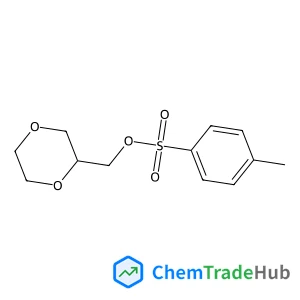
(S)-(1,4-Dioxan-2-yl)methyl 4-methylbenzenesulfonate
CAS Number:
917882-64-5
Molecular Formula:
C12H16O5S
![19-[Chloro(dideuterio)methyl]-19-deuterio-20,20-dideuteriooxyoctatriacontane-18,21-dione structure](https://static.chemtradehub.com/structs/124/1246818-85-8-6244.webp "19-[Chloro(dideuterio)methyl]-19-deuterio-20,20-dideuteriooxyoctatriacontane-18,21-dione structure")
19-[Chloro(dideuterio)methyl]-19-deuterio-20,20-dideuteriooxyoctatriacontane-18,21-dione
CAS Number:
1246818-85-8
Molecular Formula:
C39H75ClO4
![Ethyl ({[(2-methyl-2-propanyl)oxy]carbonyl}amino)(2-pyridinyl)acetate structure](https://static.chemtradehub.com/structs/313/313490-90-3-dd15.webp "Ethyl ({[(2-methyl-2-propanyl)oxy]carbonyl}amino)(2-pyridinyl)acetate structure")
Ethyl ({[(2-methyl-2-propanyl)oxy]carbonyl}amino)(2-pyridinyl)acetate
CAS Number:
313490-90-3
Molecular Formula:
C14H20N2O4
Recommended Suppliers




Disclaimer
This page provides academic journal information for reference and research purposes only. We are not affiliated with any journal publishers and do not handle publication submissions. For publication-related inquiries, please contact the respective journal publishers directly.
If you notice any inaccuracies in the information displayed, please contact us at support@chemtradehub.com. We will promptly review and address your concerns.