


![1-[6-(1H-Imidazol-1-yl)-3-pyridinyl]methanamine structure](https://static.chemtradehub.com/structs/914/914637-08-4-8825.webp "1-[6-(1H-Imidazol-1-yl)-3-pyridinyl]methanamine structure")
Synthesis and acid catalysis of zeolite-templated microporous carbons with SO3H groups
Literature Information
Publication Date
2013-04-26
DOI
10.1039/C3CP43853H
Impact Factor
3.676
Authors
Kiichi Fukuhara, Masaaki Kitano, Shigenobu Hayashi, Michikazu Hara
View Original
Abstract
Microporous carbon catalysts with large surface areas (800–1100 m2 g−1) and high densities of SO3H groups (ca. 1.1 mmol g−1) were synthesized by sulfonation of zeolite-templated microporous carbon. The resulting SO3H-bearing microporous carbon catalysts exhibited higher catalytic performance for the hydrolysis of cellobiose and the Beckmann rearrangement than conventional solid acid catalysts and non-porous amorphous carbon with SO3H groups. The high catalytic activity of these reusable heterogeneous catalysts can be attributed to the high surface area and microporous structure, which enhance the efficient incorporation and diffusion of reactant molecules from solution to the SO3H groups on the catalysts.
Recommended Journals

Pharmacological Reviews

Russian Chemical Reviews

Israel Journal of Chemistry

Helvetica Chimica Acta

Organic Preparations and Procedures International

European Journal of Wood and Wood Products

Journal of Heterocyclic Chemistry

Kinetics and Catalysis

Proceedings of the National Academy of Sciences of the United States of America

Planta Medica
Related Literature
Determination of trace rare earth elements in uranium by inductively coupled plasma atomic emission spectrometry
Paper
DOI: 10.1039/JA9860100145
Supramolecular self-assembly and perfected in vitro/vivo property of 5-fluorouracil and ferulic acid on the strength of double optimized strategy: the first 5-fluorouracial-phenolic acid nutraceutical cocrystal with synergistic antitumor efficacy
Yue-Ming Yu, Yuan-Yuan Niu, Ling-Yang Wang, Zhi-Yong Wu, Cui-Wei Yan
2021-03-10
Paper
DOI: 10.1039/D1AN00171J
O species-decorated graphene shell encapsulating iridium–nickel alloy as an efficient electrocatalyst towards hydrogen evolution reaction
Shipeng Gong, Changlai Wang, Peng Jiang, Kang Yang, Jian Lu, Minxue Huang, Shi Chen, Junzheng Wang
2019-06-06
Communication
DOI: 10.1039/C9TA04361F
Flexible thread-based electrochemical sensors for oxygen monitoring
2021-03-09
Paper
DOI: 10.1039/D0AN02400G
Nonlinear and vibrational microscopy for label-free characterization of amyloid-β plaques in Alzheimer's disease model
Renan Cunha, Lucas Lafeta, Marco A. Romano-Silva, Rafael Vieira, Leandro M. Malard
2021-03-18
Paper
DOI: 10.1039/D1AN00074H
An “off–on–off” fluorescence chemosensor for the sensitive detection of Cu2+ in aqueous solution based on multiple fluorescence emission mechanisms
Aimei Zhou, Shuhua Han
2021-02-12
Paper
DOI: 10.1039/D0AN02472D
Development and comparison of various rod-shaped mini-reference electrode compositions based on Ag/AgCl for potentiometric applications
Mustafa Nigde, Ismail Agir, Rıdvan Yıldırım, Ibrahim Isildak
2021-12-17
Paper
DOI: 10.1039/D1AN01754C
A facile online multi-gear capacitively coupled contactless conductivity detector for an automatic and wide range monitoring of high salt in HPLC
Weiwen Liu, Ziqi Liang, Yuanyu Wang, Jun Cao, Qiang Zhang, Xiaoping Liu, Yuxing Wang
2021-12-27
Paper
DOI: 10.1039/D1AN02249K
You might also like
Compound Q&A
What is the market or research trend for N-(4-Methoxybenzyl)-2-pyridinamine (CAS: 52818-63-0)?
N-(4-Methoxybenzyl)-2-pyridinamine (CAS: 52818-63-0) is increasingly being used ...
52818-63-0N-(4-Methoxybenzyl)-...
Compound Q&A
What precautions should be taken when handling Ethyl 4-(2-chlorophenyl)-1,3-thiazole-2-carboxylate (CAS: 1050507-06-6)?
When handling Ethyl 4-(2-chlorophenyl)-1,3-thiazole-2-carboxylate, appropriate p...
1050507-06-6Ethyl 4-(2-chlorophe...
Compound Q&A
What regulatory guidelines apply to diethyldiselane (CAS: 628-39-7)?
Diethyldiselane (CAS: 628-39-7) is classified under the Globally Harmonized Syst...
628-39-7Diethyldiselane
Compound Q&A
What is the market or research trend for oxocopper (CAS: 12053-18-8)?
The market for oxocopper (CAS: 12053-18-8) is primarily driven by its use in cat...
12053-18-8oxocopper; oxo-(oxoc...
Compound Q&A
What is the market or research trend for 5-{[(2-Methyl-2-propanyl)oxy]carbonyl}-5-azaspiro[2.4]heptane-7-carboxylic acid?
The market for 5-{[(2-Methyl-2-propanyl)oxy]carbonyl}-5-azaspiro[2.4]heptane-7-c...
1268519-54-55-{[(2-Methyl-2-prop...
Compound Q&A
What is 2-(1-Pyrrolidinyl)-4-pyridinamine (CAS: 35981-63-6)?
2-(1-Pyrrolidinyl)-4-pyridinamine is a chemical compound with the CAS number 359...
35981-63-62-(1-Pyrrolidinyl)-4...
Compound Q&A
What are the physical and chemical properties of 2-(3-Pyridinyl)-1-azabicyclo[2.2.2]octane (CAS: 91556-75-1)?
2-(3-Pyridinyl)-1-azabicyclo[2.2.2]octane (CAS: 91556-75-1) is a crystalline sol...
91556-75-12-(3-Pyridinyl)-1-az...
Compound Q&A
How is (S)-Alpha-allyl-proline hydrochloride (CAS: 129704-91-2) typically synthesized?
(S)-Alpha-allyl-proline hydrochloride is usually synthesized via a Wittig reacti...
129704-91-2(S)-Alpha-allyl-prol...
Compound Q&A
What is 3-Methyl-1,2-oxazole-5-carboxylic acid (CAS: 4857-42-5)?
3-Methyl-1,2-oxazole-5-carboxylic acid (CAS: 4857-42-5) is an organic compound w...
4857-42-53-Methyl-1,2-oxazole...
Compound Q&A
How is Lys-SMCC-DM1 (CAS: 1281816-04-3) typically synthesized?
Lys-SMCC-DM1 is synthesized via a multi-step process involving the coupling of S...
1281816-04-3Lys-SMCC-DM1
Source Journal
Physical Chemistry Chemical Physics

CiteScore:
5.5
Self-citation Rate:
10.3%
Articles per Year:
3036
Physical Chemistry Chemical Physics (PCCP) is an international journal co-owned by 19 physical chemistry and physics societies from around the world. This journal publishes original, cutting-edge research in physical chemistry, chemical physics and biophysical chemistry. To be suitable for publication in PCCP, articles must include significant innovation and/or insight into physical chemistry; this is the most important criterion that reviewers and Editors will judge against when evaluating submissions. The journal has a broad scope and welcomes contributions spanning experiment, theory, computation and data science. Topical coverage includes spectroscopy, dynamics, kinetics, statistical mechanics, thermodynamics, electrochemistry, catalysis, surface science, quantum mechanics, quantum computing and machine learning. Interdisciplinary research areas such as polymers and soft matter, materials, nanoscience, energy, surfaces/interfaces, and biophysical chemistry are welcomed if they demonstrate significant innovation and/or insight into physical chemistry. Joined experimental/theoretical studies are particularly appreciated when complementary and based on up-to-date approaches.
Recommended Compounds
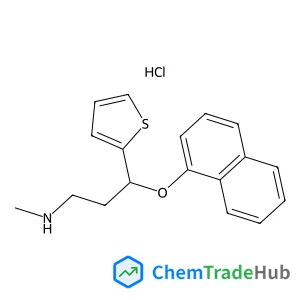
N-Methyl-3-(1-naphthyloxy)-3-(2-thienyl)-1-propanamine hydrochloride (1:1)
CAS Number:
1188266-11-6
Molecular Formula:
C18H20ClNOS
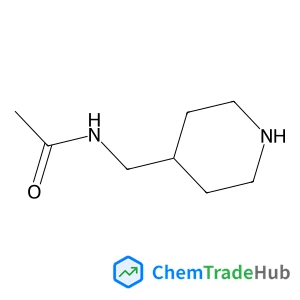
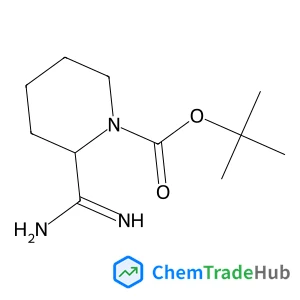
2-Methyl-2-propanyl 2-carbamimidoyl-1-piperidinecarboxylate
CAS Number:
1258640-98-0
Molecular Formula:
C11H21N3O2
Recommended Suppliers






Disclaimer
This page provides academic journal information for reference and research purposes only. We are not affiliated with any journal publishers and do not handle publication submissions. For publication-related inquiries, please contact the respective journal publishers directly.
If you notice any inaccuracies in the information displayed, please contact us at support@chemtradehub.com. We will promptly review and address your concerns.