



The interaction of H2S with the ZnO(100) surface
Literature Information
Publication Date
2013-04-26
DOI
10.1039/C3CP44546A
Impact Factor
3.676
Authors
Jakub Goclon, Bernd Meyer
View Original
Abstract
Using density functional theory with and without Hubbard-U correction we have calculated the geometric structure and the binding energy of H2S molecules adsorbed on the main cleavage plane of ZnO. We find that H2S molecules preferentially dissociate upon adsorption, with a negligible barrier for the first and an activation energy of about 0.5 eV for the second SH bond dissociation. In the low coverage limit of individual molecules single and double dissociation are energetically almost degenerate. At higher coverage double dissociation is favored because of attractive adsorbate–adsorbate interactions. Thermodynamic analysis shows that the double-dissociated state at full saturation with a coverage of 1/2 monolayer is the most stable adsorbate structure for a wide range of temperatures and partial pressures. However, at high H2S chemical potential a full monolayer of single-dissociated H2S becomes thermodynamically more favorable. In addition, at low temperature this structure may exist as a metastable configuration due to the activation barrier for the second SH bond cleavage. Finally we show that it is thermodynamically favorable for adsorbed H2S to react with the first ZnO surface layer to form ZnS and water.
Recommended Journals

Organic Preparations and Procedures International

Pharmacological Reviews

Planta Medica

Proceedings of the National Academy of Sciences of the United States of America

Russian Chemical Reviews

Kinetics and Catalysis

European Journal of Wood and Wood Products

Journal of Physics and Chemistry of Solids

Journal of Medicinal Chemistry

Helvetica Chimica Acta
Related Literature
Label-free and highly sensitive detection of DNA adenine methylation methyltransferase through cathodic photoelectrochemistry
Fang Li, Xiuming Wu, Mengmeng Gu, Guang-Li Wang
2021-02-02
Paper
DOI: 10.1039/D0AN02438D
Rational design of water-dispersible and biocompatible nanoprobes with H2S-triggered NIR emission for cancer cell imaging
Hengyan Liu, Ge Xu, Tianli Zhu, Rongchen Wang, Jiahui Tan, Chunchang Zhao, Xianfeng Gu
2020-06-29
Communication
DOI: 10.1039/D0TB00173B
Cell-inspired biointerfaces constructed from patterned smart hydrogels for immunoassays in whole blood
Jianwen Hou, Runhai Chen, Zhirong Xin, Hengchong Shi, Shing-Chung Wong, Jinghua Yin, Qiang Shi
2017-02-27
Paper
DOI: 10.1039/C6TB03385G
Accurate and rapid microfluidic ELISA to monitor Infliximab titers in patients with inflammatory bowel diseases
Virginia Chu, João Gonçalves
2021-12-30
Paper
DOI: 10.1039/D1AN01810H
A novel microfluidic system for the sensitive and cost-effective detection of okadaic acid in mussels
Ana Castanheira, Marília Barreiros dos Santos, Laura Rodriguez-Lorenzo, Raquel Queirós, Begoña Espiña
2021-02-09
Paper
DOI: 10.1039/D0AN02092C
Ascorbic acid functionalized anti-aggregated Au nanoparticles for ultrafast MEF and SERS detection of tartrazine: an ultra-wide piecewise linear range study
Mengru Li, Ran Li, Bo Han, Haojie Ma, Xueyan Hou, Yulong Kang, Yuqi Zhang, Ji-Jiang Wang
2021-12-30
Paper
DOI: 10.1039/D1AN02139G
Controllable nitrogen-doping of nanoporous carbons enabled by coordination frameworks
Wei Zhang, Saiyu Bu, Qinghong Yuan, Ming Hu
2018-12-13
Paper
DOI: 10.1039/C8TA09817D
Flexible thread-based electrochemical sensors for oxygen monitoring
2021-03-09
Paper
DOI: 10.1039/D0AN02400G
You might also like
Compound Q&A
What is the market or research trend for N-(4-Methoxybenzyl)-2-pyridinamine (CAS: 52818-63-0)?
N-(4-Methoxybenzyl)-2-pyridinamine (CAS: 52818-63-0) is increasingly being used ...
52818-63-0N-(4-Methoxybenzyl)-...
Compound Q&A
What precautions should be taken when handling Ethyl 4-(2-chlorophenyl)-1,3-thiazole-2-carboxylate (CAS: 1050507-06-6)?
When handling Ethyl 4-(2-chlorophenyl)-1,3-thiazole-2-carboxylate, appropriate p...
1050507-06-6Ethyl 4-(2-chlorophe...
Compound Q&A
What regulatory guidelines apply to diethyldiselane (CAS: 628-39-7)?
Diethyldiselane (CAS: 628-39-7) is classified under the Globally Harmonized Syst...
628-39-7Diethyldiselane
Compound Q&A
What is the market or research trend for oxocopper (CAS: 12053-18-8)?
The market for oxocopper (CAS: 12053-18-8) is primarily driven by its use in cat...
12053-18-8oxocopper; oxo-(oxoc...
Compound Q&A
What is the market or research trend for 5-{[(2-Methyl-2-propanyl)oxy]carbonyl}-5-azaspiro[2.4]heptane-7-carboxylic acid?
The market for 5-{[(2-Methyl-2-propanyl)oxy]carbonyl}-5-azaspiro[2.4]heptane-7-c...
1268519-54-55-{[(2-Methyl-2-prop...
Compound Q&A
What is 2-(1-Pyrrolidinyl)-4-pyridinamine (CAS: 35981-63-6)?
2-(1-Pyrrolidinyl)-4-pyridinamine is a chemical compound with the CAS number 359...
35981-63-62-(1-Pyrrolidinyl)-4...
Compound Q&A
What are the physical and chemical properties of 2-(3-Pyridinyl)-1-azabicyclo[2.2.2]octane (CAS: 91556-75-1)?
2-(3-Pyridinyl)-1-azabicyclo[2.2.2]octane (CAS: 91556-75-1) is a crystalline sol...
91556-75-12-(3-Pyridinyl)-1-az...
Compound Q&A
How is (S)-Alpha-allyl-proline hydrochloride (CAS: 129704-91-2) typically synthesized?
(S)-Alpha-allyl-proline hydrochloride is usually synthesized via a Wittig reacti...
129704-91-2(S)-Alpha-allyl-prol...
Compound Q&A
What is 3-Methyl-1,2-oxazole-5-carboxylic acid (CAS: 4857-42-5)?
3-Methyl-1,2-oxazole-5-carboxylic acid (CAS: 4857-42-5) is an organic compound w...
4857-42-53-Methyl-1,2-oxazole...
Compound Q&A
How is Lys-SMCC-DM1 (CAS: 1281816-04-3) typically synthesized?
Lys-SMCC-DM1 is synthesized via a multi-step process involving the coupling of S...
1281816-04-3Lys-SMCC-DM1
Source Journal
Physical Chemistry Chemical Physics

CiteScore:
5.5
Self-citation Rate:
10.3%
Articles per Year:
3036
Physical Chemistry Chemical Physics (PCCP) is an international journal co-owned by 19 physical chemistry and physics societies from around the world. This journal publishes original, cutting-edge research in physical chemistry, chemical physics and biophysical chemistry. To be suitable for publication in PCCP, articles must include significant innovation and/or insight into physical chemistry; this is the most important criterion that reviewers and Editors will judge against when evaluating submissions. The journal has a broad scope and welcomes contributions spanning experiment, theory, computation and data science. Topical coverage includes spectroscopy, dynamics, kinetics, statistical mechanics, thermodynamics, electrochemistry, catalysis, surface science, quantum mechanics, quantum computing and machine learning. Interdisciplinary research areas such as polymers and soft matter, materials, nanoscience, energy, surfaces/interfaces, and biophysical chemistry are welcomed if they demonstrate significant innovation and/or insight into physical chemistry. Joined experimental/theoretical studies are particularly appreciated when complementary and based on up-to-date approaches.
Recommended Compounds

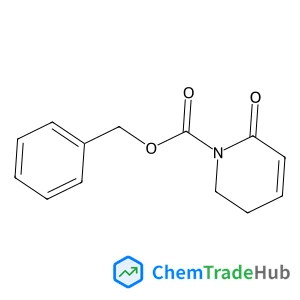
Benzyl 6-oxo-3,6-dihydro-1(2H)-pyridinecarboxylate
CAS Number:
725746-35-0
Molecular Formula:
C13H13NO3

2-(4,4-Difluorobutyl)-1H-isoindole-1,3(2H)-dione
CAS Number:
1265341-14-7
Molecular Formula:
C12H11F2NO2
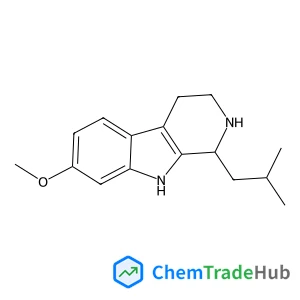
1-Isobutyl-7-methoxy-2,3,4,9-tetrahydro-1H-beta-carboline
CAS Number:
175975-76-5
Molecular Formula:
C16H22N2O
Recommended Suppliers






Disclaimer
This page provides academic journal information for reference and research purposes only. We are not affiliated with any journal publishers and do not handle publication submissions. For publication-related inquiries, please contact the respective journal publishers directly.
If you notice any inaccuracies in the information displayed, please contact us at support@chemtradehub.com. We will promptly review and address your concerns.