













Carbon onion/sulfur hybrid cathodes via inverse vulcanization for lithium–sulfur batteries
Literature Information
Publication Date
2017-10-31
DOI
10.1039/C7SE00452D
Impact Factor
6.367
Authors
Soumyadip Choudhury, Kumar Raju, Kenneth I. Ozoemena, Lars Borchardt
View Original
Abstract
A sulfur–1,3-diisopropenylbenzene copolymer was synthesized by ring-opening radical polymerization and hybridized with carbon onions at different loading levels. The carbon onion mixing was assisted by shear in a two-roll mill to capitalize on the softened state of the copolymer. The sulfur copolymer and the hybrids were thoroughly characterized in structure and chemical composition, and finally tested by electrochemical benchmarking. An enhancement of specific capacity was observed over 140 cycles at higher content of carbon onions in the hybrid electrodes. The copolymer hybrids demonstrate a maximum initial specific capacity of 1150 mA h gsulfur−1 (850 mA h gelectrode−1) and a low decay of capacity to reach 790 mA h gsulfur−1 (585 mA h gelectrode−1) after 140 charge/discharge cycles. All carbon onion/sulfur copolymer hybrid electrodes yielded high chemical stability, stable electrochemical performance superior to conventional melt-infiltrated reference samples having similar sulfur and carbon onion content. The amount of carbon onions embedded in the sulfur copolymer has a strong influence on the specific capacity, as they effectively stabilize the sulfur copolymer and sterically hinder the recombination of sulfur species to the S8 configuration.
Related Literature
An artificial protein cage made from a 12-membered ring
Bernard Piette, Kinga Borzęcka-Solarz, Antonina Naskalska, Jonathan G. Heddle
2023-12-13
Communication
DOI: 10.1039/D3TB01659E
An investigation into the effects of ink formulations of semi-solid extrusion 3D printing on the performance of printed solid dosage forms
Peter Belton, Andrew Gleadall, Richard Bibb, Sheng Qi
2023-11-27
Paper
DOI: 10.1039/D3TB01868G
Hydrothermal conversion of cerium oxalate to CeO2: a parade of oxalate and water coordination modes
Navid Assi, Christophe Lahoud, Petr Brázda, Dominika Zákutná, Daniel N. Rainer, Jakub Hraníček, Jan Rohlíček, Václav Tyrpekl
2023-12-11
Communication
DOI: 10.1039/D3NJ04635D
2D nanomaterial-based 3D network hydrogels for anti-infection therapy
Mingji Jiang, Yingnan Zhu, Qingsi Li, Wenxin Liu, Alideertu Dong, Lei Zhang
2023-12-19
Review Article
DOI: 10.1039/D3TB02244G
The effect of oxygen supply using perfluorocarbon-based nanoemulsions on human hair growth
Phil June Park, Himangsu Mondal, Sung Tae Kim, Jun-Pil Jee
2023-12-11
Paper
DOI: 10.1039/D3TB02237D
153Sm-labeled Fe3O4@lapatinib nanoparticles as a potential therapeutic agent for breast cancer: synthesis, quality control, and in vivo evaluation
Thanh Minh Pham, Dong Vu Cao, Ho Hong Quang Dang, Phuoc Minh Thanh Mai, Thanh Binh Nguyen, Ngoc Bao Nam Dinh, Thi Khanh Giang Nguyen, Thi Mai Huong Le, Van Dat Doan, Duc Thuan Nguyen
2023-12-11
Paper
DOI: 10.1039/D3TB01957H
Ruthenium/HI-catalyzed direct hydromethylation of indoles and quinolines in DME
Pengxiang Gao, Zheng Wang, Ruotong Chang, Wei Li, Ziwei Zhao, Dexin Fu, Qingbin Liu
2023-12-07
Paper
DOI: 10.1039/D3NJ03341D
Multifaceted properties of an engineered three-dimensional Zn(ii)–metal–organic coordination polymer: synthesis, crystal structure, efficient photocatalytic degradation of an organic dye and selective luminescent sensing
Rais Ahmad Khan, Amal AlFawaz, Imran Hasan, Nouf A. AlMuryyi, Afnan A. Alhamed, Sameen Laeeq, Sandeep Dey, Anup Paul, Ali Alsalme
2023-12-20
Paper
DOI: 10.1039/D3NJ04709A
Vancomycin-loaded hydrogels with thermal-responsive, self-peeling, and sustainable antibacterial properties for wound dressing
Yun Tang, Xinrui Shu, Guandi He, Yuhan Zhang, Yonghe Zhao, Hudie Yuan, Jingjie Yu, Jiabao Guo, Qiang Chen
2023-12-11
Paper
DOI: 10.1039/D3TB02084C
Dual-mode fluorescence and electrochemiluminescence sensors based on Ru-MOF nanosheets for sensitive detection of apoE genes
Huiting Hu, Hanfeng Cui, Xia Yin, Qiqi Fan, Hai Shuai, Jing Zhang, Fusheng Liao, Wei Xiong, Hedong Jiang, Hao Fan, Wenming Liu, Guobing Wei
2023-11-10
Paper
DOI: 10.1039/D3TB01934A
You might also like
Compound Q&A
How should waste containing (6-Bromo-2-naphthyl)oxy](dimethyl)(2-methyl-2-propanyl)silane be handled?
Waste containing (6-Bromo-2-naphthyl)oxy](dimethyl)(2-methyl-2-propanyl)silane (...
100751-65-3[(6-Bromo-2-naphthyl...
Compound Q&A
How is 7-Fluoro-4-isoquinolinecarboxylic acid (CAS: 1841081-40-0) typically synthesized?
7-Fluoro-4-isoquinolinecarboxylic acid can be synthesized via a multi-step proce...
1841081-40-07-Fluoro-4-isoquinol...
Compound Q&A
What are the physical and chemical properties of 2,3,5,6-Tetrabromothieno[3,2-b]thiophene (CAS: 124638-53-5)?
2,3,5,6-Tetrabromothieno[3,2-b]thiophene is a crystalline compound with a high m...
124638-53-52,3,5,6-Tetrabromoth...
Compound Q&A
Is 1-[4-(Benzylamino)-7,8-dihydro-5H-pyrano[4,3-d]pyrimidin-2-yl]-2-methyl-1H-indole-4-carboxamide (CAS: 1542705-92-9) safe?
1-[4-(Benzylamino)-7,8-dihydro-5H-pyrano[4,3-d]pyrimidin-2-yl]-2-methyl-1H-indol...
1542705-92-91-[4-(Benzylamino)-7...
Compound Q&A
What is the market or research trend for imidazo[5,1-d]-1,2,3,5-tetrazine-8-carboxylic acid, 3,4-dihydro-3-methyl-4-oxo- (CAS: 113942-30-6)?
The market for imidazo[5,1-d]-1,2,3,5-tetrazine-8-carboxylic acid, 3,4-dihydro-3...
113942-30-6Imidazo[5,1-d]-1,2,3...
Compound Q&A
What is 3-(Triisopropylsilyl)propiolaldehyde (CAS: 163271-80-5)?
3-(Triisopropylsilyl)propiolaldehyde is a synthetic organic compound with the CA...
163271-80-53-(Triisopropylsilyl...
Compound Q&A
What regulatory guidelines apply to 6-Nitro-2H-1,4-benzoxazin-3(4H)-one (CAS: 81721-87-1)?
6-Nitro-2H-1,4-benzoxazin-3(4H)-one (CAS: 81721-87-1) is subject to various regu...
81721-87-16-Nitro-2H-1,4-benzo...
Compound Q&A
How should waste containing (3-Fluorophenyl)(4-{[(2-methyl-2-propanyl)oxy]carbonyl}-1-piperazinyl)acetic acid (CAS: 885272-91-3) be handled?
Waste containing (3-Fluorophenyl)(4-{[(2-methyl-2-propanyl)oxy]carbonyl}-1-piper...
885272-91-3(3-Fluorophenyl)(4-{...
Compound Q&A
What are the physical and chemical properties of N,N'-4,4'-Biphenyldiyldiisonicotinamide (CAS: 55119-40-9)?
N,N'-4,4'-Biphenyldiyldiisonicotinamide is a white crystalline solid with a mole...
55119-40-9N,N'-4,4'-Biphenyldi...
Compound Q&A
What industries use 6-Bromo-8-fluoro-2-quinazolinol (CAS: 1036756-15-6)?
6-Bromo-8-fluoro-2-quinazolinol is primarily used in the pharmaceutical industry...
1036756-15-66-Bromo-8-fluoro-2-q...
Source Journal
Recommended Compounds
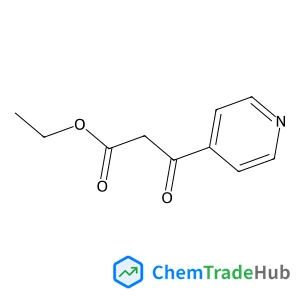
![10-(1-Azabicyclo[2.2.2]oct-3-ylmethyl)-10H-phenothiazine structure](https://static.chemtradehub.com/structs/292/29216-28-2-1d81.webp "10-(1-Azabicyclo[2.2.2]oct-3-ylmethyl)-10H-phenothiazine structure")
10-(1-Azabicyclo[2.2.2]oct-3-ylmethyl)-10H-phenothiazine
CAS Number:
29216-28-2
Molecular Formula:
C20H22N2S
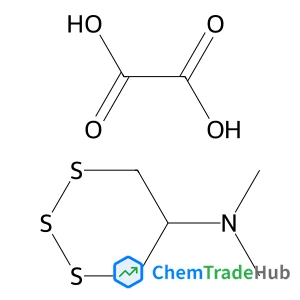
Oxalic acid compound with cyclohexylsulfamothioic O-acid (11)
CAS Number:
31895-22-4
Molecular Formula:
C7H13NO4S3
Recommended Suppliers




Disclaimer
This page provides academic journal information for reference and research purposes only. We are not affiliated with any journal publishers and do not handle publication submissions. For publication-related inquiries, please contact the respective journal publishers directly.
If you notice any inaccuracies in the information displayed, please contact us at support@chemtradehub.com. We will promptly review and address your concerns.