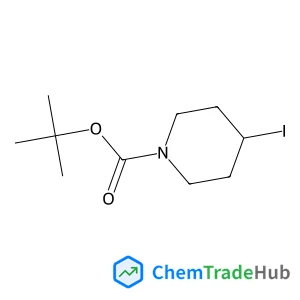
2-Methyl-2-propanyl 4-iodo-1-piperidinecarboxylate
CAS Number:
301673-14-3
Molecular Formula:
C10H18INO2
Yun Tang, Xinrui Shu, Guandi He, Yuhan Zhang, Yonghe Zhao, Hudie Yuan, Jingjie Yu, Jiabao Guo, Qiang Chen
Wound dressings play an important role in wound healing. However, many wound dressings lack antibacterial properties and are difficult to remove from newly grown tissues, causing secondary wound injuries and repeated medical treatment. This study reports a new type of thermal-responsive hydrogel dressing consisting of vancomycin-loaded gelatin nanospheres (GNs) and poly((N-isopropylacrylamide)-co-N-(methylol acrylamide)) functional components that could impart self-peeling and sustainable antibacterial properties. SEM images showed that the prepared hydrogel possessed a porous microstructure and the homogeneous distribution of GNs in its network. Excellent swelling ratios and thermal-induced self-peeling characteristics were confirmed by qualitative analysis. The GNs not only enhanced the strain at break of the hydrogel, but also acted as drug carriers to slow down the drug release from the hydrogel, achieving sustainable antibacterial properties and balanced biocompatibility. Therefore, this vancomycin-loaded hydrogel with self-peeling characteristics provides an effective way of preventing wound infection and can be used as a novel platform for wide-ranging applications of wound dressings.
Hamid Ardolic
DOI: 10.1039/C5PY01455G
Sensho Kigoshi, Arihiro Kanazawa, Shokyoku Kanaoka, Sadahito Aoshima
DOI: 10.1039/C4PY01012D
DOI: 10.1039/C4PY01102C
Wenbo Wu, Zhen Xu, Wendi Xiang, Zhen Li
DOI: 10.1039/C4PY01058B
Xiaodong Liu, Lifen Zhang, Zhenping Cheng, Xiulin Zhu
DOI: 10.1039/C5PY01765C
Lei Dong, Yu-Cheng Chiu, Chu-Chen Chueh, An-Dih Yu, Wen-Chang Chen
DOI: 10.1039/C4PY00988F
Yuanyuan Yuan, Shudong Lin, Du Cheng, Xiaoying Wang, Qing Jiang, Xintao Shuai
DOI: 10.1039/C4PY90073A
Lin Zhou, Mao Chen, Ying Guan, Yongjun Zhang
DOI: 10.1039/C4PY00868E
Johan V. Olsson, Daniel Hult, Yanling Cai, Sandra García-Gallego, Michael Malkoch
DOI: 10.1039/C4PY00911H
Waste containing (6-Bromo-2-naphthyl)oxy](dimethyl)(2-methyl-2-propanyl)silane (...
7-Fluoro-4-isoquinolinecarboxylic acid can be synthesized via a multi-step proce...
2,3,5,6-Tetrabromothieno[3,2-b]thiophene is a crystalline compound with a high m...
1-[4-(Benzylamino)-7,8-dihydro-5H-pyrano[4,3-d]pyrimidin-2-yl]-2-methyl-1H-indol...
The market for imidazo[5,1-d]-1,2,3,5-tetrazine-8-carboxylic acid, 3,4-dihydro-3...
3-(Triisopropylsilyl)propiolaldehyde is a synthetic organic compound with the CA...
6-Nitro-2H-1,4-benzoxazin-3(4H)-one (CAS: 81721-87-1) is subject to various regu...
Waste containing (3-Fluorophenyl)(4-{[(2-methyl-2-propanyl)oxy]carbonyl}-1-piper...
N,N'-4,4'-Biphenyldiyldiisonicotinamide is a white crystalline solid with a mole...
6-Bromo-8-fluoro-2-quinazolinol is primarily used in the pharmaceutical industry...
Journal of Materials Chemistry A, B & C cover high quality studies across all fields of materials chemistry. The journals focus on those theoretical or experimental studies that report new understanding, applications, properties and synthesis of materials. The journals have a strong history of publishing quality reports of interest to interdisciplinary communities and providing an efficient and rigorous service through peer review and publication. The journals are led by an international team of Editors-in-Chief and Associate Editors who are all active researchers in their fields. Journal of Materials Chemistry A, B & C are separated by the intended application of the material studied. Broadly, applications in energy and sustainability are of interest to Journal of Materials Chemistry A, applications in biology and medicine are of interest to Journal of Materials Chemistry B, and applications in optical, magnetic and electronic devices are of interest to Journal of Materials Chemistry C. More than one Journal of Materials Chemistry journal may be suitable for certain fields and researchers are encouraged to submit their paper to the journal that they feel best fits for their particular article. Example topic areas within the scope of Journal of Materials Chemistry B are listed below. This list is neither exhaustive nor exclusive. Antifouling coatings Biocompatible materials Bioelectronics Bioimaging Biomimetics Biomineralisation Bionics Biosensors Diagnostics Drug delivery Gene delivery Immunobiology Nanomedicine Regenerative medicine & Tissue engineering Scaffolds Soft robotics Stem cells Therapeutic devices image block All articles published in Journal of Materials Chemistry B from 2019 onwards will be indexed in MEDLINE®. Articles that primarily focus on providing insight into the underlying science and performance of biomaterials within a biological environment are more suited to our companion journal, Biomaterials Science.
![2-{[4-(2-Methoxyethyl)phenoxy]methyl}oxirane structure](https://static.chemtradehub.com/structs/567/56718-70-8-f037.webp "2-{[4-(2-Methoxyethyl)phenoxy]methyl}oxirane structure")
![10-(1-Azabicyclo[2.2.2]oct-3-ylmethyl)-10H-phenothiazine structure](https://static.chemtradehub.com/structs/292/29216-28-2-1d81.webp "10-(1-Azabicyclo[2.2.2]oct-3-ylmethyl)-10H-phenothiazine structure")