












Thermo- and redox-responsive dendronized polymer hydrogels
Literature Information
Publication Date
2018-01-10
DOI
10.1039/C7PY01284E
Impact Factor
5.582
Authors
Xiacong Zhang, Yu Yin, Jiatao Yan, Afang Zhang
View Original
Abstract
In order to combine dendritic structures and thermoresponsiveness within the field of metallo-supramolecular chemistry, a novel type of smart hydrogel was prepared through ferrous ion-induced supramolecular interactions from oligoethylene glycol (OEG)-based, first-generation (G1) dendritic copolymers containing terpyridine (Tpy) moieties. These hydrogels show both thermally-induced reversible shrunk-swelling and redox-mediated gel–sol transitions. Rheological analyses by rotational rheometry revealed that their storage modulus (G′) and loss modulus (G′′) were dependent on crosslinking density through changing the molar ratio of metal ions and Tpy moieties, as well as the copolymer composition with different ratios of OEG dendron and Tpy units. Copolymers pendanted with linear OEG units and second-generation (G2) dendrons were also prepared to compare the possible effects of architecture on the formation of hydrogels and their properties. By virtue of the thermoresponsiveness of these dendronized copolymers, hydrogels were further prepared through crosslinking of aggregates above the polymer phase-transition temperatures, which provides a convenient strategy to afford hydrogels with much improved elastic modulus. Moreover, encapsulation and thermally-mediated transition of the model drug from the hydrogels were investigated, to demonstrate the unique confinement from the OEG-based dendronized polymer matrix. This report provides not only a first route to fabricate intelligent hydrogels from dendronized copolymers through metal ions-mediated coordination, but also proves that thermoresponsive hydrogels with enhanced mechanical properties could be simply prepared by crosslinking thermally-induced polymer aggregates.
Related Literature
Reversible carboxylation of N-heterocyclic carbenes
Hung A. Duong, Thomas N. Tekavec, Atta M. Arif, Janis Louie
2003-11-10
Communication
DOI: 10.1039/B311350G
Highly-efficient metal-free organic dyes for dye-sensitized solar cells
Tamotsu Horiuchi, Hidetoshi Miura, Satoshi Uchida
2003-11-03
Communication
DOI: 10.1039/B307819A
Synthesis and characterization of luminescent osmium(ii) carbonyl complexes based on chelating dibenzoylmethanate and halide ligands
Yao-Lun Chen, Chittaranjan Sinha, I-Chia Chen, Kuan-Lin Liu, Yun Chi, Jen-Kan Yu, Pi-Tai Chou, Tian-Huey Lu
2003-10-31
Communication
DOI: 10.1039/B308340C
Helical templating of polyiodide networks at a binuclear metallo complex
Caitlin J. Horn, Alexander J. Blake, Neil R. Champness, Alessandra Garau, Vito Lippolis, Claire Wilson, Martin Schröder
2003-01-14
Communication
DOI: 10.1039/B211743F
The C-terminal ester of membrane anchored peptide ion channels affects anion transport
Natasha Djedovic, Riccardo Ferdani, Egan Harder, Jolanta Pajewska, Robert Pajewski, Paul H. Schlesinger, George W. Gokel
2003-10-23
Communication
DOI: 10.1039/B312209N
Formation of nickel-thiolate aggregates via reaction with CH2Cl2
Qiang Wang, Andrew C. Marr, Alexander J. Blake, Claire Wilson, Martin Schröder
2003-10-20
Communication
DOI: 10.1039/B309523A
A novel approach to polymeric hollow nanospheres with stabilized structure
Min Kuang, Hongwei Duan, Jing Wang, Daoyong Chen, Ming Jiang
2003-01-22
Communication
DOI: 10.1039/B210851H
Direct preparation of polyfunctional amino-substituted arylmagnesium reagents via an iodine–magnesium exchange reaction
Greta Varchi, Christiane Kofink, David M. Lindsay, Alfredo Ricci, Paul Knochel
2003-01-14
Communication
DOI: 10.1039/B211115B
Facile fabrication of 2-dimensional arrays of sub-10 nm single crystalline Si nanopillars using nanoparticle masks
Young-Kyu Hong, Jae Ho Bahng, Geunseop Lee, Hanchul Kim, Wondong Kim, Sekyung Lee, Ja-Yong Koo, Jong-Il Park, Woo-ram Lee, Jinwoo Cheon
2003-11-13
Communication
DOI: 10.1039/B310098G
Unusual structure of the dimeric 4-bromocalcimycin–Zn2+ complex
Stéphane Vila, Isabelle Canet, Jacques Guyot, Georges Jeminet, Loïc Toupet
2003-01-21
Communication
DOI: 10.1039/B210280N
You might also like
Compound Q&A
What precautions should be taken when handling lithium chloride hydrate (1:1:1) (CAS: 16712-20-2)?
When handling lithium chloride hydrate (1:1:1) (CAS: 16712-20-2), it is importan...
16712-20-2Lithium chloride hyd...
Compound Q&A
Is 4-(4H-1,2,4-Triazol-4-yl)piperidine (CAS: 690261-92-8) safe?
4-(4H-1,2,4-Triazol-4-yl)piperidine is generally considered safe for use in phar...
690261-92-84-(4H-1,2,4-Triazol-...
Compound Q&A
How should waste containing 1,3-Thiazole-2-carboxamide (CAS: 16733-85-0) be handled?
Waste containing 1,3-Thiazole-2-carboxamide (CAS: 16733-85-0) should be collecte...
16733-85-01,3-Thiazole-2-carbo...
Compound Q&A
What regulatory guidelines apply to 5-(Difluoromethyl)-2-fluorobenzonitrile (CAS: 934175-58-3)?
5-(Difluoromethyl)-2-fluorobenzonitrile (CAS: 934175-58-3) is subject to regulat...
934175-58-35-(Difluoromethyl)-2...
Compound Q&A
How is Methyl 3-acetamido-2-thiophenecarboxylate (CAS: 22288-79-5) typically synthesized?
Methyl 3-acetamido-2-thiophenecarboxylate can be synthesized by the reaction of ...
22288-79-5Methyl 3-acetamido-2...
Compound Q&A
What is 4-Isoquinolinecarbonitrile (CAS: 34846-65-6)?
4-Isoquinolinecarbonitrile is a chemical compound with the CAS number 34846-65-6...
34846-65-64-Isoquinolinecarbon...
Compound Q&A
How should Methyl 1H-1,2,3-triazole-4-carboxylate (CAS: 877309-59-6) be stored?
Store Methyl 1H-1,2,3-triazole-4-carboxylate (CAS: 877309-59-6) in a cool, dry p...
877309-59-6Methyl 1H-1,2,3-tria...
Compound Q&A
What regulatory guidelines apply to 6-Bromo[1,3]thiazolo[5,4-b]pyridin-2-amine (CAS: 1160791-13-8)?
6-Bromo[1,3]thiazolo[5,4-b]pyridin-2-amine (CAS: 1160791-13-8) is subject to the...
1160791-13-86-Bromo[1,3]thiazolo...
Compound Q&A
Is (2S,3S)-2-Ammonio-3-(3,4-dihydroxyphenyl)-3-hydroxypropanoate (CAS: 23651-95-8) safe?
(2S,3S)-2-Ammonio-3-(3,4-dihydroxyphenyl)-3-hydroxypropanoate (CAS: 23651-95-8) ...
23651-95-8(2S,3S)-2-Ammonio-3-...
Compound Q&A
What are the physical and chemical properties of 7-bromo-3-methyl-3,4-dihydroquinazolin-4-one (CAS: 1293987-84-4)?
7-Bromo-3-methyl-3,4-dihydroquinazolin-4-one is a solid with a crystalline form....
1293987-84-47-bromo-3-methyl-3,4...
Source Journal
Polymer Chemistry

CiteScore:
8.6
Self-citation Rate:
7.3%
Articles per Year:
457
Polymer Chemistry welcomes submissions in all areas of polymer science that have a strong focus on macromolecular chemistry. Manuscripts may cover a broad range of fields, yet no direct application focus is required.
Recommended Compounds

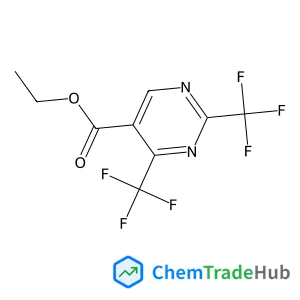
Ethyl 2,4-bis(trifluoromethyl)-5-pyrimidinecarboxylate
CAS Number:
188781-15-9
Molecular Formula:
C9H6F6N2O2
![Benzeneacetic acid, 2-bromo-α-[[(1,1-dimethylethoxy)carbonyl]amino]-, (αS)- structure](https://static.chemtradehub.com/structs/122/1228547-87-2-f296.webp "Benzeneacetic acid, 2-bromo-α-[[(1,1-dimethylethoxy)carbonyl]amino]-, (αS)- structure")
Benzeneacetic acid, 2-bromo-α-[[(1,1-dimethylethoxy)carbonyl]amino]-, (αS)-
CAS Number:
1228547-87-2
Molecular Formula:
C13H16BrNO4
Recommended Suppliers





Disclaimer
This page provides academic journal information for reference and research purposes only. We are not affiliated with any journal publishers and do not handle publication submissions. For publication-related inquiries, please contact the respective journal publishers directly.
If you notice any inaccuracies in the information displayed, please contact us at support@chemtradehub.com. We will promptly review and address your concerns.