


Sustainable polyvinyl acetals from bioaromatic aldehydes
Literature Information
Publication Date
2017-03-24
DOI
10.1039/C7PY00205J
Impact Factor
5.582
Authors
Mayra Rostagno, Steven Shen, Ion Ghiviriga, Stephen A. Miller
View Original
Abstract
A series of polyvinyl aromatic acetals was obtained from the condesation of commercially available polyvinyl alcohol (PVA) and sustainable aromatic aldehydes: 4-hydroxybenzaldehyde, vanillin, syringaldehyde, ethylvanillin, ortho-vanillin, isovanillin, salicylaldehyde, ortho-anisaldehyde, para-anisaldehyde, benzaldehyde, cinnamaldehyde, cuminaldehyde, and hydroxymethylfurfural. The degree of acetalization was determined by 1H NMR and found to range from 54 to 75%, resulting in calculated number average molecular weights of 38 200 to 46 000 Da. The glass transition temperature (Tg) of PVA (75 °C) was increased to substantially excel over that of polystyrene (PS, 100 °C), with polyvinyl aromatic acetal Tg values ranging from 114 to 157 °C. Heterogeneous degradation studies of polyvinyl vanillin acetal at room temperature indicated nearly complete hydrolysis over 24 hours in acidic aqueous media. For example, at pH = 1, the initial acetalization of 54% dropped to 0.8%, generating benign aromatic small molecules and water-soluble, biodegradable PVA.
Recommended Journals

Journal of Enzyme inhibition and Medicinal Chemistry

Mini-Reviews in Medicinal Chemistry

Contact Lens & Anterior Eye

Molecular Diversity

Angewandte Chemie International Edition

Photochemical & Photobiological Sciences

Advanced Engineering Materials

Current Pharmaceutical Biotechnology

Environmental Toxicology and Pharmacology

Coloration Technology
Related Literature
Conformational analysis of amphetamine and methamphetamine: a comprehensive approach by vibrational and chiroptical spectroscopy
Kristýna Dobšíková, Pavel Michal, Dita Spálovská, Josef Kapitán, Vladimír Setnička
2023-02-16
Paper
DOI: 10.1039/D2AN02014A
Insight into the role of nitrogen in N-doped ordered mesoporous carbons for the spontaneous non-covalent attachment and electrografting of redox-active materials
Nasim Shamsvand, Hamzeh Hassanaki
2023-02-17
Paper
DOI: 10.1039/D3AN00176H
CuO nanorod-decorated hemin-graphene with enhanced peroxidase-mimicking performance for the colorimetric and electrochemical determination of 4-aminophenol with a smartphone
Miaomiao Li, Xiuying Peng, Zhiguang Liu, Yan Dai, Yujie Han, Lifang Fan, Yujing Guo
2023-05-10
Paper
DOI: 10.1039/D3AN00327B
On the mechanism of the bipolar reference electrode
Nicole L. Walker
2023-02-23
Paper
DOI: 10.1039/D3AN00107E
Characterization of bispecific antigen-binding biotherapeutic fragmentation sites using microfluidic capillary electrophoresis coupled to mass spectrometry (mCZE-MS)
Ruhi Desai, Weidong Cui, John J. Harrahy, Alexander R. Ivanov
2023-01-03
Paper
DOI: 10.1039/D2AN01724E
Mass spectrometry-based quantitation combined with time-dependent metabolomics to discover metabolic features in human neurogenesis using neural constructs generated from neural progenitor cells
Xin Wang, Zhenye Gao, Wenxiu Zhou
2022-12-16
Paper
DOI: 10.1039/D2AN01162J
Discrimination of Robusta Amazônico coffee farmed by indigenous and non-indigenous people in Amazon: comparing benchtop and portable NIR using ComDim and duplex
Patrícia Valderrama, Enrique Anastácio Alves, Juliana Azevedo Lima Pallone, Federico Marini
2023-02-28
Paper
DOI: 10.1039/D3AN00104K
Light controlled reversible Michael addition of cysteine: a new tool for dynamic site-specific labeling of proteins
Soham Maity, Courtney Bingham, Wei Sheng, Nona Ehyaei, Debarshi Chakraborty, Setare Tahmasebi-Nick, Thomas E. Kimmel, Chrysoula Vasileiou, James H. Geiger, Babak Borhan
2023-01-25
Paper
DOI: 10.1039/D2AN01395A
Development of a modularized aptamer targeting the nuclear T-cell suppressor PAC1
Zixi Hu, Zhongyu Jiang, Zeliang Yang, Liang Liu, Zhenyu Zhu, Yan Jin, Yuxin Yin
2023-05-16
Paper
DOI: 10.1039/D3AN00011G
Surface plasmon resonance detection of UV irradiation-induced DNA damage and photoenzymatic repair processes through specific interaction between consensus double-stranded DNA and p53 protein
Yuhan He, Sijia Chen, Guoyang Xie, Xinyao Yi, Jianxiu Wang
2022-12-26
Paper
DOI: 10.1039/D2AN01847K
You might also like
Compound Q&A
What are the main uses of 4-Nitrophenyl phosphate disodium salt hexahydrate (CAS: 333338-18-4)?
4-Nitrophenyl phosphate disodium salt hexahydrate is primarily used as a substra...
333338-18-44-Nitrophenyl phosph...
Compound Q&A
What are the main uses of 2-(Trifluoromethyl)-1,3-oxazole-4-carboxylic Acid (CAS: 1060816-01-4)?
2-(Trifluoromethyl)-1,3-oxazole-4-carboxylic Acid (CAS: 1060816-01-4) is widely ...
1060816-01-42-(Trifluoromethyl)-...
Compound Q&A
How should 2-Fluoro-4-biphenylcarboxylic acid (CAS: 137045-30-8) be stored?
2-Fluoro-4-biphenylcarboxylic acid should be stored in a cool, dry place at room...
137045-30-82-Fluoro-4-biphenylc...
Compound Q&A
What industries use Prednisolone-21-Carboxylic Acid (CAS: 61549-70-0)?
Prednisolone-21-Carboxylic Acid is primarily used in the pharmaceutical industry...
61549-70-0Prednisolone-21-Carb...
Compound Q&A
How should 4-(Hydrazinomethyl)-1,2,3-benzenetriol (CAS: 3614-72-0) be stored?
4-(Hydrazinomethyl)-1,2,3-benzenetriol (CAS: 3614-72-0) should be stored in a co...
3614-72-04-(Hydrazinomethyl)-...
Compound Q&A
What industries use 4-Amino-1-methyl-1H-pyrazole-5-carboxylic acid hydrochloride (CAS: 92534-70-8)?
4-Amino-1-methyl-1H-pyrazole-5-carboxylic acid hydrochloride (CAS: 92534-70-8) i...
92534-70-84-Amino-1-methyl-1H-...
Compound Q&A
What regulatory guidelines apply to dehydropachymic acid (CAS: 77012-31-8)?
Dehydropachymic acid (CAS: 77012-31-8) is regulated by various agencies. It fall...
77012-31-8Dehydropachymic acid
Compound Q&A
What is the market or research trend for 6-[(2,2-Dimethylpropanoyl)amino]nicotinic acid (CAS: 898561-66-5)?
The market and research trends for 6-[(2,2-Dimethylpropanoyl)amino]nicotinic aci...
898561-66-56-[(2,2-Dimethylprop...
Compound Q&A
How should 1,10-Phenanthroline-2,9-dicarbaldehyde (CAS: 57709-62-3) be stored?
1,10-Phenanthroline-2,9-dicarbaldehyde should be stored in a cool, dry place awa...
57709-62-31,10-Phenanthroline-...
Compound Q&A
How is 5-Carbamoyl-11-oxo-10,11-dihydro-5H-dibenzo[b,f]azepin-10-yl acetate (CAS: 113952-21-9) typically synthesized?
5-Carbamoyl-11-oxo-10,11-dihydro-5H-dibenzo[b,f]azepin-10-yl acetate can be synt...
113952-21-95-Carbamoyl-11-oxo-1...
Source Journal
Polymer Chemistry

CiteScore:
8.6
Self-citation Rate:
7.3%
Articles per Year:
457
Polymer Chemistry welcomes submissions in all areas of polymer science that have a strong focus on macromolecular chemistry. Manuscripts may cover a broad range of fields, yet no direct application focus is required.
Recommended Compounds
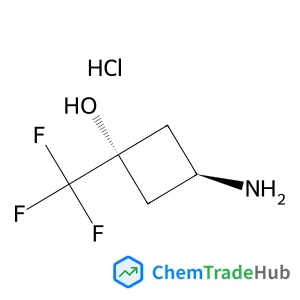
cis-3-Amino-1-(trifluoromethyl)cyclobutanol hydrochloride (1:1)
CAS Number:
1408075-16-0
Molecular Formula:
C5H9ClF3NO
![[(1S,2S,3R,4S,7R,9S,10S,12R,15S)-4,12-Diacetyloxy-15-[(2R,3S)-3-benzamido-3-phenyl-2-(2,2,2-trichloroethoxycarbonyloxy)propanoyl]oxy-1,9-dihydroxy-10,14,17,17-tetramethyl-11-oxo-6-oxatetracyclo[11.3.1.03,10.04,7]heptadec-13-en-2-yl] benzoate structure](https://static.chemtradehub.com/structs/100/100431-55-8-7104.webp "[(1S,2S,3R,4S,7R,9S,10S,12R,15S)-4,12-Diacetyloxy-15-[(2R,3S)-3-benzamido-3-phenyl-2-(2,2,2-trichloroethoxycarbonyloxy)propanoyl]oxy-1,9-dihydroxy-10,14,17,17-tetramethyl-11-oxo-6-oxatetracyclo[11.3.1.03,10.04,7]heptadec-13-en-2-yl] benzoate structure")
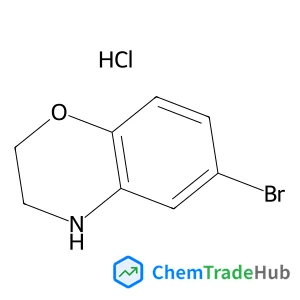
6-Bromo-3,4-dihydro-2H-1,4-benzoxazine hydrochloride (1:1)
CAS Number:
1260803-10-8
Molecular Formula:
C8H9BrClNO
Recommended Suppliers





Disclaimer
This page provides academic journal information for reference and research purposes only. We are not affiliated with any journal publishers and do not handle publication submissions. For publication-related inquiries, please contact the respective journal publishers directly.
If you notice any inaccuracies in the information displayed, please contact us at support@chemtradehub.com. We will promptly review and address your concerns.