


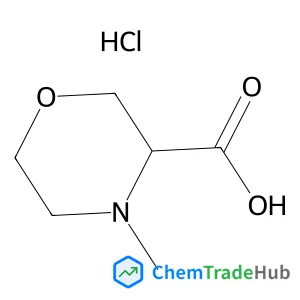
4-Methyl-3-morpholinecarboxylic acid hydrochloride (1:1)
CAS Number:
1240518-90-4
Molecular Formula:
C6H12ClNO3
Soham Maity, Courtney Bingham, Wei Sheng, Nona Ehyaei, Debarshi Chakraborty, Setare Tahmasebi-Nick, Thomas E. Kimmel, Chrysoula Vasileiou, James H. Geiger, Babak Borhan
Cysteine-based Michael addition is a widely employed strategy for covalent conjugation of proteins, peptides, and drugs. The covalent reaction is irreversible in most cases, leading to a lack of control over the process. Utilizing spectroscopic analyses along with X-ray crystallographic studies, we demonstrate Michael addition of an engineered cysteine residue in human Cellular Retinol Binding Protein II (hCRBPII) with a coumarin analog that creates a non-fluorescent complex. UV-illumination reverses the conjugation, yielding a fluorescent species, presumably through a retro-Michael process. This series of events can be repeated between a bound and non-bound form of the cysteine reversibly, resulting in the ON–OFF control of fluorescence. The details of the mechanism of photoswitching was illuminated by recapitulation of the process in light irradiated single crystals, confirming the mechanism at atomic resolution.

European Journal of Organic Chemistry

Faraday Discussions

Green Chemistry

Nature Reviews Drug Discovery

Advanced Engineering Materials

Current Pharmaceutical Biotechnology

Contact Lens & Anterior Eye

Mini-Reviews in Medicinal Chemistry

Angewandte Chemie International Edition

Journal of Enzyme inhibition and Medicinal Chemistry
Raviraj Thakur, Ahmed M. Amin, Steve Wereley
DOI: 10.1039/C4AN01829J
Man Wu, Haolin Li, Yinghui Jiang, Chunmei Song, Huiqin Guo, Shuyan Wu, Cheng Liu, Jianwu Li, Haijuan Zeng, Xuzhao Zhai, Weisheng Zhang, Enguo Fan, Qing Liu
DOI: 10.1039/C5AN01035G
Jilin Tang
DOI: 10.1039/C5AN00945F
Junyu Lu, Fanggui Ye, Aizhu Zhang, Xia Chen, Yu Wei, Shulin Zhao
DOI: 10.1039/C2AN35923E
Melanie J. Bailey, Robert Bradshaw, Simona Francese, Tara L. Salter, Catia Costa, Roger P. Webb, Ingrid Bosman, Kim Wolff, Marcel de Puit
DOI: 10.1039/C5AN00112A
Gerdi Christine Kemmer, Sidsel Ammitzbøll Bogh, Michael Urban, Michael G. Palmgren, Tom Vosch, Jürgen Schiller, Thomas Günther Pomorski
DOI: 10.1039/C5AN01180A
Michael C. D. Tayler, S. (Bas) G. J. van Meerten, Arno P. M. Kentgens, P. Jan M. van Bentum
DOI: 10.1039/C5AN00772K
Kelsey I. MacConaghy, Duncan M. Chadly, Mark P. Stoykovich, Joel L. Kaar
DOI: 10.1039/C5AN01191D
Wayne L. O'Brien, Nicholas D. Boltin, Zhenyu Lu, Brianna M. Cassidy, Raymond G. Belliveau, Emory J. Straub, Stephanie A. DeJong, Stephen L. Morgan, M. L. Myrick
DOI: 10.1039/C5AN01413A
4-Nitrophenyl phosphate disodium salt hexahydrate is primarily used as a substra...
2-(Trifluoromethyl)-1,3-oxazole-4-carboxylic Acid (CAS: 1060816-01-4) is widely ...
2-Fluoro-4-biphenylcarboxylic acid should be stored in a cool, dry place at room...
Prednisolone-21-Carboxylic Acid is primarily used in the pharmaceutical industry...
4-(Hydrazinomethyl)-1,2,3-benzenetriol (CAS: 3614-72-0) should be stored in a co...
4-Amino-1-methyl-1H-pyrazole-5-carboxylic acid hydrochloride (CAS: 92534-70-8) i...
Dehydropachymic acid (CAS: 77012-31-8) is regulated by various agencies. It fall...
The market and research trends for 6-[(2,2-Dimethylpropanoyl)amino]nicotinic aci...
1,10-Phenanthroline-2,9-dicarbaldehyde should be stored in a cool, dry place awa...
5-Carbamoyl-11-oxo-10,11-dihydro-5H-dibenzo[b,f]azepin-10-yl acetate can be synt...

Analyst publishes analytical and bioanalytical research that reports premier fundamental discoveries and inventions, and the applications of those discoveries, unconfined by traditional discipline barriers.

![N-[2-(4-Hydroxyphenoxy)-4-nitrophenyl]methanesulfonamide structure](https://static.chemtradehub.com/structs/109/109032-22-6-7c88.webp "N-[2-(4-Hydroxyphenoxy)-4-nitrophenyl]methanesulfonamide structure")



