












CuO nanorod-decorated hemin-graphene with enhanced peroxidase-mimicking performance for the colorimetric and electrochemical determination of 4-aminophenol with a smartphone
Literature Information
Publication Date
2023-05-10
DOI
10.1039/D3AN00327B
Impact Factor
4.616
Authors
Miaomiao Li, Xiuying Peng, Zhiguang Liu, Yan Dai, Yujie Han, Lifang Fan, Yujing Guo
View Original
Abstract
The detection of 4-aminophenol (4-AP) is of critical importance due to its high toxicity, and the development of accurate, sensitive, and portable methods for this purpose is essential. Here, a facile colorimetric and electrochemical dual-mode sensor based on a CuO nanorod-decorated hemin-functionalized graphene nanocomposite (CuO/H-Gr) is successfully constructed for the detection of 4-AP. CuO/H-Gr exhibited superior peroxidase-mimicking activity, catalyzing the oxidation of 3,3′,5,5′-tetramethylbenzidine (TMB) by H2O2 and generating a colorimetric signal. The catalytic system was found to contain hydroxyl radicals, as revealed by reactive oxygen species trials. Meanwhile, TMB was found to be an electroactive indicator that could be oxidized on a glassy carbon electrode. In the presence of CuO/H-Gr and H2O2, an enhanced electrochemical signal of TMB was generated. Upon the addition of 4-AP, the catalytic performance of CuO/H-Gr in the oxidation of TMB was significantly reduced, leading to a decrease in colorimetric and electrochemical signals. Based on this, a dual-mode sensor for the detection of 4-AP was developed. The linear response ranges for colorimetric and electrochemical sensors are 1.00–200 μM and 0.0100–300 μM, with detection limits of 0.687 μM and 0.00756 μM, respectively. Real water samples were tested to estimate the feasibility of the dual-mode sensor, and the recoveries were found to be consistent with those obtained by high-performance liquid chromatography. In addition, a smartphone-based assay was used to evaluate the levels of 4-AP, which opened a new path for on-site detection.
Related Literature
Strand displacement activated peroxidase activity of hemin for fluorescent DNA sensing
Quanbo Wang, Nan Xu, Zhen Gui, Jianping Lei, Huangxian Ju, Feng Yan
2015-08-07
Paper
DOI: 10.1039/C5AN01206F
Highly sensitive ligand-binding assays in pre-clinical and clinical applications: immuno-PCR and other emerging techniques
Mark Spengler, Michael Adler, Christof M. Niemeyer
2015-07-21
Critical Review
DOI: 10.1039/C5AN00822K
Contribution of rotational diffusivity towards the transport of antigens in heterogeneous immunosensors
2015-08-06
Paper
DOI: 10.1039/C5AN00803D
Dependence of negative-mode electrospray ionization response factors on mobile phase composition and molecular structure for newly-authenticated neutral acylsucrose metabolites
Banibrata Ghosh
2015-08-27
Paper
DOI: 10.1039/C4AN02124J
High resolution ion mobility-mass spectrometry for separation and identification of isomeric lipids
M. Groessl, S. Graf, R. Knochenmuss
2015-08-20
Paper
DOI: 10.1039/C5AN00838G
Cellular discrimination using in vitro Raman micro spectroscopy: the role of the nucleolus
Z. Farhane, F. Bonnier, A. Casey, A. Maguire, L. O'Neill, H. J. Byrne
2015-07-20
Paper
DOI: 10.1039/C5AN01157D
Fine-tuning the specificity of boronate affinity monoliths toward glycoproteins through pH manipulation
Yue Lu, Zijun Bie, Yunchun Liu, Zhen Liu
2012-10-02
Paper
DOI: 10.1039/C2AN36048A
Investigating the relationship between changes in collagen fiber orientation during skin aging and collagen/water interactions by polarized-FTIR microimaging
2015-06-09
Paper
DOI: 10.1039/C5AN00278H
Absorption spectroscopy in microfluidic flow cells using a metal clad leaky waveguide device with a porous gel waveguide layer
Bruce Grieve
2012-10-31
Paper
DOI: 10.1039/C2AN35898K
You might also like
Compound Q&A
What are the main uses of 4-Nitrophenyl phosphate disodium salt hexahydrate (CAS: 333338-18-4)?
4-Nitrophenyl phosphate disodium salt hexahydrate is primarily used as a substra...
333338-18-44-Nitrophenyl phosph...
Compound Q&A
What are the main uses of 2-(Trifluoromethyl)-1,3-oxazole-4-carboxylic Acid (CAS: 1060816-01-4)?
2-(Trifluoromethyl)-1,3-oxazole-4-carboxylic Acid (CAS: 1060816-01-4) is widely ...
1060816-01-42-(Trifluoromethyl)-...
Compound Q&A
How should 2-Fluoro-4-biphenylcarboxylic acid (CAS: 137045-30-8) be stored?
2-Fluoro-4-biphenylcarboxylic acid should be stored in a cool, dry place at room...
137045-30-82-Fluoro-4-biphenylc...
Compound Q&A
What industries use Prednisolone-21-Carboxylic Acid (CAS: 61549-70-0)?
Prednisolone-21-Carboxylic Acid is primarily used in the pharmaceutical industry...
61549-70-0Prednisolone-21-Carb...
Compound Q&A
How should 4-(Hydrazinomethyl)-1,2,3-benzenetriol (CAS: 3614-72-0) be stored?
4-(Hydrazinomethyl)-1,2,3-benzenetriol (CAS: 3614-72-0) should be stored in a co...
3614-72-04-(Hydrazinomethyl)-...
Compound Q&A
What industries use 4-Amino-1-methyl-1H-pyrazole-5-carboxylic acid hydrochloride (CAS: 92534-70-8)?
4-Amino-1-methyl-1H-pyrazole-5-carboxylic acid hydrochloride (CAS: 92534-70-8) i...
92534-70-84-Amino-1-methyl-1H-...
Compound Q&A
What regulatory guidelines apply to dehydropachymic acid (CAS: 77012-31-8)?
Dehydropachymic acid (CAS: 77012-31-8) is regulated by various agencies. It fall...
77012-31-8Dehydropachymic acid
Compound Q&A
What is the market or research trend for 6-[(2,2-Dimethylpropanoyl)amino]nicotinic acid (CAS: 898561-66-5)?
The market and research trends for 6-[(2,2-Dimethylpropanoyl)amino]nicotinic aci...
898561-66-56-[(2,2-Dimethylprop...
Compound Q&A
How should 1,10-Phenanthroline-2,9-dicarbaldehyde (CAS: 57709-62-3) be stored?
1,10-Phenanthroline-2,9-dicarbaldehyde should be stored in a cool, dry place awa...
57709-62-31,10-Phenanthroline-...
Compound Q&A
How is 5-Carbamoyl-11-oxo-10,11-dihydro-5H-dibenzo[b,f]azepin-10-yl acetate (CAS: 113952-21-9) typically synthesized?
5-Carbamoyl-11-oxo-10,11-dihydro-5H-dibenzo[b,f]azepin-10-yl acetate can be synt...
113952-21-95-Carbamoyl-11-oxo-1...
Source Journal
Analyst

CiteScore:
7.8
Self-citation Rate:
5.6%
Articles per Year:
653
Analyst publishes analytical and bioanalytical research that reports premier fundamental discoveries and inventions, and the applications of those discoveries, unconfined by traditional discipline barriers.
Recommended Compounds
![(3R,5R)-1-[(Benzyloxy)carbonyl]-5-methyl-3-piperidinecarboxylic acid structure](https://static.chemtradehub.com/structs/126/1269757-29-0-c552.webp "(3R,5R)-1-[(Benzyloxy)carbonyl]-5-methyl-3-piperidinecarboxylic acid structure")
(3R,5R)-1-[(Benzyloxy)carbonyl]-5-methyl-3-piperidinecarboxylic acid
CAS Number:
1269757-29-0
Molecular Formula:
C15H19NO4
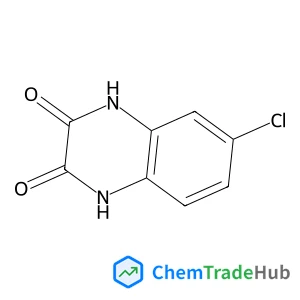
6-CHLORO-2,3-DIOXO-1,2,3,4-TETRAHYDROQUINOXALINE, 97
CAS Number:
169-14-2
Molecular Formula:
C8H5ClN2O2
Recommended Suppliers







Disclaimer
This page provides academic journal information for reference and research purposes only. We are not affiliated with any journal publishers and do not handle publication submissions. For publication-related inquiries, please contact the respective journal publishers directly.
If you notice any inaccuracies in the information displayed, please contact us at support@chemtradehub.com. We will promptly review and address your concerns.