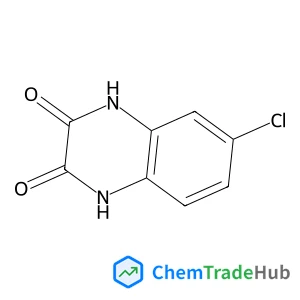
6-CHLORO-2,3-DIOXO-1,2,3,4-TETRAHYDROQUINOXALINE, 97
CAS Number:
169-14-2
Molecular Formula:
C8H5ClN2O2
Kristýna Dobšíková, Pavel Michal, Dita Spálovská, Josef Kapitán, Vladimír Setnička
After cannabis, the most commonly used illicit substance worldwide is amphetamine and its derivatives, such as methamphetamine, with an ever-increasing number of synthetic modifications. Thus, fast and reliable methods are needed to identify them according to their spectral patterns and structures. Here, we have investigated the use of molecular spectroscopy methods to describe the 3D structures of these substances in a solution that models the physiological environment. The substances were analyzed by Raman and infrared (IR) absorption spectroscopy and by chiroptical methods, vibrational circular dichroism (VCD) and Raman optical activity (ROA). The obtained experimental data were supported by three different computational approaches based on density functional theory (DFT) and molecular dynamics (MD). Successful interpretation relies on good agreement between experimental and predicted spectra. The determination of the conformer populations of the studied molecules was based on maximizing the similarity overlap of weighted conformer spectra by a global minimization algorithm. Very good agreement was obtained between the experimental spectra and optimized-population weighted spectra from MD, providing a detailed insight into the structure of the molecules and their interaction with the solvent. The relative population of three amphetamine and six methamphetamine conformers was determined and is consistent with a previous NMR study. However, this work shows that only a few isolated conformers are not sufficient for the successful interpretation of the spectra, but the entire conformational space needs to be sampled appropriately and explicit interaction with the solvent needs to be included.
Rongxian Ma, Jiaxuan Jiang, Yanfei Ya, Yu Lin, Yuyi Zhou, Yeyu Wu, Xuecai Tan, KeJing Huang, Fangkai Du, Jingjuan Xu
DOI: 10.1039/D3AN00024A
Yichen Zhao, Biwen Gao, Yijing Chen, Juewen Liu
DOI: 10.1039/D3AN00154G
Jun-Hee Park, Zhiquan Song, Ji-Hong Bong, Hong-Rae Kim, Min-Jung Kang, Jae-Chul Pyun
DOI: 10.1039/D2AN01648F
Aohuan Guo, Jie Sun, Menghua Yan, Guang-Li Wang
DOI: 10.1039/D3AN00195D
Wei Zhu, Jing-Yi Tang, Dong Yu
DOI: 10.1039/D2AN01831D
Patrícia Valderrama, Enrique Anastácio Alves, Juliana Azevedo Lima Pallone, Federico Marini
DOI: 10.1039/D3AN00104K
Yongliang Dong, Jiali Zhai, Ziwei Zhang, Can Peng, Yunjing Zhang, Zipin Zhang
DOI: 10.1039/D2AN01859D
Yupu Wei, Jinghui Shen, Jinlong Zhuo, Mingqi Xu, Yunliang Wang
DOI: 10.1039/D3AN00038A
Zehang Gao
DOI: 10.1039/D3AN00271C
4-Nitrophenyl phosphate disodium salt hexahydrate is primarily used as a substra...
2-(Trifluoromethyl)-1,3-oxazole-4-carboxylic Acid (CAS: 1060816-01-4) is widely ...
2-Fluoro-4-biphenylcarboxylic acid should be stored in a cool, dry place at room...
Prednisolone-21-Carboxylic Acid is primarily used in the pharmaceutical industry...
4-(Hydrazinomethyl)-1,2,3-benzenetriol (CAS: 3614-72-0) should be stored in a co...
4-Amino-1-methyl-1H-pyrazole-5-carboxylic acid hydrochloride (CAS: 92534-70-8) i...
Dehydropachymic acid (CAS: 77012-31-8) is regulated by various agencies. It fall...
The market and research trends for 6-[(2,2-Dimethylpropanoyl)amino]nicotinic aci...
1,10-Phenanthroline-2,9-dicarbaldehyde should be stored in a cool, dry place awa...
5-Carbamoyl-11-oxo-10,11-dihydro-5H-dibenzo[b,f]azepin-10-yl acetate can be synt...

Analyst publishes analytical and bioanalytical research that reports premier fundamental discoveries and inventions, and the applications of those discoveries, unconfined by traditional discipline barriers.