













Insight into the role of nitrogen in N-doped ordered mesoporous carbons for the spontaneous non-covalent attachment and electrografting of redox-active materials
Literature Information
Publication Date
2023-02-17
DOI
10.1039/D3AN00176H
Impact Factor
4.616
Authors
Nasim Shamsvand, Hamzeh Hassanaki
View Original
Abstract
The role of nitrogen functional groups in nitrogen-doped ordered mesoporous carbons (OMCs) toward the spontaneous non-covalent and electrografting was investigated using two home-made ionic liquid-derived ordered mesoporous carbons having different nitrogen concentrations (guanine-rich ionic liquid-derived ordered mesoporous carbon (GIOMC) and ionic liquid-derived ordered mesoporous carbon (IOMC)). The carbonaceous materials were fabricated by the carbonization of a mixture of ionic liquid (1-methyl-3-phenethyl-1H-imidazolium hydrogen sulfate) as a carbon source using SBA-15 as a hard template. Guanine was used during the carbonization of GIOMC as a nitrogen source. The electrode was modified with either GIOMC or IOMC followed by electrochemical surface functionalization with a few electro-active precursors as redox-active molecular models bearing different substituents and electronic properties. The high surface coverage of 5.6(±0.3) × 10−9 mol cm−2 for 4,4-biphenol was obtained for the GIOMC-modified electrode. We seek to explain whether the nitrogen content could indeed exert a dramatic impact on loading electroactive species on the electrode surface. The non-covalent anchoring studies indicated that at higher pH values the loading of electro-active moieties was significantly influenced by the content of nitrogen on the employed OMCs. The adsorption capacity (mg g−1) of the OMCs was studied for catechol as a typical electro-active species in the range of 0.050–0.165 mg ml−1. The adsorption capacity of 0.11 mg g−1 catechol was 42(±4) and 26(±3) mg g−1 for GIOMC and IOMC, respectively. In addition, our observations revealed that electro-grafting efficiency via diazonium ion was restricted by the protonation of nitrogen in the reaction media. Further, the fabricated redox-active/N-doped OMC electrodes showed sensitivity to pH, which was accompanied by either a Nernstian shift of the redox peak potentials (60(±3) mV per pH) in the pH range of 2–13 in the buffer solutions or variations of the redox peak currents (9.7(±0.3) μA per pH) in the pH range of 1–5.5 in the unbuffered situations. The resulting electrodes as voltammetric pH probes showed a simple response to pH in both buffer and unbuffered solutions. In addition, we introduced the fabricated electrode as a zero-gap generator/collector electrode system using a single electrode to recognize proton-dependent electron transfer from the proton-independent electrode process by detecting pH changes quite close to the surface of the electrode. The detailed descriptions are outlined.
Recommended Journals
Related Literature
Positively charged polymer brush-functionalized filter paper for DNA sequence determination following Dot blot hybridization employing a pyrrolidinyl peptide nucleic acid probe
Tirayut Vilaivan, Voravee P. Hoven
2012-10-19
Paper
DOI: 10.1039/C2AN36133G
A new electrochemical substrate for rapid and sensitive in vivo monitoring of β-galactosidase gene expressions
Kesavan Manibalan, Veerappan Mani
2015-07-10
Paper
DOI: 10.1039/C5AN01036E
On-chip dilution in nanoliter droplets
Raviraj Thakur, Ahmed M. Amin, Steve Wereley
2015-07-14
Communication
DOI: 10.1039/C4AN01829J
A 3D printed microliquid jet with an adjustable nozzle diameter
D. L. A. Fernandes, M. V. Pavliuk
2015-07-30
Communication
DOI: 10.1039/C5AN01329A
A label-free and time-resolved luminescence strategy for the detection of proteins based on DNA–Tb3+ luminescence quenched by graphene oxide
Hao Li, Wang Li, Zhou Nie, Shouzhuo Yao
2015-07-27
Paper
DOI: 10.1039/C5AN01343G
Electrochemical immunosensor modified with self-assembled monolayer of 11-mercaptoundecanoic acid on gold electrodes for detection of benzo[a]pyrene in water
Eric Moore
2012-10-05
Paper
DOI: 10.1039/C2AN35236B
Colorimetric detection of biological hydrogen sulfide using fluorosurfactant functionalized gold nanorods
Xuan Zhang, Wenjuan Zhou, Zhiqin Yuan, Chao Lu
2015-09-17
Paper
DOI: 10.1039/C5AN01665G
Fine-tuning the specificity of boronate affinity monoliths toward glycoproteins through pH manipulation
Yue Lu, Zijun Bie, Yunchun Liu, Zhen Liu
2012-10-02
Paper
DOI: 10.1039/C2AN36048A
You might also like
Compound Q&A
What are the main uses of 4-Nitrophenyl phosphate disodium salt hexahydrate (CAS: 333338-18-4)?
4-Nitrophenyl phosphate disodium salt hexahydrate is primarily used as a substra...
333338-18-44-Nitrophenyl phosph...
Compound Q&A
What are the main uses of 2-(Trifluoromethyl)-1,3-oxazole-4-carboxylic Acid (CAS: 1060816-01-4)?
2-(Trifluoromethyl)-1,3-oxazole-4-carboxylic Acid (CAS: 1060816-01-4) is widely ...
1060816-01-42-(Trifluoromethyl)-...
Compound Q&A
How should 2-Fluoro-4-biphenylcarboxylic acid (CAS: 137045-30-8) be stored?
2-Fluoro-4-biphenylcarboxylic acid should be stored in a cool, dry place at room...
137045-30-82-Fluoro-4-biphenylc...
Compound Q&A
What industries use Prednisolone-21-Carboxylic Acid (CAS: 61549-70-0)?
Prednisolone-21-Carboxylic Acid is primarily used in the pharmaceutical industry...
61549-70-0Prednisolone-21-Carb...
Compound Q&A
How should 4-(Hydrazinomethyl)-1,2,3-benzenetriol (CAS: 3614-72-0) be stored?
4-(Hydrazinomethyl)-1,2,3-benzenetriol (CAS: 3614-72-0) should be stored in a co...
3614-72-04-(Hydrazinomethyl)-...
Compound Q&A
What industries use 4-Amino-1-methyl-1H-pyrazole-5-carboxylic acid hydrochloride (CAS: 92534-70-8)?
4-Amino-1-methyl-1H-pyrazole-5-carboxylic acid hydrochloride (CAS: 92534-70-8) i...
92534-70-84-Amino-1-methyl-1H-...
Compound Q&A
What regulatory guidelines apply to dehydropachymic acid (CAS: 77012-31-8)?
Dehydropachymic acid (CAS: 77012-31-8) is regulated by various agencies. It fall...
77012-31-8Dehydropachymic acid
Compound Q&A
What is the market or research trend for 6-[(2,2-Dimethylpropanoyl)amino]nicotinic acid (CAS: 898561-66-5)?
The market and research trends for 6-[(2,2-Dimethylpropanoyl)amino]nicotinic aci...
898561-66-56-[(2,2-Dimethylprop...
Compound Q&A
How should 1,10-Phenanthroline-2,9-dicarbaldehyde (CAS: 57709-62-3) be stored?
1,10-Phenanthroline-2,9-dicarbaldehyde should be stored in a cool, dry place awa...
57709-62-31,10-Phenanthroline-...
Compound Q&A
How is 5-Carbamoyl-11-oxo-10,11-dihydro-5H-dibenzo[b,f]azepin-10-yl acetate (CAS: 113952-21-9) typically synthesized?
5-Carbamoyl-11-oxo-10,11-dihydro-5H-dibenzo[b,f]azepin-10-yl acetate can be synt...
113952-21-95-Carbamoyl-11-oxo-1...
Source Journal
Analyst

CiteScore:
7.8
Self-citation Rate:
5.6%
Articles per Year:
653
Analyst publishes analytical and bioanalytical research that reports premier fundamental discoveries and inventions, and the applications of those discoveries, unconfined by traditional discipline barriers.
Recommended Compounds
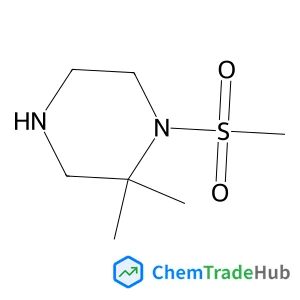

cis-3-Amino-1-(trifluoromethyl)cyclobutanol hydrochloride (1:1)
CAS Number:
1408075-16-0
Molecular Formula:
C5H9ClF3NO
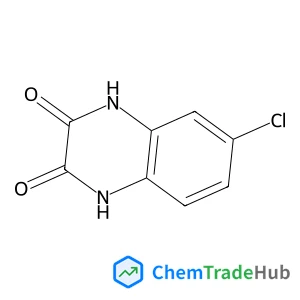
6-CHLORO-2,3-DIOXO-1,2,3,4-TETRAHYDROQUINOXALINE, 97
CAS Number:
169-14-2
Molecular Formula:
C8H5ClN2O2

Recommended Suppliers






Disclaimer
This page provides academic journal information for reference and research purposes only. We are not affiliated with any journal publishers and do not handle publication submissions. For publication-related inquiries, please contact the respective journal publishers directly.
If you notice any inaccuracies in the information displayed, please contact us at support@chemtradehub.com. We will promptly review and address your concerns.