













Inside front cover
Literature Information
Publication Date
DOI
10.1039/C7OB90189E
Impact Factor
3.876
Authors
View Original
Abstract
A graphical abstract is available for this content
Related Literature
Solid-state caging of 1,10-phenanthroline π–π stacked dimers by calix[4]arene dihydroxyphosphonic acid
Adina N. Lazar, Alda Navaza, Anthony W. Coleman
2004-03-30
Communication
DOI: 10.1039/B315600C
Convenient magnesiation of aromatic and heterocyclic rings bearing a hydroxy group in presence of LiCl
Felix Kopp, Arkady Krasovskiy, Paul Knochel
2004-08-26
Communication
DOI: 10.1039/B409664A
Stereospecific peptide folds. A rationally designed molecular bracelet
Soumendra Rana, Bijoy Kundu, Susheel Durani
2004-09-20
Communication
DOI: 10.1039/B410532J
A novel 2D net-like supramolecular polymer constructed from Ln6Cu24 node and trans-Cu(Gly)2 bridge
Jian-Jun Zhang, Sheng-Qing Xia, Tian-Lu Sheng, Sheng-Min Hu, Guido Leibeling, Franc Meyer, Xin-Tao Wu, Sheng-Chang Xiang, Rui-Biao Fu
2004-04-14
Communication
DOI: 10.1039/B400447G
Azobenzene derivatives with a long alkyl chain and aminoxyls
Masahiro Fujino, Takamitsu Amano, Hiroki Akutsu, Jun-ichi Yamada, Shin'ichi Nakatsuji
2004-09-03
Communication
DOI: 10.1039/B408432B
Programmed single step self-assembly of a [2 × 2] grid architecture built on metallic centers of different coordination geometries
Anne Petitjean, Nathalie Kyritsakas, Jean-Marie Lehn
2004-04-23
Communication
DOI: 10.1039/B402854F
Desymmetrization of meso-dienyne by asymmetric Pauson–Khand type reaction catalysts
Nakcheol Jeong, Dong Hoon Kim, Jun Hun Choi
2004-04-08
Communication
DOI: 10.1039/B401288G
First cation radical salt of a tetrathiafulvalene–based phosphine metal complex
Narcis Avarvari, Marc Fourmigué
2004-05-05
Communication
DOI: 10.1039/B403168G
Step-wise dis-assembly of trimesic acid: mono- and bis(methanol) solvates
Sophie H. Dale, Mark R. J. Elsegood, Simon J. Richards
2004-05-10
Communication
DOI: 10.1039/B402922D
Shuttling through reversible covalent chemistry
David A. Leigh, Emilio M. Pérez
2004-09-23
Communication
DOI: 10.1039/B412570C
You might also like
Compound Q&A
What precautions should be taken when handling 2-Chloro-1,2-bis(4-methylphenyl)ethanone (CAS: 71193-32-3)?
When handling 2-Chloro-1,2-bis(4-methylphenyl)ethanone (CAS: 71193-32-3), it is ...
71193-32-32-Chloro-1,2-bis(4-m...
Compound Q&A
What industries use 4-Ethoxy-3-(5-methyl-4-oxo-7-propyl-1,4-dihydroimidazo[5,1-f][1,2,4]triazin-2-yl)benzenesulfonyl chloride (CAS: 224789-26-8)?
4-Ethoxy-3-(5-methyl-4-oxo-7-propyl-1,4-dihydroimidazo[5,1-f][1,2,4]triazin-2-yl...
224789-26-84-Ethoxy-3-(5-methyl...
Compound Q&A
How should Methyl 3-Oxo-4-Androsten-17-Carboxylate (CAS: 2681-55-2) be stored?
Methyl 3-Oxo-4-Androsten-17-Carboxylate (CAS: 2681-55-2) should be stored in a c...
2681-55-2Methyl 3-Oxo-4-Andro...
Compound Q&A
What are the main uses of (R)-3-Amino-4-(3-hexylphenylamino)-4-oxobutylphosphonic acid (CAS: 909725-61-7)?
(R)-3-Amino-4-(3-hexylphenylamino)-4-oxobutylphosphonic acid is primarily used i...
909725-61-7(R)-3-Amino-4-(3-hex...
Compound Q&A
What regulatory guidelines apply to 2-Methyl-2-propanyl 3-amino-3-carbamoyl-1-azetidinecarboxylate (CAS: 1254120-14-3)?
2-Methyl-2-propanyl 3-amino-3-carbamoyl-1-azetidinecarboxylate (CAS: 1254120-14-...
1254120-14-32-Methyl-2-propanyl ...
Compound Q&A
Are there alternatives to (E)-4-(tert-Butoxy)-4-oxobut-2-enoic acid (CAS: 135355-96-3) in synthesis?
There are alternative reagents that can be used in synthesis instead of (E)-4-(t...
135355-96-3(E)-4-(tert-Butoxy)-...
Compound Q&A
What are the physical and chemical properties of [2-(3-Chlorophenyl)-1,3-thiazol-4-yl]methanol (CAS: 121202-20-8)?
[2-(3-Chlorophenyl)-1,3-thiazol-4-yl]methanol (CAS: 121202-20-8) is a crystallin...
121202-20-8[2-(3-Chlorophenyl)-...
Compound Q&A
What is the market or research trend for Methyl (2S)-[(4S)-2,2-dimethyl-1,3-dioxolan-4-yl]{[(4-methylphenyl)sulfonyl]oxy}acetate (CAS: 166249-17-8)?
The market and research trends for Methyl (2S)-[(4S)-2,2-dimethyl-1,3-dioxolan-4...
166249-17-8Methyl (2S)-[(4S)-2,...
Compound Q&A
What is the market or research trend for 1-Bromo-2-isocyanatoethane (CAS: 42865-19-0)?
The market for 1-Bromo-2-isocyanatoethane (CAS: 42865-19-0) is driven by its use...
42865-19-01-Bromo-2-isocyanato...
Compound Q&A
What are the main uses of 4-Nitro-D-phenylalanine hydrochloride (CAS: 147065-06-3)?
4-Nitro-D-phenylalanine hydrochloride (CAS: 147065-06-3) is primarily used in re...
147065-06-34-Nitro-D-phenylalan...
Source Journal
Organic & Biomolecular Chemistry

CiteScore:
3.4
Self-citation Rate:
10.3%
Articles per Year:
1041
Organic & Biomolecular Chemistry (OBC) publishes original and high impact research and reviews in organic chemistry. We welcome research that shows new or significantly improved protocols or methodologies in total synthesis, synthetic methodology or physical and theoretical organic chemistry as well as research that shows a significant advance in the organic chemistry or molecular design aspects of chemical biology, catalysis, supramolecular and macromolecular chemistry, theoretical chemistry, mechanism-oriented physical organic chemistry, medicinal chemistry or natural products. Articles published in the journal should report new work which makes a highly-significant impact in the field. Routine and incremental work is generally not suitable for publication in the journal. More details about key areas of our scope are below. In all cases authors should include in their article clear rationale for why their research has been carried out.
Recommended Compounds

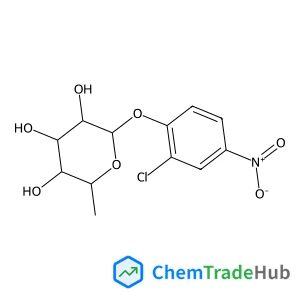
2-Chloro-4-nitrophenyl 6-deoxy-alpha-L-galactopyranoside
CAS Number:
157843-41-9
Molecular Formula:
C12H14ClNO7
Recommended Suppliers





Disclaimer
This page provides academic journal information for reference and research purposes only. We are not affiliated with any journal publishers and do not handle publication submissions. For publication-related inquiries, please contact the respective journal publishers directly.
If you notice any inaccuracies in the information displayed, please contact us at support@chemtradehub.com. We will promptly review and address your concerns.