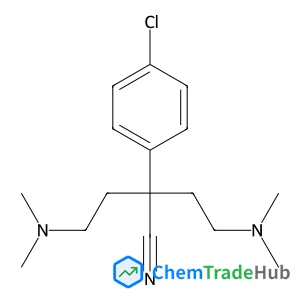
2-(4-Chlorophenyl)-4-(dimethylamino)-2-(2-(dimethylamino)ethyl)butanenitrile
CAS Number:
1246816-57-8
Molecular Formula:
C16H24ClN3
Li Shen, Xuemin Wang, Heyuan Liu, Xiyou Li
Efficient singlet fission (SF) has been obtained in quinoidal bithiophene, end-capped with dicyanomethylene groups (QBT). However, QBT suffers from low triplet state energy [E(T1)] because of its biradicaloid nature, which results in a great driving force for SF but also a large loss of energy during the SF process. This is not favorable for the application of SF in solar cells. Modifications to the molecular structure of QBT were performed to optimize the SF relevant excited state energy levels and its diradical character in the present study. This includes chalcogen replacement, the fusing of the heterocyclic ring between the two thiophene rings, and the introduction of side substituents. Detailed analysis focused on the correlation between the molecular structure of the QBT derivatives and their diradical character y0, bond length alternation (BLA), molecular orbitals, and SF relevant excited state energy levels. The results show that electron-donating substituents, particularly groups introduced at the inner β-positions of the thiophene ring, can increase E(T1) and reduce the energy loss of SF significantly under the premise of exothermic SF. These results would be beneficial to the development of new SF candidates for application in solar cells.
Xuefeng He, Yongsu Li, Meng Wang, Hui-Xuan Chen, Bin Chen, Hao Liang, Yaqi Zhang, Jiyan Pang, Liqin Qiu
DOI: 10.1039/C8OB01029C
William Copp, Christopher J. Wilds
DOI: 10.1039/C8OB02453G
Philip C. Bulman Page, Francesca S. Kinsey, Yohan Chan, Ian R. Strutt, Alexandra M. Z. Slawin, Garth A. Jones
DOI: 10.1039/C8OB01795F
C. Parthiban, Pavithra M., L. Vinod Kumar Reddy, Dwaipayan Sen, Melvin Samuel S., N. D. Pradeep Singh
DOI: 10.1039/C8OB01629A
Samanth Reddy Kedika
DOI: 10.1039/C8OB01406J
Fen Li, Xiaohui Li, Xin Zhang
DOI: 10.1039/C8OB01944D
Rongxiang Chen, Abosede Adejoke Ogunlana, Shangwen Fang, Wenhao Long, Hongmei Sun, Xiaoguang Bao, Xiaobing Wan
DOI: 10.1039/C8OB01067F
Keisuke Tanaka, Yoichi Miyamoto, Takumi Okuda, Tatsuro Kasai, Kentaro Onodera, Masahiro Oka, Yoshihiro Yoneda
DOI: 10.1039/C8OB90140F
Pei-Qian Wu, Yi-Fan Yu, Ye Zhao, Chun-Xue Yu, De-Juan Zhi, Feng-Ming Qi
DOI: 10.1039/C8OB02319K
This compound is mainly used as an intermediate in the synthesis of antipsychoti...
Waste containing 1-(D-Ribofuranosyl)-1,4-dihydro-3-pyridinecarboxamide (CAS: 191...
2-Methyl-2-propanyl 3-bromo-3-(hydroxymethyl)-1-azetidinecarboxylate (CAS: 20079...
N-(4-Chloro-2-pyridinyl)acetamide (CAS: 245056-66-0) is a chemical compound with...
5-Chloro-2-hydroxybenzoic acid, also known as 5-chlorosalicylic acid, is an arom...
When handling 1,1-Dichloro-1-fluoroethane (CAS: 1717-00-6), it is important to u...
Fmoc-(2S,3R)-3-phenylpyrrolidine-2-carboxylic acid is a white crystalline solid ...
4-Amino-5-bromo-2-pyridinecarboxylic acid is primarily used as a precursor in th...
Handling this compound should be done with personal protective equipment (PPE) i...
When handling 8-bromo-2,2-dimethyl-3,4-dihydro-2H-1,4-benzoxazin-3-one, use prop...

Physical Chemistry Chemical Physics (PCCP) is an international journal co-owned by 19 physical chemistry and physics societies from around the world. This journal publishes original, cutting-edge research in physical chemistry, chemical physics and biophysical chemistry. To be suitable for publication in PCCP, articles must include significant innovation and/or insight into physical chemistry; this is the most important criterion that reviewers and Editors will judge against when evaluating submissions. The journal has a broad scope and welcomes contributions spanning experiment, theory, computation and data science. Topical coverage includes spectroscopy, dynamics, kinetics, statistical mechanics, thermodynamics, electrochemistry, catalysis, surface science, quantum mechanics, quantum computing and machine learning. Interdisciplinary research areas such as polymers and soft matter, materials, nanoscience, energy, surfaces/interfaces, and biophysical chemistry are welcomed if they demonstrate significant innovation and/or insight into physical chemistry. Joined experimental/theoretical studies are particularly appreciated when complementary and based on up-to-date approaches.
![2,6-Bis({(2R)-2-[hydroxy(diphenyl)methyl]-1-pyrrolidinyl}methyl)-4-methylphenol structure](https://static.chemtradehub.com/structs/877/877395-58-9-70bf.webp "2,6-Bis({(2R)-2-[hydroxy(diphenyl)methyl]-1-pyrrolidinyl}methyl)-4-methylphenol structure")