


Dynamic Diels–Alder reactions of maleimide–furan amphiphiles and their fluorescence ON/OFF behaviours
Literature Information
Publication Date
2018-10-02
DOI
10.1039/C8OB01944D
Impact Factor
3.876
Authors
Fen Li, Xiaohui Li, Xin Zhang
View Original
Abstract
The occurrence of dynamic covalent reactions only requires relatively low activation energy, which allows both the forward and reverse reactions to proceed under mild conditions. Here, we report the design and synthesis of amphiphilic maleimide–furan adducts, where hydrophobic maleimide-based and hydrophilic furan-based moieties were connected by reversible dynamic covalent bonds. The Diels–Alder addition reactions of maleimide–furan adducts are simple, efficient, clean, and reversible without catalysts and side reactions, and occur under mild conditions. Single crystal X-ray diffraction revealed that the length of the dynamic covalent bonds is 1.56 Å, which is longer and weaker than for normal covalent bonds. The cleavage and reformation process of the dynamic covalent bonds was monitored by 1H NMR and fluorescence spectroscopy. 1H NMR spectroscopy revealed that the furan moieties of these new maleimide–furan amphiphiles can be exchanged in mixing systems due to dynamic Diels–Alder reactions; thus, two new maleimide–furan compounds can be transformed into each other. The maleimide–furan amphiphiles displayed reversible fluorescence ON/OFF behaviours and interesting H-bonding driven supramolecular assembly.
Recommended Journals

Russian Journal of Applied Chemistry

Journal of Saudi Chemical Society

Russian Chemical Bulletin

Journal of Natural Medicines

New Journal of Chemistry

Saudi Pharmaceutical Journal

Journal of Peptide Science

Crystallography Reports

Chemistry Education Research and Practice

Russian Journal of General Chemistry
Related Literature
Recent developments in stimuli-responsive luminescent polymers composed of boron compounds
Shunichiro Ito, Masayuki Gon, Kazuo Tanaka, Yoshiki Chujo
2021-10-01
Review Article
DOI: 10.1039/D1PY01170G
Synthesis and optoelectronic properties of benzodithiophene-based conjugated polymers with hydrogen bonding nucleobase side chain functionality
Sina Sabury, Tyler J. Adams, Margaret Kocherga, Michael G. Walter
2020-08-11
Paper
DOI: 10.1039/D0PY00972E
Development of the first panchromatic BODIPY-based one-component iodonium salts for initiating the photopolymerization processes
Monika Topa-Skwarczyńska, Mariusz Galek, Magdalena Jankowska, Fabrice Morlet-Savary, Bernadette Graff, Jacques Lalevée, Roman Popielarz
2021-11-03
Paper
DOI: 10.1039/D1PY01263K
Facile preparation of polycarbonates from bio-based eugenol and 2-methoxy-4-vinylphenol
Mengqian Huang, De Bai, Qin Chen, Changbo Zhao, Tianhua Ren, Caijuan Huang, Michael North, Haibo Xie
2020-06-30
Communication
DOI: 10.1039/D0PY00291G
Porous polycaprolactone and polycarbonate poly(urethane urea)s via emulsion templating: structures, properties, cell growth‡
Katya Kapilov-Buchman, Tslil Bialystocki, Danna Niezni, Luba Perry, Shulamit Levenberg, Michael S. Silverstein
2021-11-01
Paper
DOI: 10.1039/D1PY01106E
Development of physical, mechanical, antibacterial and cell growth properties of poly(glycerol sebacate urethane) (PGSU) with helping of curcumin and hydroxyapatite nanoparticles
Vafa Fakhri, Aliakbar Jafari, Mir Alireza Shafiei, Mohammad Vahid Ehteshamfar, Shima Khalighiyan, Hadi Hosseini, Vahabodin Goodarzi, Frederik R. Wurm, Mehrdad Moosazadeh Moghaddam
2021-10-19
Paper
DOI: 10.1039/D1PY01040A
Self-healing behaviour of furan–maleimide poly(ionic liquid) covalent adaptable networks
Katelyn M. Lindenmeyer, R. Daniel Johnson, Kevin M. Miller
2020-02-26
Communication
DOI: 10.1039/D0PY00016G
Effect of polymerisation by microwave on the physical properties of molecularly imprinted polymers (MIPs) specific for caffeine
Heli A. Brahmbhatt, Alexander Surtees, Cavan Tierney, Oluwabukunmi A. Ige, Elena V. Piletska, Thomas Swift
2020-08-12
Paper
DOI: 10.1039/D0PY00921K
Self-healable functional polymers based on Diels–Alder ‘click chemistry’ involving substituted furan and triazolinedione derivatives: a simple and very fast approach
Prantik Mondal, Gourhari Jana, Tuhin Subhra Pal, Nikhil K. Singha
2021-09-27
Paper
DOI: 10.1039/D1PY00910A
You might also like
Compound Q&A
What is the market or research trend for N-(4-Methoxybenzyl)-2-pyridinamine (CAS: 52818-63-0)?
N-(4-Methoxybenzyl)-2-pyridinamine (CAS: 52818-63-0) is increasingly being used ...
52818-63-0N-(4-Methoxybenzyl)-...
Compound Q&A
What precautions should be taken when handling Ethyl 4-(2-chlorophenyl)-1,3-thiazole-2-carboxylate (CAS: 1050507-06-6)?
When handling Ethyl 4-(2-chlorophenyl)-1,3-thiazole-2-carboxylate, appropriate p...
1050507-06-6Ethyl 4-(2-chlorophe...
Compound Q&A
What regulatory guidelines apply to diethyldiselane (CAS: 628-39-7)?
Diethyldiselane (CAS: 628-39-7) is classified under the Globally Harmonized Syst...
628-39-7Diethyldiselane
Compound Q&A
What is the market or research trend for oxocopper (CAS: 12053-18-8)?
The market for oxocopper (CAS: 12053-18-8) is primarily driven by its use in cat...
12053-18-8oxocopper; oxo-(oxoc...
Compound Q&A
What is the market or research trend for 5-{[(2-Methyl-2-propanyl)oxy]carbonyl}-5-azaspiro[2.4]heptane-7-carboxylic acid?
The market for 5-{[(2-Methyl-2-propanyl)oxy]carbonyl}-5-azaspiro[2.4]heptane-7-c...
1268519-54-55-{[(2-Methyl-2-prop...
Compound Q&A
What is 2-(1-Pyrrolidinyl)-4-pyridinamine (CAS: 35981-63-6)?
2-(1-Pyrrolidinyl)-4-pyridinamine is a chemical compound with the CAS number 359...
35981-63-62-(1-Pyrrolidinyl)-4...
Compound Q&A
What are the physical and chemical properties of 2-(3-Pyridinyl)-1-azabicyclo[2.2.2]octane (CAS: 91556-75-1)?
2-(3-Pyridinyl)-1-azabicyclo[2.2.2]octane (CAS: 91556-75-1) is a crystalline sol...
91556-75-12-(3-Pyridinyl)-1-az...
Compound Q&A
How is (S)-Alpha-allyl-proline hydrochloride (CAS: 129704-91-2) typically synthesized?
(S)-Alpha-allyl-proline hydrochloride is usually synthesized via a Wittig reacti...
129704-91-2(S)-Alpha-allyl-prol...
Compound Q&A
What is 3-Methyl-1,2-oxazole-5-carboxylic acid (CAS: 4857-42-5)?
3-Methyl-1,2-oxazole-5-carboxylic acid (CAS: 4857-42-5) is an organic compound w...
4857-42-53-Methyl-1,2-oxazole...
Compound Q&A
How is Lys-SMCC-DM1 (CAS: 1281816-04-3) typically synthesized?
Lys-SMCC-DM1 is synthesized via a multi-step process involving the coupling of S...
1281816-04-3Lys-SMCC-DM1
Source Journal
Organic & Biomolecular Chemistry

CiteScore:
3.4
Self-citation Rate:
10.3%
Articles per Year:
1041
Organic & Biomolecular Chemistry (OBC) publishes original and high impact research and reviews in organic chemistry. We welcome research that shows new or significantly improved protocols or methodologies in total synthesis, synthetic methodology or physical and theoretical organic chemistry as well as research that shows a significant advance in the organic chemistry or molecular design aspects of chemical biology, catalysis, supramolecular and macromolecular chemistry, theoretical chemistry, mechanism-oriented physical organic chemistry, medicinal chemistry or natural products. Articles published in the journal should report new work which makes a highly-significant impact in the field. Routine and incremental work is generally not suitable for publication in the journal. More details about key areas of our scope are below. In all cases authors should include in their article clear rationale for why their research has been carried out.
Recommended Compounds

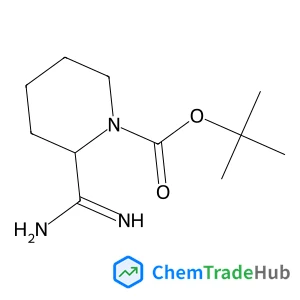
2-Methyl-2-propanyl 2-carbamimidoyl-1-piperidinecarboxylate
CAS Number:
1258640-98-0
Molecular Formula:
C11H21N3O2
Recommended Suppliers






Disclaimer
This page provides academic journal information for reference and research purposes only. We are not affiliated with any journal publishers and do not handle publication submissions. For publication-related inquiries, please contact the respective journal publishers directly.
If you notice any inaccuracies in the information displayed, please contact us at support@chemtradehub.com. We will promptly review and address your concerns.