












Covalent capture of OGT's active site using engineered human-E. coli chimera and intrastrand DNA cross-links
Literature Information
Publication Date
2018-11-07
DOI
10.1039/C8OB02453G
Impact Factor
3.876
Authors
William Copp, Christopher J. Wilds
View Original
Abstract
O 6-Alkylguanine DNA alkyltransferases (AGTs) are proteins found in most organisms whose role is to remove alkylation damage from the O6- and O4-positions of 2′-deoxyguanosine (dG) and thymidine (dT), respectively. Variations in active site residues between AGTs from different organisms leads to differences in repair proficiency: The human variant (hAGT) has a proclivity for removal of alkyl groups at the O6-position of guanine and the E. coli OGT protein has activity towards the O4-position of thymine. A chimeric protein (hOGT) that our laboratory has engineered with twenty of the active site residues mutated in hAGT to those found in OGT, exhibited activity towards a broader range of substrates relative to native OGT. Among the substrates that the hOGT protein was found to act upon was interstrand cross-linked DNA connected by an alkylene linkage at the O6-position of dG to the complementary strand. In the present study the activity of hOGT towards DNA containing alkylene intrastrand cross-links (IaCL) at the O6- and O4-positions respectively of dG and dT, which lack a phosphodiester linkage between the connected residues, was evaluated. The hOGT protein exhibited proficiency at removal of an alkylene linkage at the O6-atom of dG but the O4-position of dT was refractory to protein activity. The activity of the chimeric hOGT protein towards these IaCLs to prepare well defined DNA–protein cross-linked conjugates will enable mechanistic and high resolution structural studies to address the differences observed in the repair adeptness of O4-alkylated dT by the OGT protein relative to other AGT variants.
Recommended Journals
Related Literature
The addition of CO2 to four superbase ionic liquids: a DFT study
Maxime Mercy, S. F. Rebecca Taylor, Johan Jacquemin, Christopher Hardacre, Robert G. Bell
2015-09-25
Paper
DOI: 10.1039/C5CP05153C
Pressure-responsive mesoscopic structures in room temperature ionic liquids
Olga Russina, Fabrizio Lo Celso, Alessandro Triolo
2015-10-19
Communication
DOI: 10.1039/C5CP04682C
Improved charge carrier separation in barium tantalate composites investigated by laser flash photolysis
Jenny Schneider, Michael Wark, Roland Marschall
2015-12-15
Paper
DOI: 10.1039/C5CP07115A
A new insight into the nanostructure of alkylammonium alkanoates based ionic liquids in water
Umme Salma, Paolo Ballirano, Marianna Usula, Ruggero Caminiti, Natalia V. Plechkova, Kenneth R. Seddon, Lorenzo Gontrani
2016-03-21
Paper
DOI: 10.1039/C5CP07953E
Are the three hydroxyphenyl radical isomers created equal? – The role of the phenoxy radical –
P. Hemberger, G. da Silva, A. J. Trevitt, T. Gerber, A. Bodi
2015-10-21
Paper
DOI: 10.1039/C5CP05346C
Electron delocalization and electron density of small polycyclic aromatic hydrocarbons in singlet excited states
Mar Estévez-Fregoso, Jesús Hernández-Trujillo
2016-01-11
Paper
DOI: 10.1039/C5CP06993A
Nonlinear optical chromophores based on Dewar's rules: enhancement of electro-optic activity by introducing heteroatoms into the donor or bridge
Shuhui Bo, Xinhou Liu
2015-10-07
Paper
DOI: 10.1039/C5CP04959H
Strong orbital deformation due to CH–π interaction in the benzene–methane complex
Jianfu Li, Rui-Qin Zhang
2015-10-19
Communication
DOI: 10.1039/C5CP04684J
Biexponential photon antibunching: recombination kinetics within the Förster-cycle in DMSO
Michael Vester, Andreas Grueter, Björn Finkler, Robert Becker, Gregor Jung
2016-03-11
Paper
DOI: 10.1039/C6CP00718J
You might also like
Compound Q&A
What is the market or research trend for N-(4-Methoxybenzyl)-2-pyridinamine (CAS: 52818-63-0)?
N-(4-Methoxybenzyl)-2-pyridinamine (CAS: 52818-63-0) is increasingly being used ...
52818-63-0N-(4-Methoxybenzyl)-...
Compound Q&A
What precautions should be taken when handling Ethyl 4-(2-chlorophenyl)-1,3-thiazole-2-carboxylate (CAS: 1050507-06-6)?
When handling Ethyl 4-(2-chlorophenyl)-1,3-thiazole-2-carboxylate, appropriate p...
1050507-06-6Ethyl 4-(2-chlorophe...
Compound Q&A
What regulatory guidelines apply to diethyldiselane (CAS: 628-39-7)?
Diethyldiselane (CAS: 628-39-7) is classified under the Globally Harmonized Syst...
628-39-7Diethyldiselane
Compound Q&A
What is the market or research trend for oxocopper (CAS: 12053-18-8)?
The market for oxocopper (CAS: 12053-18-8) is primarily driven by its use in cat...
12053-18-8oxocopper; oxo-(oxoc...
Compound Q&A
What is the market or research trend for 5-{[(2-Methyl-2-propanyl)oxy]carbonyl}-5-azaspiro[2.4]heptane-7-carboxylic acid?
The market for 5-{[(2-Methyl-2-propanyl)oxy]carbonyl}-5-azaspiro[2.4]heptane-7-c...
1268519-54-55-{[(2-Methyl-2-prop...
Compound Q&A
What is 2-(1-Pyrrolidinyl)-4-pyridinamine (CAS: 35981-63-6)?
2-(1-Pyrrolidinyl)-4-pyridinamine is a chemical compound with the CAS number 359...
35981-63-62-(1-Pyrrolidinyl)-4...
Compound Q&A
What are the physical and chemical properties of 2-(3-Pyridinyl)-1-azabicyclo[2.2.2]octane (CAS: 91556-75-1)?
2-(3-Pyridinyl)-1-azabicyclo[2.2.2]octane (CAS: 91556-75-1) is a crystalline sol...
91556-75-12-(3-Pyridinyl)-1-az...
Compound Q&A
How is (S)-Alpha-allyl-proline hydrochloride (CAS: 129704-91-2) typically synthesized?
(S)-Alpha-allyl-proline hydrochloride is usually synthesized via a Wittig reacti...
129704-91-2(S)-Alpha-allyl-prol...
Compound Q&A
What is 3-Methyl-1,2-oxazole-5-carboxylic acid (CAS: 4857-42-5)?
3-Methyl-1,2-oxazole-5-carboxylic acid (CAS: 4857-42-5) is an organic compound w...
4857-42-53-Methyl-1,2-oxazole...
Compound Q&A
How is Lys-SMCC-DM1 (CAS: 1281816-04-3) typically synthesized?
Lys-SMCC-DM1 is synthesized via a multi-step process involving the coupling of S...
1281816-04-3Lys-SMCC-DM1
Source Journal
Organic & Biomolecular Chemistry

CiteScore:
3.4
Self-citation Rate:
10.3%
Articles per Year:
1041
Organic & Biomolecular Chemistry (OBC) publishes original and high impact research and reviews in organic chemistry. We welcome research that shows new or significantly improved protocols or methodologies in total synthesis, synthetic methodology or physical and theoretical organic chemistry as well as research that shows a significant advance in the organic chemistry or molecular design aspects of chemical biology, catalysis, supramolecular and macromolecular chemistry, theoretical chemistry, mechanism-oriented physical organic chemistry, medicinal chemistry or natural products. Articles published in the journal should report new work which makes a highly-significant impact in the field. Routine and incremental work is generally not suitable for publication in the journal. More details about key areas of our scope are below. In all cases authors should include in their article clear rationale for why their research has been carried out.
Recommended Compounds
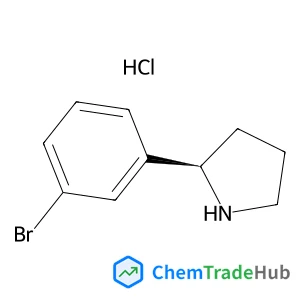
(2R)-2-(3-Bromophenyl)pyrrolidine hydrochloride (1:1)
CAS Number:
1391550-13-2
Molecular Formula:
C10H13BrClN
Recommended Suppliers







Disclaimer
This page provides academic journal information for reference and research purposes only. We are not affiliated with any journal publishers and do not handle publication submissions. For publication-related inquiries, please contact the respective journal publishers directly.
If you notice any inaccuracies in the information displayed, please contact us at support@chemtradehub.com. We will promptly review and address your concerns.