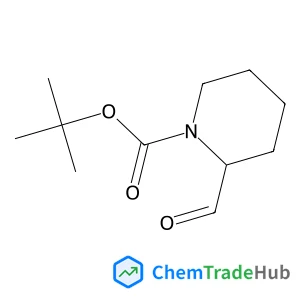
2-Methyl-2-propanyl (2R)-2-formyl-1-piperidinecarboxylate
CAS Number:
134526-69-5
Molecular Formula:
C11H19NO3
In the quest for identifying a graphene membrane for efficient water desalination, molecular dynamics simulations were performed for the pressure-driven flow of salty water across a multilayer graphene membrane. Water transport through the graphene membranes was tuned as a function of pore size, external pressure, and salt concentration. The results predicted that water permeability through the graphene channel (width of h = 7 Å) is two orders of magnitude higher than that through the conventional thin film membranes. The breaking of continuum assumption in graphene nanopores was captured by the appearance of a layered water structure and plug-like velocity profiles. Furthermore, the fluidity under nano confinement of graphene was examined in terms of shear viscosity, friction coefficient, and slip length, which were found to depend on the separation of the confining graphene walls and the external pressure. Furthermore, the MD results revealed that the macroscopic water flux through the graphene nanopores can be linked to the microscopic diffusion of water. The calculated viscosity and diffusion coefficient under the graphene pores did not follow the Stokes–Einstein relation, indicating the failure of the hydrodynamic theory. The confined state of water in the graphene pores was also explored via the translational density of states (TDOS) and entropy, which displayed a significant change in the translational entropy with change in the pore size and applied pressure and thus revealed the interconnectivity of the structure, dynamics, thermodynamics, and hydrodynamics of water in the graphene nanopores. Such a linking of the microscopic parameters with the macroscopic profiles provides direct evidence to the experiments of pressure-driven flow through the graphene membranes and might be helpful in examining the performance of graphene membranes for the factors that have large implications on their application in the reverse osmosis (RO) process and other biological channels.

Russian Journal of Applied Chemistry

Current Opinion in Solid State & Materials Science

Russian Chemical Bulletin

Organic Process Research & Development

Russian Journal of General Chemistry

Russian Journal of Organic Chemistry

Russian Journal of Bioorganic Chemistry

Current Opinion in Colloid & Interface Science

New Journal of Chemistry

Journal of Saudi Chemical Society
T. F. Otero, E. W. H. Jager
DOI: 10.1039/C5CP05841D
Sangram K. Rath, Kathi Sudarshan, Rupesh S. Bhavsar, Ulhas K. Kharul, Pradeep K. Pujari, Manoranjan Patri, Devang V. Khakhar
DOI: 10.1039/C5CP05260B
Jun Ma, Xizi Cao, Xiaopeng Xing, Xuefeng Wang, Joel H. Parks
DOI: 10.1039/C5CP06116D
Talal M. Althagafi, Saud A. Algarni, Abdullah Al Naim, Javed Mazher, Martin Grell
DOI: 10.1039/C5CP03326H
Biswajit Biswas, Prashant Chandra Singh
DOI: 10.1039/C5CP04744G
Marc Nadal-Ferret, Ricard Gelabert, Miquel Moreno
DOI: 10.1039/C5CP01067E
Rui-Ning Wang, Xin-Ran Zhang, Shu-Fang Wang, Guang-Sheng Fu, Jiang-Long Wang
DOI: 10.1039/C5CP05313G
F. M. Schunk, D. Rand, C. Rose-Petruck
DOI: 10.1039/C5CP04508H
Alexander Volk, Philipp Thaler, Daniel Knez, Andreas W. Hauser, Johannes Steurer, Werner Grogger, Ferdinand Hofer, Wolfgang E. Ernst
DOI: 10.1039/C5CP06248A
6-(3-Fluorophenyl)picolinic acid is generally considered safe for laboratory use...
(3R)-3-Pyrrolidinol is used in the pharmaceutical industry as a precursor for dr...
When handling (4R,5R)-4,5-Diethoxycarbonyl-2,2-dimethyldioxolane (CAS: 59779-75-...
1-(6-Chloroimidazo[1,2-b]pyridazin-3-yl)ethanone is often synthesized via a mult...
The market for N-Ethyl-3,4-dimethylbenzylamine (CAS: 39180-83-1) remains steady,...
Tert-butyl 3-(pyrrolidin-1-yl)azetidine-1-carboxylate is a chemical compound wit...
1-Bromo-3-chloro-2,4-dimethoxybenzene (CAS: 1228956-93-1) falls under the classi...
The safety of 8-Bromo-2-methyl-3,4-dihydroisoquinolin-1(2H)-one (CAS: 1368622-07...
Benzyl [(3S)-2,6-dioxo-3-piperidinyl]carbamate is generally safe when handled wi...
1-{[4-(4,4,5,5-Tetramethyl-1,3,2-dioxaborolan-2-yl)phenyl]sulfonyl}pyrrolidine s...

Physical Chemistry Chemical Physics (PCCP) is an international journal co-owned by 19 physical chemistry and physics societies from around the world. This journal publishes original, cutting-edge research in physical chemistry, chemical physics and biophysical chemistry. To be suitable for publication in PCCP, articles must include significant innovation and/or insight into physical chemistry; this is the most important criterion that reviewers and Editors will judge against when evaluating submissions. The journal has a broad scope and welcomes contributions spanning experiment, theory, computation and data science. Topical coverage includes spectroscopy, dynamics, kinetics, statistical mechanics, thermodynamics, electrochemistry, catalysis, surface science, quantum mechanics, quantum computing and machine learning. Interdisciplinary research areas such as polymers and soft matter, materials, nanoscience, energy, surfaces/interfaces, and biophysical chemistry are welcomed if they demonstrate significant innovation and/or insight into physical chemistry. Joined experimental/theoretical studies are particularly appreciated when complementary and based on up-to-date approaches.