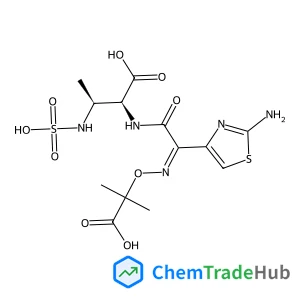
Aztreonam USP Related Compound A (Open-ring Aztreonam)
CAS Number:
87500-74-1
Molecular Formula:
C13H19N5O9S2
Mohsen Yarmohammadi, Kavoos Mirabbaszadeh
Topological crystalline insulators (TCIs) are particularly one of the most fascinating materials in current research. The gapless surface states protected by the crystal point group symmetries in TCIs entail the emergence of nontrivial physics and can be tailored by controlling the external perturbations. This paper is devoted to a detailed analysis of the perturbation effects on the quantum phase of SnTe(001) surface states. Generically, surface states are gradually perturbed so that the gapless phase dies out. In doing so, a numerical study of the perturbed · model is accomplished by the linear response theory and the Green's function technique. The model is experimentally accessible. The system displays a commensurate breaking of the mirror invariance imposed by external perturbations such as strain, magnetic proximity effect/electric field/Zeeman magnetic field, Rashba spin–orbit coupling, and dilute charged impurity. The interesting behaviors are explained by the variation of the gap with the above-mentioned perturbations (invoking the opening of the gap) at Dirac cones corresponding to the TCI phase. For suitably tuned parameters, SnTe(001) surface states realize gapped phases. The synergy of perturbations is responsible for breaking down the topologically non-trivial character of SnTe and related alloys. Further, the conditions under which the variations of the parameters maintain the topological properties are discussed. These findings and predictions report that, besides a vast number of TCI applications, TCIs are versatile candidates for topological transistors with tunable ON and OFF states if appropriate tuning of the surface band gap can be performed experimentally.
Ya-Nan Yu, Shi-Yu Lu, Shu-Juan Bao, Qiang-Qiang Sun, Sheng-Hui Liao
DOI: 10.1039/C5CP05790F
Tiantian Hong, Zhifeng Liu, Weiguo Yan, Junqi Liu, Xueqi Zhang
DOI: 10.1039/C5CP05742F
DOI: 10.1039/C5CP05636E
Yuanhui Sun, Guangtao Yu, Jingwei Liu, Xiaopeng Shen, Xuri Huang, Wei Chen
DOI: 10.1039/C5CP06069A
Jin-Yong Hong, Jeong Jae Wie, Yu Xu, Ho Seok Park
DOI: 10.1039/C5CP04203H
Kongfa Chen, Na Ai, San Ping Jiang
DOI: 10.1039/C5CP05065K
Benjamin J. Bergner, Christine Hofmann, Adrian Schürmann, Daniel Schröder, Klaus Peppler, Peter R. Schreiner, Jürgen Janek
DOI: 10.1039/C5CP04505C
Arya Shafiefarhood, Joseph Clay Hamill, Luke Michael Neal, Fanxing Li
DOI: 10.1039/C5CP05583K
P. Vaqueiro, R. A. R. Al Orabi, G. Guélou, A. V. Powell, R. I. Smith, J.-P. Song, D. Wee, M. Fornari
DOI: 10.1039/C5CP06192J
DOI: 10.1039/C5CP90218E
6-(3-Fluorophenyl)picolinic acid is generally considered safe for laboratory use...
(3R)-3-Pyrrolidinol is used in the pharmaceutical industry as a precursor for dr...
When handling (4R,5R)-4,5-Diethoxycarbonyl-2,2-dimethyldioxolane (CAS: 59779-75-...
1-(6-Chloroimidazo[1,2-b]pyridazin-3-yl)ethanone is often synthesized via a mult...
The market for N-Ethyl-3,4-dimethylbenzylamine (CAS: 39180-83-1) remains steady,...
Tert-butyl 3-(pyrrolidin-1-yl)azetidine-1-carboxylate is a chemical compound wit...
1-Bromo-3-chloro-2,4-dimethoxybenzene (CAS: 1228956-93-1) falls under the classi...
The safety of 8-Bromo-2-methyl-3,4-dihydroisoquinolin-1(2H)-one (CAS: 1368622-07...
Benzyl [(3S)-2,6-dioxo-3-piperidinyl]carbamate is generally safe when handled wi...
1-{[4-(4,4,5,5-Tetramethyl-1,3,2-dioxaborolan-2-yl)phenyl]sulfonyl}pyrrolidine s...

Physical Chemistry Chemical Physics (PCCP) is an international journal co-owned by 19 physical chemistry and physics societies from around the world. This journal publishes original, cutting-edge research in physical chemistry, chemical physics and biophysical chemistry. To be suitable for publication in PCCP, articles must include significant innovation and/or insight into physical chemistry; this is the most important criterion that reviewers and Editors will judge against when evaluating submissions. The journal has a broad scope and welcomes contributions spanning experiment, theory, computation and data science. Topical coverage includes spectroscopy, dynamics, kinetics, statistical mechanics, thermodynamics, electrochemistry, catalysis, surface science, quantum mechanics, quantum computing and machine learning. Interdisciplinary research areas such as polymers and soft matter, materials, nanoscience, energy, surfaces/interfaces, and biophysical chemistry are welcomed if they demonstrate significant innovation and/or insight into physical chemistry. Joined experimental/theoretical studies are particularly appreciated when complementary and based on up-to-date approaches.
![[4-Chloro-3-(diethylcarbamoyl)phenyl]boronic acid structure](https://static.chemtradehub.com/structs/871/871332-68-2-0e3b.webp "[4-Chloro-3-(diethylcarbamoyl)phenyl]boronic acid structure")
![2-[({[(2-Methyl-2-propanyl)oxy]carbonyl}amino)methyl]isonicotinic acid structure](https://static.chemtradehub.com/structs/473/473924-63-9-973b.webp "2-[({[(2-Methyl-2-propanyl)oxy]carbonyl}amino)methyl]isonicotinic acid structure")
![2-Methyl-2-propanyl [(2S)-1-hydroxy-3-(4-hydroxyphenyl)-2-propanyl]carbamate structure](https://static.chemtradehub.com/structs/833/83345-46-4-eec2.webp "2-Methyl-2-propanyl [(2S)-1-hydroxy-3-(4-hydroxyphenyl)-2-propanyl]carbamate structure")