


Ab initio spectroscopy of water under electric fields
Literature Information
Publication Date
2019-07-23
DOI
10.1039/C9CP03101D
Impact Factor
3.676
Authors
Giuseppe Cassone, Jiri Sponer, Sebastiano Trusso, Franz Saija
View Original
Abstract
Whereas a broad range of literature exists on the spectroscopy of water in disparate conditions, infrared (IR) and Raman spectra of water subjected to electric fields have never extensively been investigated so far. Based on ab initio molecular dynamics simulations, here we present IR and Raman spectra of bulk liquid water under the effect of static electric fields. A contraction of the entire frequency range is recorded upon increasing the field intensity both in the IR and in the Raman spectra. Whilst the OH stretching band is progressively shifted toward lower frequencies – indicating a field-induced strengthening of the H-bond network – all the other bands are up-shifted by the field. Furthermore, an evident modification of the librational mode band appears in all the spectra. Finally, the order-maker action of the field emerges also from the increase of the water orientational tetrahedral order. Upon field exposure, the water structure becomes more “ice like”.
Recommended Journals

Chemical Communications

Saudi Pharmaceutical Journal

Russian Journal of Bioorganic Chemistry

Crystallography Reports

Russian Journal of Coordination Chemistry

Chemistry Education Research and Practice

Journal of Natural Medicines

Russian Journal of General Chemistry

Current Opinion in Solid State & Materials Science

Nature Medicine
Related Literature
The role of copper in the thermal conductivity of thermoelectric oxychalcogenides: do lone pairs matter?
P. Vaqueiro, R. A. R. Al Orabi, G. Guélou, A. V. Powell, R. I. Smith, J.-P. Song, D. Wee, M. Fornari
2015-11-06
Paper
DOI: 10.1039/C5CP06192J
Negative photoconductivity of InAs nanowires
Yuxiang Han, Xiao Zheng, Mengqi Fu, Dong Pan, Xing Li, Yao Guo, Jianhua Zhao, Qing Chen
2015-11-17
Paper
DOI: 10.1039/C5CP06139C
Synthesis of ceria based superhydrophobic coating on Ni20Cr substrate via cathodic electrodeposition
F. Pedraza, S. A. Mahadik, B. Bouchaud
2015-11-06
Paper
DOI: 10.1039/C5CP04723D
Size-dependent strain and surface energies of gold nanoclusters
S. Ali, V. S. Myasnichenko, E. C. Neyts
2015-11-18
Paper
DOI: 10.1039/C5CP06153A
Effect of hydration on the organo-noble gas molecule HKrCCH: role of krypton in the stabilization of hydrated HKrCCH complexes
Biswajit Biswas, Prashant Chandra Singh
2015-10-20
Paper
DOI: 10.1039/C5CP04744G
Light harvesting in photonic crystals revisited: why do slow photons at the blue edge enhance absorption?
O. Deparis, S. R. Mouchet, B.-L. Su
2015-10-26
Paper
DOI: 10.1039/C5CP04983K
Electronic coherence and the kinetics of inter-complex energy transfer in light-harvesting systems
Pengfei Huo, Thomas F. Miller III
2015-06-01
Paper
DOI: 10.1039/C5CP02517F
Chemical modification of graphene aerogels for electrochemical capacitor applications
Jin-Yong Hong, Jeong Jae Wie, Yu Xu, Ho Seok Park
2015-10-30
Perspective
DOI: 10.1039/C5CP04203H
In silico rational design of ionic liquids for the exfoliation and dispersion of boron nitride nanosheets
Gregorio García, Mert Atilhan, Santiago Aparicio
2015-11-19
Paper
DOI: 10.1039/C5CP05376E
Probing electrode/electrolyte interfaces in situ by X-ray spectroscopies: old methods, new tricks
Robert S. Weatherup
2015-09-21
Perspective
DOI: 10.1039/C5CP04058B
You might also like
Compound Q&A
Is 6-(3-Fluorophenyl)picolinic acid (CAS: 887982-40-3) safe?
6-(3-Fluorophenyl)picolinic acid is generally considered safe for laboratory use...
887982-40-36-(3-Fluorophenyl)pi...
Compound Q&A
What industries use (3R)-3-Pyrrolidinol (CAS: 2799-21-5)?
(3R)-3-Pyrrolidinol is used in the pharmaceutical industry as a precursor for dr...
2799-21-5(3R)-3-Pyrrolidinol
Compound Q&A
What precautions should be taken when handling (4R,5R)-4,5-Diethoxycarbonyl-2,2-dimethyldioxolane (CAS: 59779-75-8)?
When handling (4R,5R)-4,5-Diethoxycarbonyl-2,2-dimethyldioxolane (CAS: 59779-75-...
59779-75-8(4R,5R)-4,5-Diethoxy...
Compound Q&A
How is 1-(6-Chloroimidazo[1,2-b]pyridazin-3-yl)ethanone (CAS: 90734-71-7) typically synthesized?
1-(6-Chloroimidazo[1,2-b]pyridazin-3-yl)ethanone is often synthesized via a mult...
90734-71-71-(6-Chloroimidazo[1...
Compound Q&A
What is the market or research trend for N-Ethyl-3,4-dimethylbenzylamine (CAS: 39180-83-1)?
The market for N-Ethyl-3,4-dimethylbenzylamine (CAS: 39180-83-1) remains steady,...
39180-83-1N-Ethyl-3,4-dimethyl...
Compound Q&A
What is Tert-butyl 3-(pyrrolidin-1-yl)azetidine-1-carboxylate (CAS: 1019008-21-9)?
Tert-butyl 3-(pyrrolidin-1-yl)azetidine-1-carboxylate is a chemical compound wit...
1019008-21-9Tert-butyl 3-(pyrrol...
Compound Q&A
What regulatory guidelines apply to 1-Bromo-3-chloro-2,4-dimethoxybenzene (CAS: 1228956-93-1)?
1-Bromo-3-chloro-2,4-dimethoxybenzene (CAS: 1228956-93-1) falls under the classi...
1228956-93-11-Bromo-3-chloro-2,4...
Compound Q&A
Is 8-Bromo-2-methyl-3,4-dihydroisoquinolin-1(2H)-one (CAS: 1368622-07-4) safe?
The safety of 8-Bromo-2-methyl-3,4-dihydroisoquinolin-1(2H)-one (CAS: 1368622-07...
1368622-07-48-Bromo-2-methyl-3,4...
Compound Q&A
Is Benzyl [(3S)-2,6-dioxo-3-piperidinyl]carbamate (CAS: 22785-43-9) safe?
Benzyl [(3S)-2,6-dioxo-3-piperidinyl]carbamate is generally safe when handled wi...
22785-43-9Benzyl [(3S)-2,6-dio...
Compound Q&A
How should 1-{[4-(4,4,5,5-Tetramethyl-1,3,2-dioxaborolan-2-yl)phenyl]sulfonyl}pyrrolidine (CAS: 928657-21-0) be stored?
1-{[4-(4,4,5,5-Tetramethyl-1,3,2-dioxaborolan-2-yl)phenyl]sulfonyl}pyrrolidine s...
928657-21-01-{[4-(4,4,5,5-Tetra...
Source Journal
Physical Chemistry Chemical Physics

CiteScore:
5.5
Self-citation Rate:
10.3%
Articles per Year:
3036
Physical Chemistry Chemical Physics (PCCP) is an international journal co-owned by 19 physical chemistry and physics societies from around the world. This journal publishes original, cutting-edge research in physical chemistry, chemical physics and biophysical chemistry. To be suitable for publication in PCCP, articles must include significant innovation and/or insight into physical chemistry; this is the most important criterion that reviewers and Editors will judge against when evaluating submissions. The journal has a broad scope and welcomes contributions spanning experiment, theory, computation and data science. Topical coverage includes spectroscopy, dynamics, kinetics, statistical mechanics, thermodynamics, electrochemistry, catalysis, surface science, quantum mechanics, quantum computing and machine learning. Interdisciplinary research areas such as polymers and soft matter, materials, nanoscience, energy, surfaces/interfaces, and biophysical chemistry are welcomed if they demonstrate significant innovation and/or insight into physical chemistry. Joined experimental/theoretical studies are particularly appreciated when complementary and based on up-to-date approaches.
Recommended Compounds
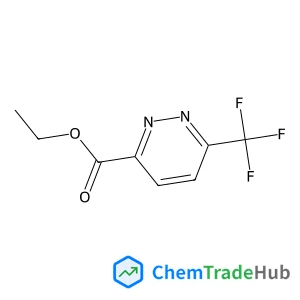
Ethyl 6-(trifluoromethyl)pyridazine-3-carboxylate
CAS Number:
1192155-06-8
Molecular Formula:
C8H7F3N2O2
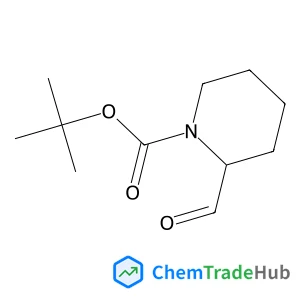
2-Methyl-2-propanyl (2R)-2-formyl-1-piperidinecarboxylate
CAS Number:
134526-69-5
Molecular Formula:
C11H19NO3
Recommended Suppliers





Disclaimer
This page provides academic journal information for reference and research purposes only. We are not affiliated with any journal publishers and do not handle publication submissions. For publication-related inquiries, please contact the respective journal publishers directly.
If you notice any inaccuracies in the information displayed, please contact us at support@chemtradehub.com. We will promptly review and address your concerns.