












![1-[3-(4-Morpholinylsulfonyl)phenyl]methanamine structure](https://static.chemtradehub.com/structs/933/933989-32-3-51af.webp "1-[3-(4-Morpholinylsulfonyl)phenyl]methanamine structure")
Thermoelectric properties of Ag-doped CuS nanocomposites synthesized by a facile polyol method
Literature Information
Publication Date
2018-01-25
DOI
10.1039/C7CP07986A
Impact Factor
3.676
Authors
Tarachand, S. Hussain, N. P. Lalla, Y.-K. Kuo, A. Lakhani, V. G. Sathe, U. Deshpande, G. S. Okram
View Original
Abstract
We report the first thermoelectric properties of Cu1−xAgxS, x = 0–0.75 nanocomposites, synthesized by using a facile polyol method. Systematic characterizations using powder XRD, Rietveld refinement of XRD, EDAX, XPS and Raman spectroscopy confirmed their single phase, hexagonal crystal structure with the space group P63/mmc, nominal elemental composition, valence states of the constituent elements and stoichiometric nature. The TEM images showing the CuS formation of nearly perfect hexagonal disk-like particles of average thickness 26.7 nm and breadth ranging in a few hundreds of nanometers with nanorods stacked from these hexagonal nanodisks (NDs) elongated along the c axis corroborate the FESEM images. Attributed to structural phase transition, an anomaly at 55 K is clearly observed in both the thermopower and Hall resistivity data. By increasing x, a systematic reduction in thermal conductivity was observed near 300 K. Consequently, a 50% enhancement in figure of merit was observed for Cu0.9Ag0.1S as compared to pure CuS at 300 K. These results therefore are expected to provide a new direction in improving ZT near 300 K.
Recommended Journals
Related Literature
Facile and practical synthesis of β-carbolinium salts and γ-carbolinium salts via rhodium-catalyzed three-component reactions
Zhuo Wang, Tongyu Li, Siyang Xing, Bolin Zhu
2018-06-20
Paper
DOI: 10.1039/C8OB01182F
A supramolecular red to near-infrared fluorescent probe for the detection of drugs in urine
Gyan H. Aryal, Kenneth W. Hunter, Liming Huang
2018-09-21
Paper
DOI: 10.1039/C8OB02180E
Iron(iii)-catalyzed radical α,β-aminophosphinoylation of styrenes with diphenylphosphine oxides and anilines
Yu Wang, Wei Wang, Ruyun Tang, Zhenhua Liu, Weihua Tao, Zhongxue Fang
2018-10-15
Communication
DOI: 10.1039/C8OB02151A
Synthesis of oxindoles through trifluoromethylation of N-aryl acrylamides by photoredox catalysis
Maojian Lu, Zhiji Liu, Jinwang Zhang, Yu Tian, Honggui Qin, Mingqiang Huang, Shirong Hu
2018-08-22
Paper
DOI: 10.1039/C8OB01922C
Synthesis and potassium KV7 channel opening activity of thioether analogues of the analgesic flupirtine
Christian Bock, Kristin Beirow, Abdrrahman S. Surur, Lukas Schulig, Anja Bodtke, Patrick J. Bednarski, Andreas Link
2018-10-30
Communication
DOI: 10.1039/C8OB02530D
RNA-based boronate internucleosidic linkages: an entry into reversible templated ligation and loop formation
Alejandro Gimenez Molina, Ivan Barvik, Sabine Müller, Jean-Jacques Vasseur, Michael Smietana
2018-11-01
Paper
DOI: 10.1039/C8OB02182A
Porphyrin–ferrocene conjugates for photodynamic and chemodynamic therapy
Xiaoyu Zhang, Shi Liu, Zhigang Xie
2018-10-25
Paper
DOI: 10.1039/C8OB02391C
Silver-catalyzed regioselective hydroamination of alkenyl diazoacetates to synthesize γ-amino acid equivalents
Jun Ueda, Shingo Harada, Hiroki Nakayama
2018-06-06
Paper
DOI: 10.1039/C8OB00894A
Cesium carbonate-promoted synthesis of aryl methyl sulfides using S-methylisothiourea sulfate under transition-metal-free conditions
Caiyang Zhang, You Zhou, Jintao Huang, Canhui Tu, Xiaoai Zhou, Guodong Yin
2018-08-15
Paper
DOI: 10.1039/C8OB01758A
You might also like
Compound Q&A
What are the main uses of 1-(3-Aminophenyl)-3-[(3R)-1-(3,3-dimethyl-2-oxobutyl)-2-oxo-5-(2-pyridinyl)-2,3-dihydro-1H-1,4-benzodiazepin-3-yl]urea (CAS: 155412-88-7)?
This compound is mainly used as an intermediate in the synthesis of antipsychoti...
155412-88-71-(3-Aminophenyl)-3-...
Compound Q&A
How should waste containing 1-(D-Ribofuranosyl)-1,4-dihydro-3-pyridinecarboxamide (CAS: 19132-12-8) be handled?
Waste containing 1-(D-Ribofuranosyl)-1,4-dihydro-3-pyridinecarboxamide (CAS: 191...
19132-12-81-(D-Ribofuranosyl)-...
Compound Q&A
What regulatory guidelines apply to 2-Methyl-2-propanyl 3-bromo-3-(hydroxymethyl)-1-azetidinecarboxylate (CAS: 2007919-81-3)?
2-Methyl-2-propanyl 3-bromo-3-(hydroxymethyl)-1-azetidinecarboxylate (CAS: 20079...
2007919-81-32-Methyl-2-propanyl ...
Compound Q&A
What is N-(4-Chloro-2-pyridinyl)acetamide (CAS: 245056-66-0)?
N-(4-Chloro-2-pyridinyl)acetamide (CAS: 245056-66-0) is a chemical compound with...
245056-66-0N-(4-Chloro-2-pyridi...
Compound Q&A
What is 5-Chloro-2-hydroxybenzoic acid (CAS: 321-14-2)?
5-Chloro-2-hydroxybenzoic acid, also known as 5-chlorosalicylic acid, is an arom...
321-14-25-Chloro-2-hydroxybe...
Compound Q&A
What precautions should be taken when handling 1,1-Dichloro-1-fluoroethane (CAS: 1717-00-6)?
When handling 1,1-Dichloro-1-fluoroethane (CAS: 1717-00-6), it is important to u...
1717-00-61,1-Dichloro-1-fluor...
Compound Q&A
What are the physical and chemical properties of Fmoc-(2S,3R)-3-phenylpyrrolidine-2-carboxylic acid (CAS: 281655-32-1)?
Fmoc-(2S,3R)-3-phenylpyrrolidine-2-carboxylic acid is a white crystalline solid ...
281655-32-1Fmoc-(2S,3R)-3-pheny...
Compound Q&A
What are the main uses of 4-Amino-5-bromo-2-pyridinecarboxylic acid (CAS: 1363381-01-4)?
4-Amino-5-bromo-2-pyridinecarboxylic acid is primarily used as a precursor in th...
1363381-01-44-Amino-5-bromo-2-py...
Compound Q&A
What precautions should be taken when handling (S)-tert-butyl 2-((2-(4-bromophenyl)-2-oxoethyl)carbamoyl)pyrrolidine-1-carboxylate (CAS: 1007881-98-2)?
Handling this compound should be done with personal protective equipment (PPE) i...
1007881-98-2(S)-tert-butyl 2-((2...
Compound Q&A
What precautions should be taken when handling 8-bromo-2,2-dimethyl-3,4-dihydro-2H-1,4-benzoxazin-3-one (CAS: 688363-73-7)?
When handling 8-bromo-2,2-dimethyl-3,4-dihydro-2H-1,4-benzoxazin-3-one, use prop...
688363-73-78-bromo-2,2-dimethyl...
Source Journal
Physical Chemistry Chemical Physics

CiteScore:
5.5
Self-citation Rate:
10.3%
Articles per Year:
3036
Physical Chemistry Chemical Physics (PCCP) is an international journal co-owned by 19 physical chemistry and physics societies from around the world. This journal publishes original, cutting-edge research in physical chemistry, chemical physics and biophysical chemistry. To be suitable for publication in PCCP, articles must include significant innovation and/or insight into physical chemistry; this is the most important criterion that reviewers and Editors will judge against when evaluating submissions. The journal has a broad scope and welcomes contributions spanning experiment, theory, computation and data science. Topical coverage includes spectroscopy, dynamics, kinetics, statistical mechanics, thermodynamics, electrochemistry, catalysis, surface science, quantum mechanics, quantum computing and machine learning. Interdisciplinary research areas such as polymers and soft matter, materials, nanoscience, energy, surfaces/interfaces, and biophysical chemistry are welcomed if they demonstrate significant innovation and/or insight into physical chemistry. Joined experimental/theoretical studies are particularly appreciated when complementary and based on up-to-date approaches.
Recommended Compounds
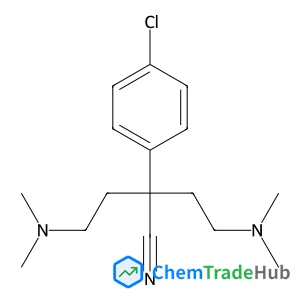
2-(4-Chlorophenyl)-4-(dimethylamino)-2-(2-(dimethylamino)ethyl)butanenitrile
CAS Number:
1246816-57-8
Molecular Formula:
C16H24ClN3

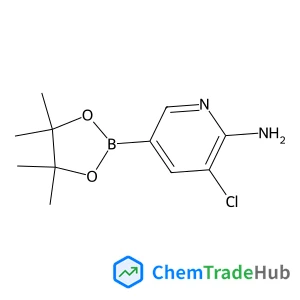
3-Chloro-5-(4,4,5,5-tetramethyl-1,3,2-dioxaborolan-2-yl)-2-pyridinamine
CAS Number:
1032758-99-8
Molecular Formula:
C11H16BClN2O2
Recommended Suppliers




Disclaimer
This page provides academic journal information for reference and research purposes only. We are not affiliated with any journal publishers and do not handle publication submissions. For publication-related inquiries, please contact the respective journal publishers directly.
If you notice any inaccuracies in the information displayed, please contact us at support@chemtradehub.com. We will promptly review and address your concerns.