












Using computed infrared intensities for the reduction of vibrational configuration interaction bases
Literature Information
Publication Date
2020-03-11
DOI
10.1039/D0CP00593B
Impact Factor
3.676
Authors
Vincent Le Bris, Marc Odunlami, Didier Bégué, Isabelle Baraille, Olivier Coulaud
View Original
Abstract
The Adaptive Vibrational Configuration Interaction (A-VCI) algorithm is an iterative process that computes the anharmonic spectrum of a molecule using nested bases to discretize the Hamiltonian operator. For large molecular systems, the size of the discretization space and the computation time quickly become prohibitive. It is therefore necessary to develop new methods to further limit the number of basis functions. Most of the time, the interpretation of an experimental infrared spectrum does not require the calculation of all eigenvalues but only those corresponding to vibrational states with significant intensity. In this paper, a technique that uses infrared intensities is introduced to select a subset of eigenvalues to be precisely calculated. Thus, we build smaller nested bases and reduce both the memory footprint and the computational time. We validate the advantages of this new approach on a well-studied 7-atom molecular system (C2H4O), and we apply it on a larger 10-atom molecule (C4H4N2).
Related Literature
Dirhodium(ii)/P(t-Bu)3 catalyzed tandem reaction of α,β-unsaturated aldehydes with arylboronic acids
Ziling Ma, Yuanhua Wang
2018-09-20
Paper
DOI: 10.1039/C8OB01997E
Vinyl sulfonyl chemistry-driven unidirectional transport of a macrocycle through a [2]rotaxane
Arthur H. G. David, Pablo García–Cerezo, Araceli G. Campaña, Francisco Santoyo–González, Victor Blanco
2021-11-26
Research Article
DOI: 10.1039/D1QO01491A
Catalytic asymmetric Tamura cycloaddition of homophthalic anhydrides with 2-arylidene-1,3-diones
Han Xu, Feng Sha, Qiong Li, Xin-Yan Wu
2018-09-19
Paper
DOI: 10.1039/C8OB01970C
An effective preparation of both 1,3-diketones and nitriles from alkynones with oximes as hydroxide sources
Pei Chen, Qian-Qian Zhang, Jia Guo, Lu-Lu Chen, Yan-Bo Wang, Xiao Zhang
2018-09-03
Paper
DOI: 10.1039/C8OB01861H
Synthesis of functionalized 2,5-dihydropyrrole derivatives via a convenient [3 + 2] annulation of azomethine ylides with allenoates
Zhusheng Huang, Zonghao Dai, Jin Zhu, Fulai Yang, Qingfa Zhou
2018-08-28
Communication
DOI: 10.1039/C8OB01946K
Catalytic properties of 4,5-bridged proline methano- and ethanologues in the Hajos–Parrish intramolecular aldol reaction
Sofiane Hocine, Gilles Berger, K. N. Houk, Stephen Hanessian
2021-12-15
Research Article
DOI: 10.1039/D1QO01688A
Iron-catalysed carbene-transfer reactions of diazo acetonitrile
Claire Empel, Katharina J. Hock, Rene M. Koenigs
2018-09-20
Communication
DOI: 10.1039/C8OB01991F
l-Dopa and dopamine conjugated naphthalenediimides modulate amyloid β toxicity
Madhu Ramesh, Pandeeswar Makam, Chandrashekhar Voshavar, Harshavardhan Khare, Kolla Rajasekhar, Suryanarayanarao Ramakumar, Thimmaiah Govindaraju
2018-09-28
Paper
DOI: 10.1039/C8OB01691G
Diastereoselective construction of structurally diverse 2,3-dihydroquinolin-4-one scaffolds via redox neutral cascade [1,7]-hydride transfer/cyclization
Ronghao Xie, Shixiao Chen, Xianping Xiang, Xiangcong Yin, Lubin Xu, Shuai-Shuai Li, Liang Wang, Fengying Dong
2021-12-07
Research Article
DOI: 10.1039/D1QO01530C
Optimized synthesis and indium complex formation with the bifunctional chelator NODIA-Me
Jason P. Holland, Harald Scherer, Stephan Maus, Tobias Stemler, Hendrik Bohnenberger, Samer Ezziddin, Philipp Kurz
2018-09-24
Paper
DOI: 10.1039/C8OB01981A
You might also like
Compound Q&A
Is 6-(3-Fluorophenyl)picolinic acid (CAS: 887982-40-3) safe?
6-(3-Fluorophenyl)picolinic acid is generally considered safe for laboratory use...
887982-40-36-(3-Fluorophenyl)pi...
Compound Q&A
What industries use (3R)-3-Pyrrolidinol (CAS: 2799-21-5)?
(3R)-3-Pyrrolidinol is used in the pharmaceutical industry as a precursor for dr...
2799-21-5(3R)-3-Pyrrolidinol
Compound Q&A
What precautions should be taken when handling (4R,5R)-4,5-Diethoxycarbonyl-2,2-dimethyldioxolane (CAS: 59779-75-8)?
When handling (4R,5R)-4,5-Diethoxycarbonyl-2,2-dimethyldioxolane (CAS: 59779-75-...
59779-75-8(4R,5R)-4,5-Diethoxy...
Compound Q&A
How is 1-(6-Chloroimidazo[1,2-b]pyridazin-3-yl)ethanone (CAS: 90734-71-7) typically synthesized?
1-(6-Chloroimidazo[1,2-b]pyridazin-3-yl)ethanone is often synthesized via a mult...
90734-71-71-(6-Chloroimidazo[1...
Compound Q&A
What is the market or research trend for N-Ethyl-3,4-dimethylbenzylamine (CAS: 39180-83-1)?
The market for N-Ethyl-3,4-dimethylbenzylamine (CAS: 39180-83-1) remains steady,...
39180-83-1N-Ethyl-3,4-dimethyl...
Compound Q&A
What is Tert-butyl 3-(pyrrolidin-1-yl)azetidine-1-carboxylate (CAS: 1019008-21-9)?
Tert-butyl 3-(pyrrolidin-1-yl)azetidine-1-carboxylate is a chemical compound wit...
1019008-21-9Tert-butyl 3-(pyrrol...
Compound Q&A
What regulatory guidelines apply to 1-Bromo-3-chloro-2,4-dimethoxybenzene (CAS: 1228956-93-1)?
1-Bromo-3-chloro-2,4-dimethoxybenzene (CAS: 1228956-93-1) falls under the classi...
1228956-93-11-Bromo-3-chloro-2,4...
Compound Q&A
Is 8-Bromo-2-methyl-3,4-dihydroisoquinolin-1(2H)-one (CAS: 1368622-07-4) safe?
The safety of 8-Bromo-2-methyl-3,4-dihydroisoquinolin-1(2H)-one (CAS: 1368622-07...
1368622-07-48-Bromo-2-methyl-3,4...
Compound Q&A
Is Benzyl [(3S)-2,6-dioxo-3-piperidinyl]carbamate (CAS: 22785-43-9) safe?
Benzyl [(3S)-2,6-dioxo-3-piperidinyl]carbamate is generally safe when handled wi...
22785-43-9Benzyl [(3S)-2,6-dio...
Compound Q&A
How should 1-{[4-(4,4,5,5-Tetramethyl-1,3,2-dioxaborolan-2-yl)phenyl]sulfonyl}pyrrolidine (CAS: 928657-21-0) be stored?
1-{[4-(4,4,5,5-Tetramethyl-1,3,2-dioxaborolan-2-yl)phenyl]sulfonyl}pyrrolidine s...
928657-21-01-{[4-(4,4,5,5-Tetra...
Source Journal
Physical Chemistry Chemical Physics

CiteScore:
5.5
Self-citation Rate:
10.3%
Articles per Year:
3036
Physical Chemistry Chemical Physics (PCCP) is an international journal co-owned by 19 physical chemistry and physics societies from around the world. This journal publishes original, cutting-edge research in physical chemistry, chemical physics and biophysical chemistry. To be suitable for publication in PCCP, articles must include significant innovation and/or insight into physical chemistry; this is the most important criterion that reviewers and Editors will judge against when evaluating submissions. The journal has a broad scope and welcomes contributions spanning experiment, theory, computation and data science. Topical coverage includes spectroscopy, dynamics, kinetics, statistical mechanics, thermodynamics, electrochemistry, catalysis, surface science, quantum mechanics, quantum computing and machine learning. Interdisciplinary research areas such as polymers and soft matter, materials, nanoscience, energy, surfaces/interfaces, and biophysical chemistry are welcomed if they demonstrate significant innovation and/or insight into physical chemistry. Joined experimental/theoretical studies are particularly appreciated when complementary and based on up-to-date approaches.
Recommended Compounds
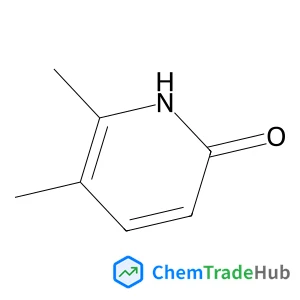

Ethyl 6-(trifluoromethyl)pyridazine-3-carboxylate
CAS Number:
1192155-06-8
Molecular Formula:
C8H7F3N2O2

Recommended Suppliers




Disclaimer
This page provides academic journal information for reference and research purposes only. We are not affiliated with any journal publishers and do not handle publication submissions. For publication-related inquiries, please contact the respective journal publishers directly.
If you notice any inaccuracies in the information displayed, please contact us at support@chemtradehub.com. We will promptly review and address your concerns.