












Chiral β3-isocyanopropionates for multicomponent synthesis of peptides and depsipeptides containing a β-amino acid fragment
Literature Information
Publication Date
2018-07-31
DOI
10.1039/C8OB01507D
Impact Factor
3.876
Authors
Danil P. Zarezin, Olga I. Shmatova, Valentine G. Nenajdenko
View Original
Abstract
An efficient three-step synthesis of a novel family of enantiomerically pure isocyanides derived from β3-isocyanopropionic acids was elaborated. Easily available N-formylated α-amino acids were used as starting materials towards this aim. The 3-step sequence (Arndt–Eistert reaction–Wolff rearrangement–dehydration) resulted in target isonitriles in good yields (up to 97%). As a result a new family of isocyanides bearing a fragment of β3-amino acids with different functional groups (amides, esters and short peptides) was obtained. It was demonstrated that these new isonitriles can be used in the Ugi and Passerini reactions to prepare short peptides and depsipeptides having a β-amino acid fragment incorporated.
Recommended Journals
Related Literature
Highly branched polymethacrylates prepared efficiently: brancher-directed topology and application performance
Hong-Mei Yang, Zhi-Hao Chen, Jun-Fang Li, Xiu-Li Sun, Xiao-Yan Wang, Yong Tang
2021-11-02
Paper
DOI: 10.1039/D1PY01273H
Thermoresponsive polymers as macromolecular coordination ligands: complexation-dependence of thermally induced aggregation in aqueous solution
Maximilian Felix Toni Meier, Franck Thetiot, Narsimhulu Pittala, Ingo Lieberwirth, Cleiton Kunzler, Smail Triki, Ulrich Jonas
2021-08-13
Paper
DOI: 10.1039/D1PY00847A
Folded amphiphilic homopolymer micelles in water: uniform self-assembly beyond amphiphilic random copolymers
Yoshihiko Kimura, Makoto Ouchi, Takaya Terashima
2020-07-06
Paper
DOI: 10.1039/D0PY00685H
Facile preparation of polycarbonates from bio-based eugenol and 2-methoxy-4-vinylphenol
Mengqian Huang, De Bai, Qin Chen, Changbo Zhao, Tianhua Ren, Caijuan Huang, Michael North, Haibo Xie
2020-06-30
Communication
DOI: 10.1039/D0PY00291G
Green-light photocleavable meso-methyl BODIPY building blocks for macromolecular chemistry
Paul Strasser, Pauline Stadler, Patrick Breiteneder, Günther Redhammer, Markus Himmelsbach, Oliver Brüggemann, Uwe Monkowius, Ian Teasdale
2021-11-16
Paper
DOI: 10.1039/D1PY01245B
Polymer actuators based on covalent adaptable networks
Yahe Wu, Yan Ji
2020-05-14
Review Article
DOI: 10.1039/D0PY00075B
Identifying competitive tin- or metal-free catalyst combinations to tailor polyurethane prepolymer and network properties
Priscilla Arnould, Lionel Bosco, Federico Sanz, Frédéric N. Simon, Stéphane Fouquay, Guillaume Michaud, Jean Raynaud, Vincent Monteil
2020-08-25
Paper
DOI: 10.1039/D0PY00864H
You might also like
Compound Q&A
What is the market or research trend for N-(4-Methoxybenzyl)-2-pyridinamine (CAS: 52818-63-0)?
N-(4-Methoxybenzyl)-2-pyridinamine (CAS: 52818-63-0) is increasingly being used ...
52818-63-0N-(4-Methoxybenzyl)-...
Compound Q&A
What precautions should be taken when handling Ethyl 4-(2-chlorophenyl)-1,3-thiazole-2-carboxylate (CAS: 1050507-06-6)?
When handling Ethyl 4-(2-chlorophenyl)-1,3-thiazole-2-carboxylate, appropriate p...
1050507-06-6Ethyl 4-(2-chlorophe...
Compound Q&A
What regulatory guidelines apply to diethyldiselane (CAS: 628-39-7)?
Diethyldiselane (CAS: 628-39-7) is classified under the Globally Harmonized Syst...
628-39-7Diethyldiselane
Compound Q&A
What is the market or research trend for oxocopper (CAS: 12053-18-8)?
The market for oxocopper (CAS: 12053-18-8) is primarily driven by its use in cat...
12053-18-8oxocopper; oxo-(oxoc...
Compound Q&A
What is the market or research trend for 5-{[(2-Methyl-2-propanyl)oxy]carbonyl}-5-azaspiro[2.4]heptane-7-carboxylic acid?
The market for 5-{[(2-Methyl-2-propanyl)oxy]carbonyl}-5-azaspiro[2.4]heptane-7-c...
1268519-54-55-{[(2-Methyl-2-prop...
Compound Q&A
What is 2-(1-Pyrrolidinyl)-4-pyridinamine (CAS: 35981-63-6)?
2-(1-Pyrrolidinyl)-4-pyridinamine is a chemical compound with the CAS number 359...
35981-63-62-(1-Pyrrolidinyl)-4...
Compound Q&A
What are the physical and chemical properties of 2-(3-Pyridinyl)-1-azabicyclo[2.2.2]octane (CAS: 91556-75-1)?
2-(3-Pyridinyl)-1-azabicyclo[2.2.2]octane (CAS: 91556-75-1) is a crystalline sol...
91556-75-12-(3-Pyridinyl)-1-az...
Compound Q&A
How is (S)-Alpha-allyl-proline hydrochloride (CAS: 129704-91-2) typically synthesized?
(S)-Alpha-allyl-proline hydrochloride is usually synthesized via a Wittig reacti...
129704-91-2(S)-Alpha-allyl-prol...
Compound Q&A
What is 3-Methyl-1,2-oxazole-5-carboxylic acid (CAS: 4857-42-5)?
3-Methyl-1,2-oxazole-5-carboxylic acid (CAS: 4857-42-5) is an organic compound w...
4857-42-53-Methyl-1,2-oxazole...
Compound Q&A
How is Lys-SMCC-DM1 (CAS: 1281816-04-3) typically synthesized?
Lys-SMCC-DM1 is synthesized via a multi-step process involving the coupling of S...
1281816-04-3Lys-SMCC-DM1
Source Journal
Organic & Biomolecular Chemistry

CiteScore:
3.4
Self-citation Rate:
10.3%
Articles per Year:
1041
Organic & Biomolecular Chemistry (OBC) publishes original and high impact research and reviews in organic chemistry. We welcome research that shows new or significantly improved protocols or methodologies in total synthesis, synthetic methodology or physical and theoretical organic chemistry as well as research that shows a significant advance in the organic chemistry or molecular design aspects of chemical biology, catalysis, supramolecular and macromolecular chemistry, theoretical chemistry, mechanism-oriented physical organic chemistry, medicinal chemistry or natural products. Articles published in the journal should report new work which makes a highly-significant impact in the field. Routine and incremental work is generally not suitable for publication in the journal. More details about key areas of our scope are below. In all cases authors should include in their article clear rationale for why their research has been carried out.
Recommended Compounds
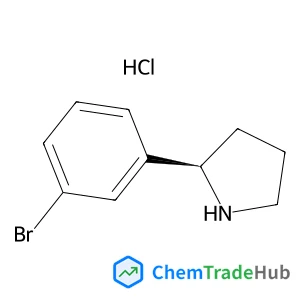
(2R)-2-(3-Bromophenyl)pyrrolidine hydrochloride (1:1)
CAS Number:
1391550-13-2
Molecular Formula:
C10H13BrClN


Recommended Suppliers







Disclaimer
This page provides academic journal information for reference and research purposes only. We are not affiliated with any journal publishers and do not handle publication submissions. For publication-related inquiries, please contact the respective journal publishers directly.
If you notice any inaccuracies in the information displayed, please contact us at support@chemtradehub.com. We will promptly review and address your concerns.